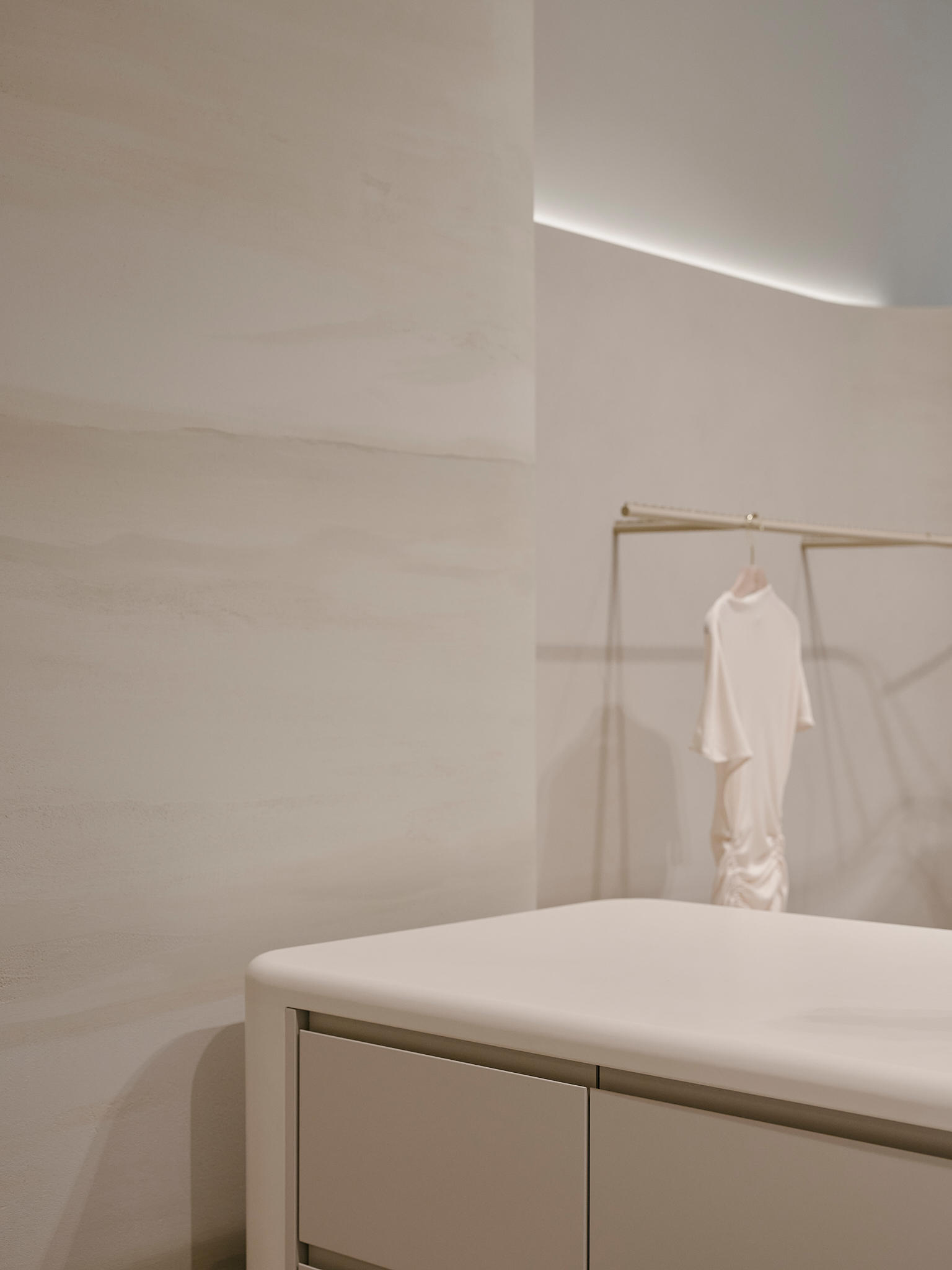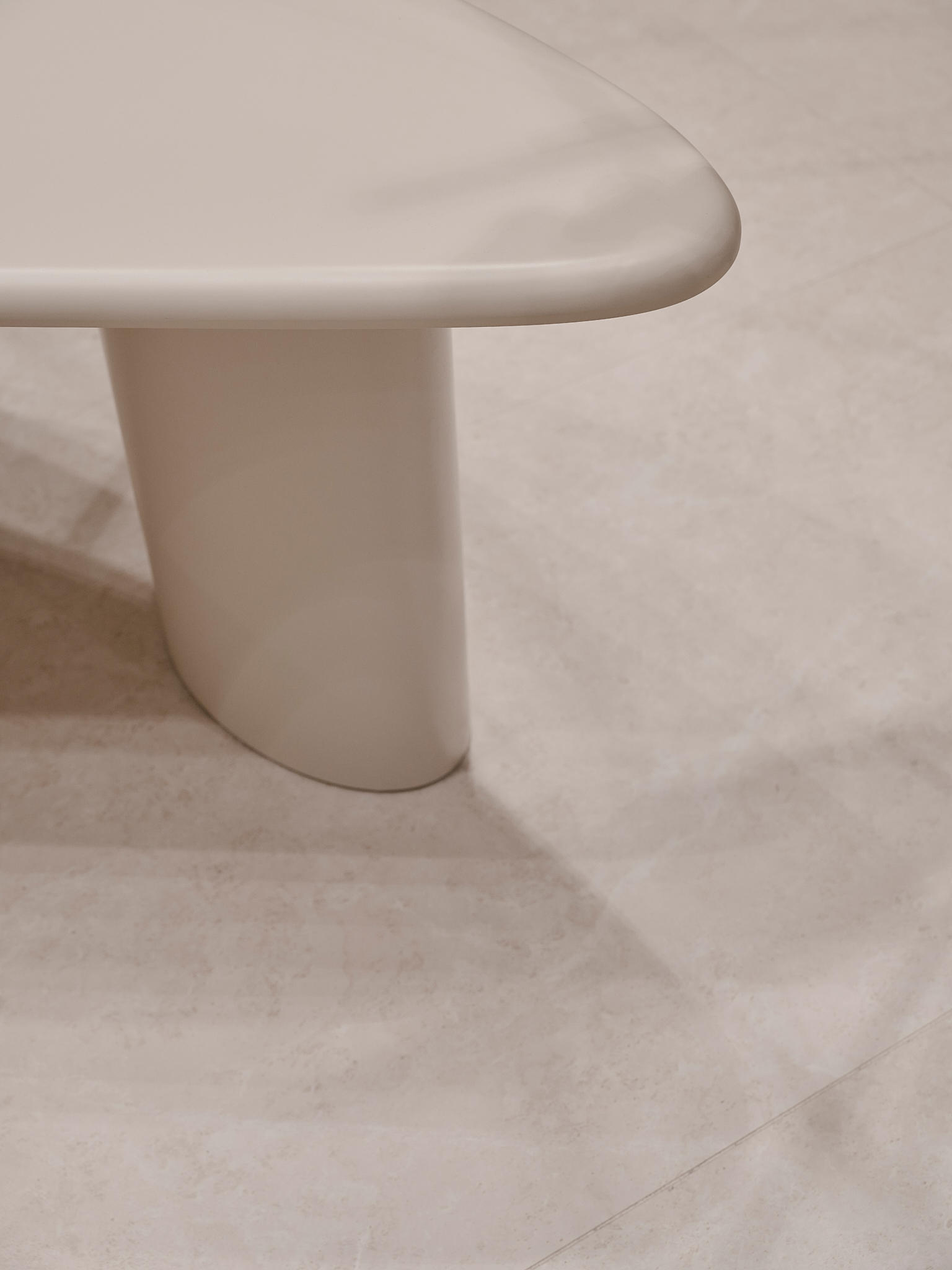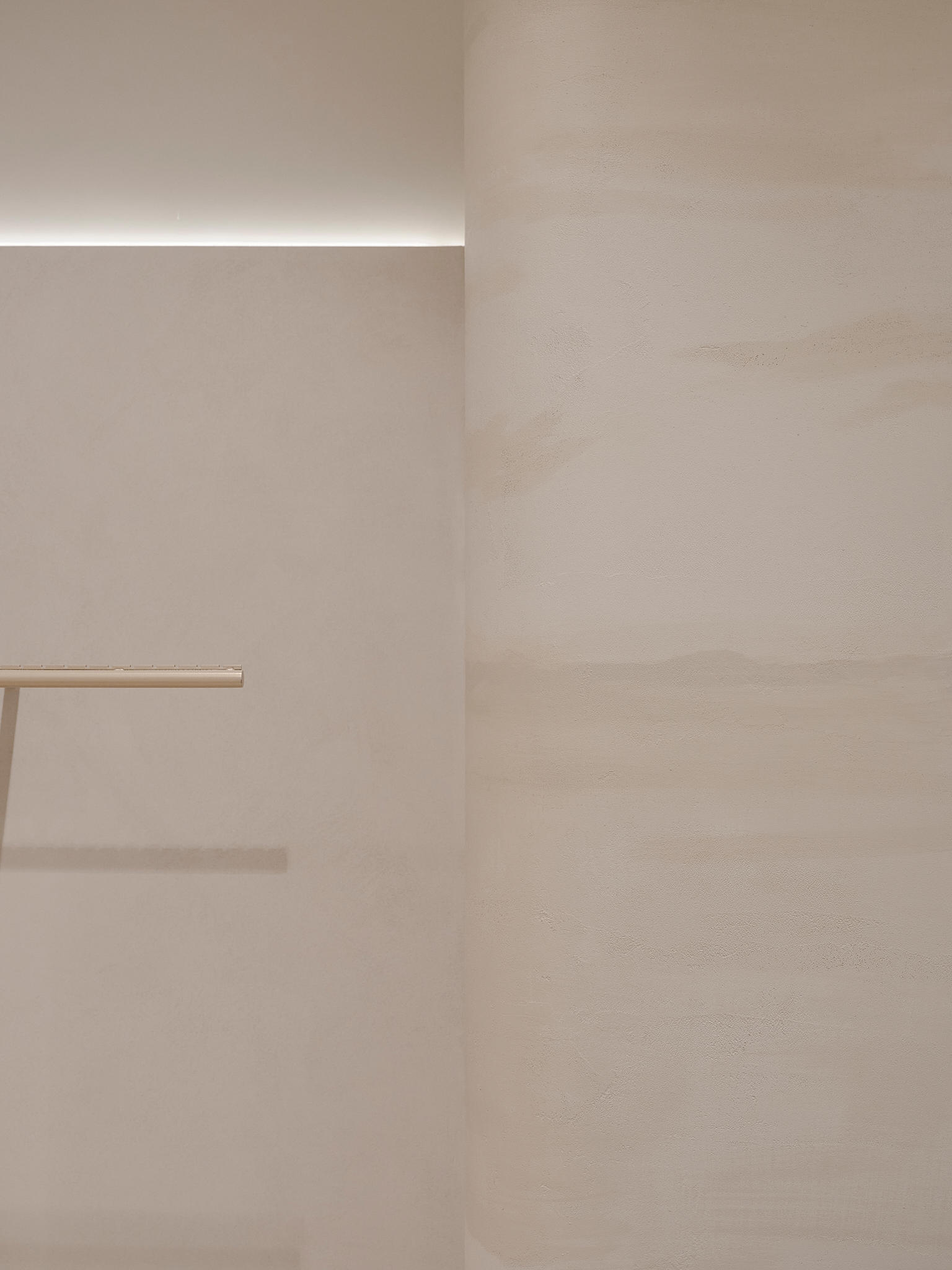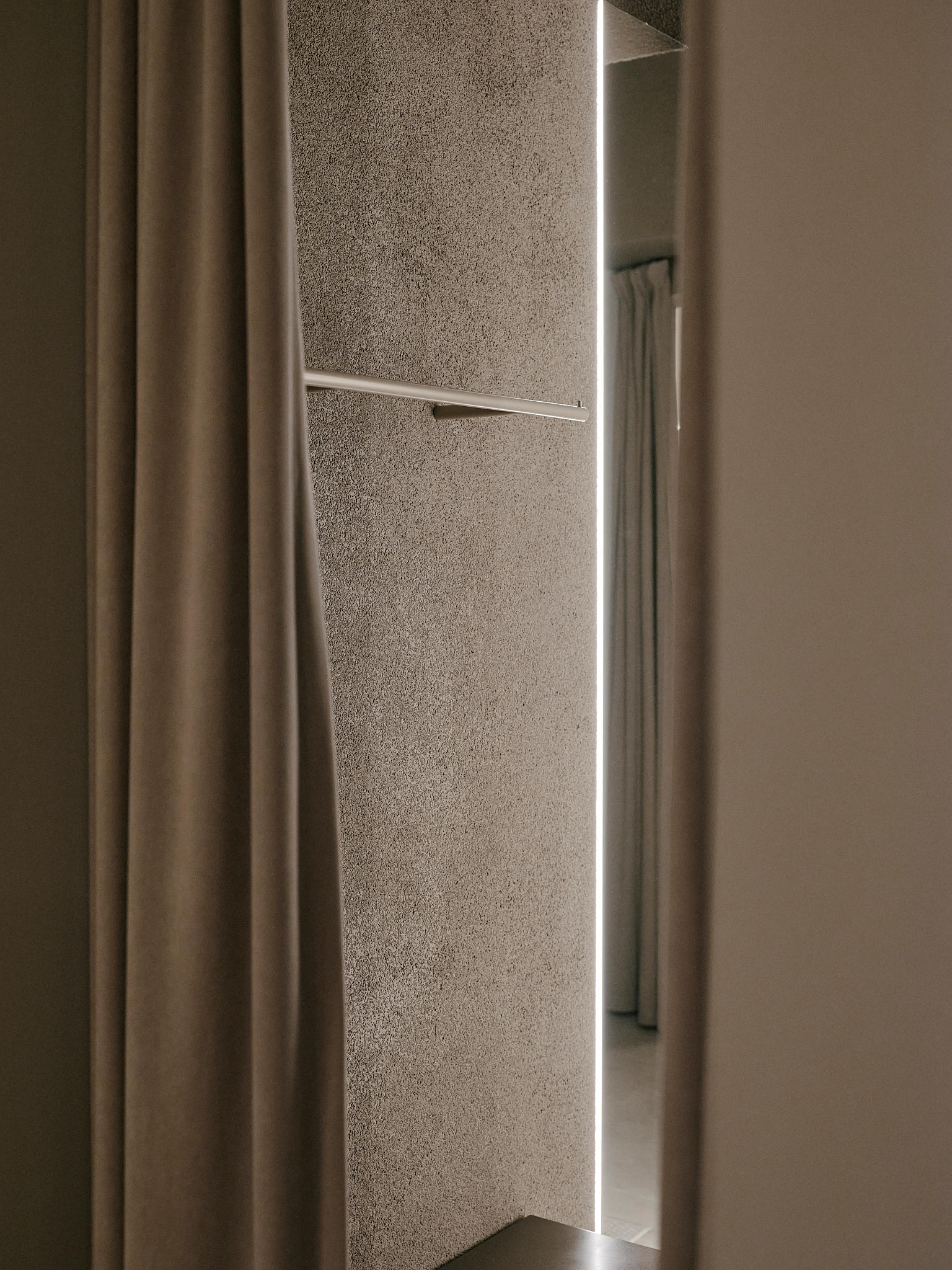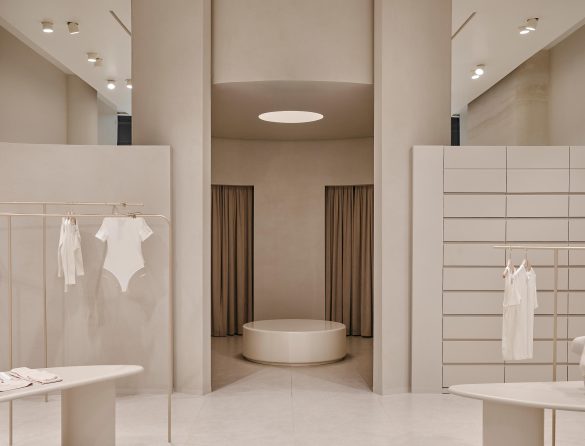
Project name: Lavarice Store, Salaris Shopping Mall
Interior design: Sinitsa Buro
Chief Architect: Anastasia Kolchina
Lead Architects: Varvara Serebrova, Anastasia Emelyanova
Architect: Tatyana Butrinova
Project Manager: Daria Krainova
Location: Moscow, Russia
Photo: Dmitry Suvorov
Area: 131 m²
Year: 2025
Project description from design firms Sinitsa Buro
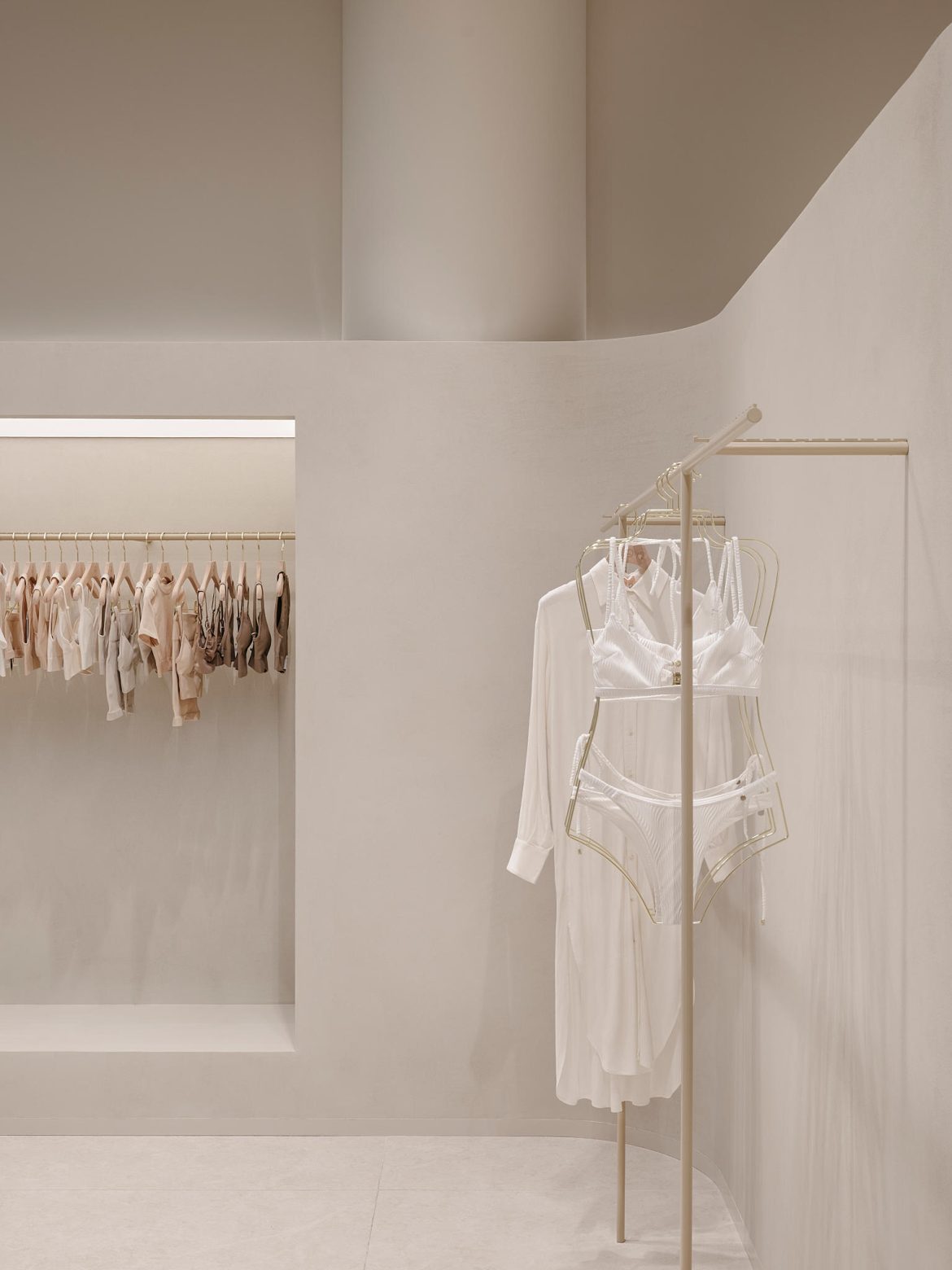
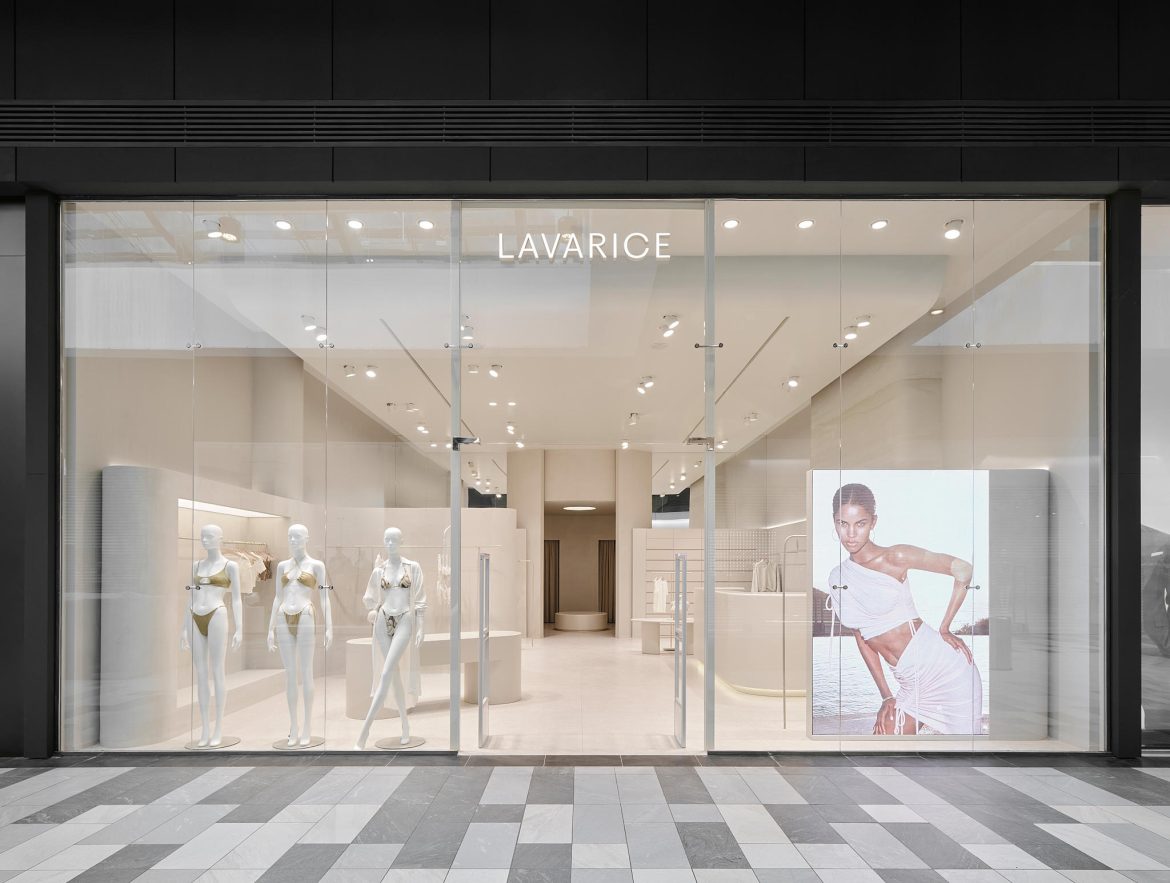
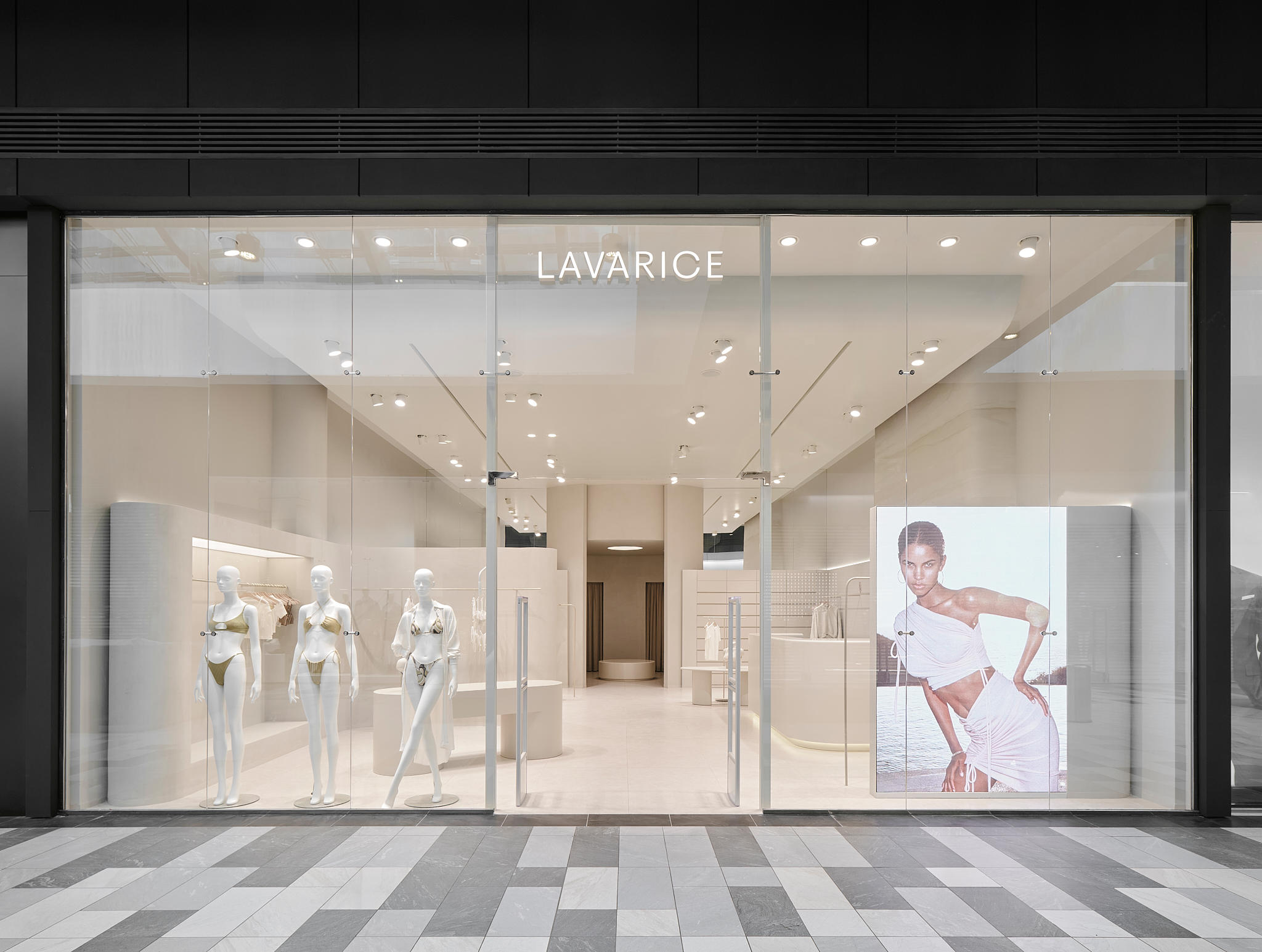
The interior design of the Lavarice lingerie store in the Salaris shopping mall in Moscow represents a carefully crafted evolution of the brand’s architectural language. Covering 131 square meters and completed between January and May 2025, the project continues the design trajectory initiated with Lavarice Hollywood, yet offers a more mature, sculpturally refined interpretation. For Sinitsa Bureau, this was not the first collaboration with the client, but it became the most conceptually sophisticated one, capturing the brand’s growing desire for depth, sensuality and a heightened emotional tone.

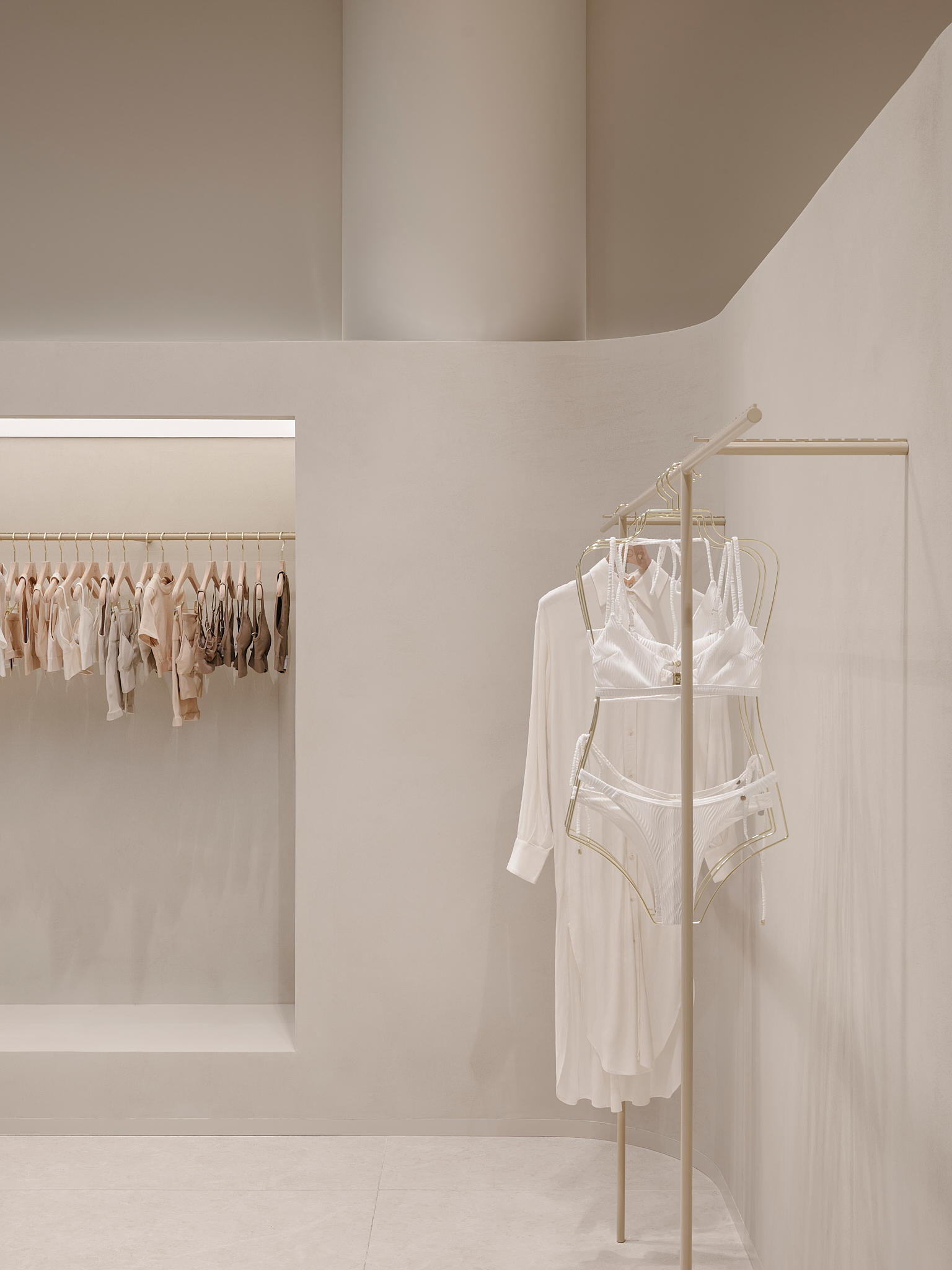
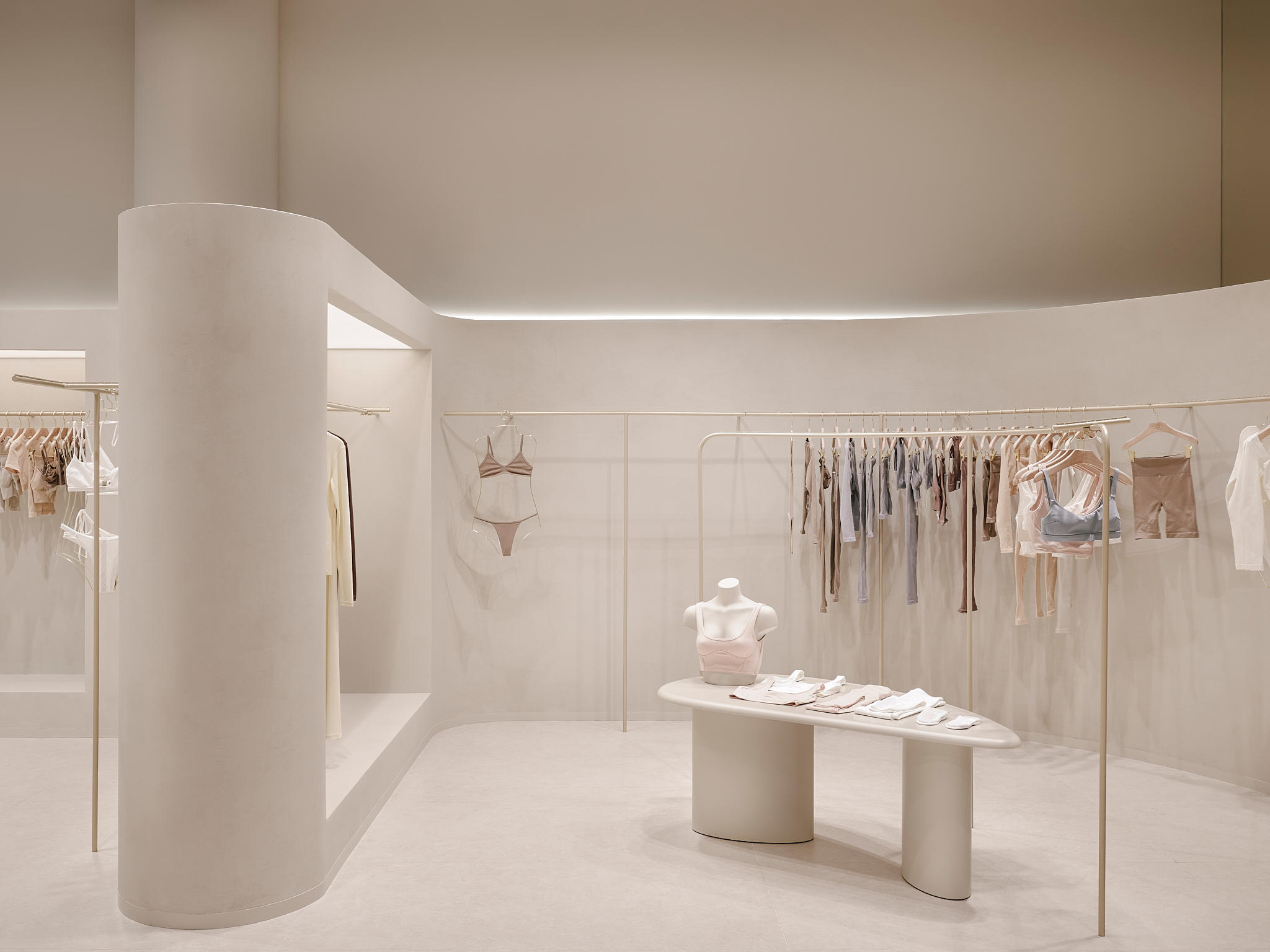
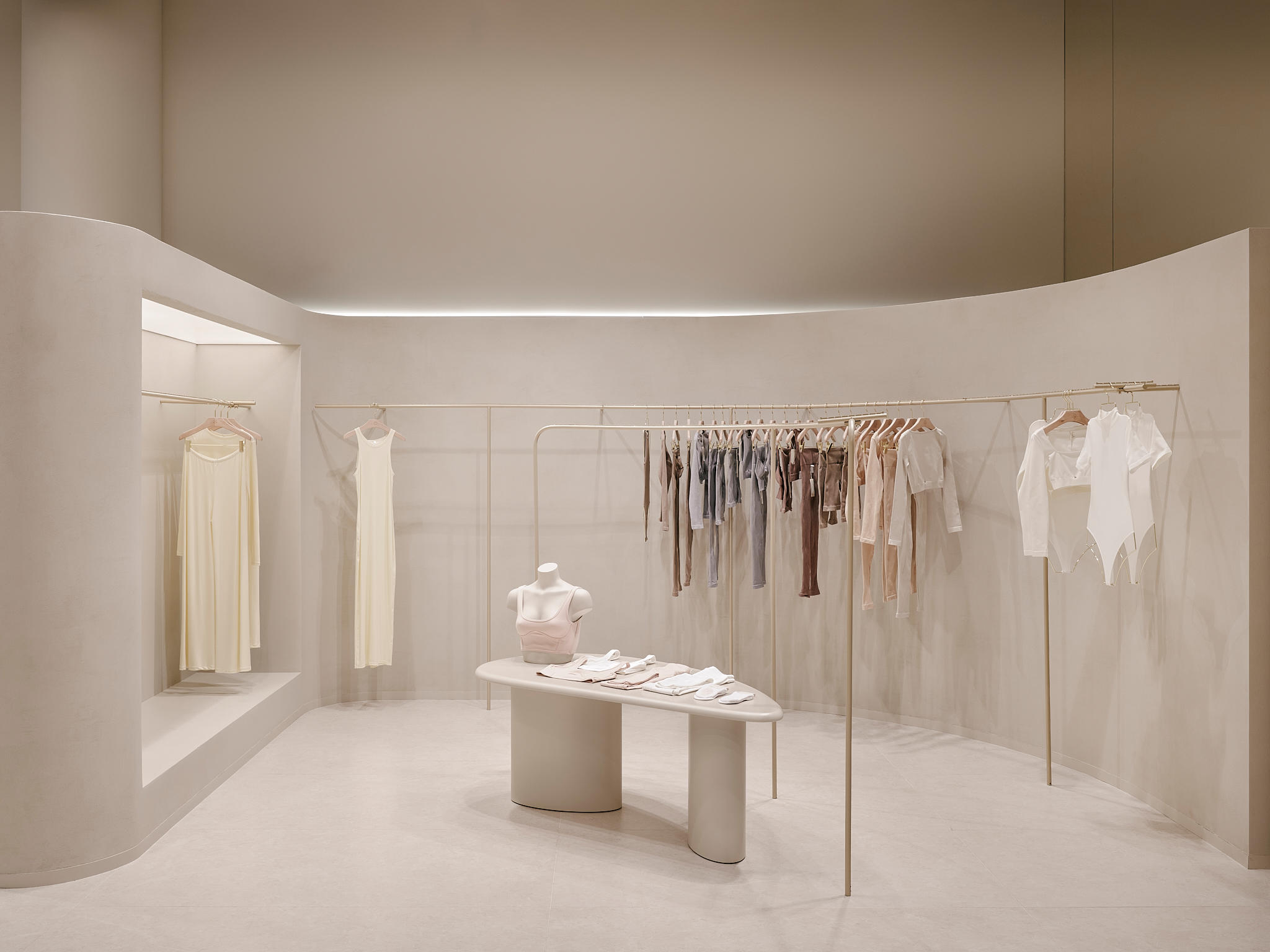
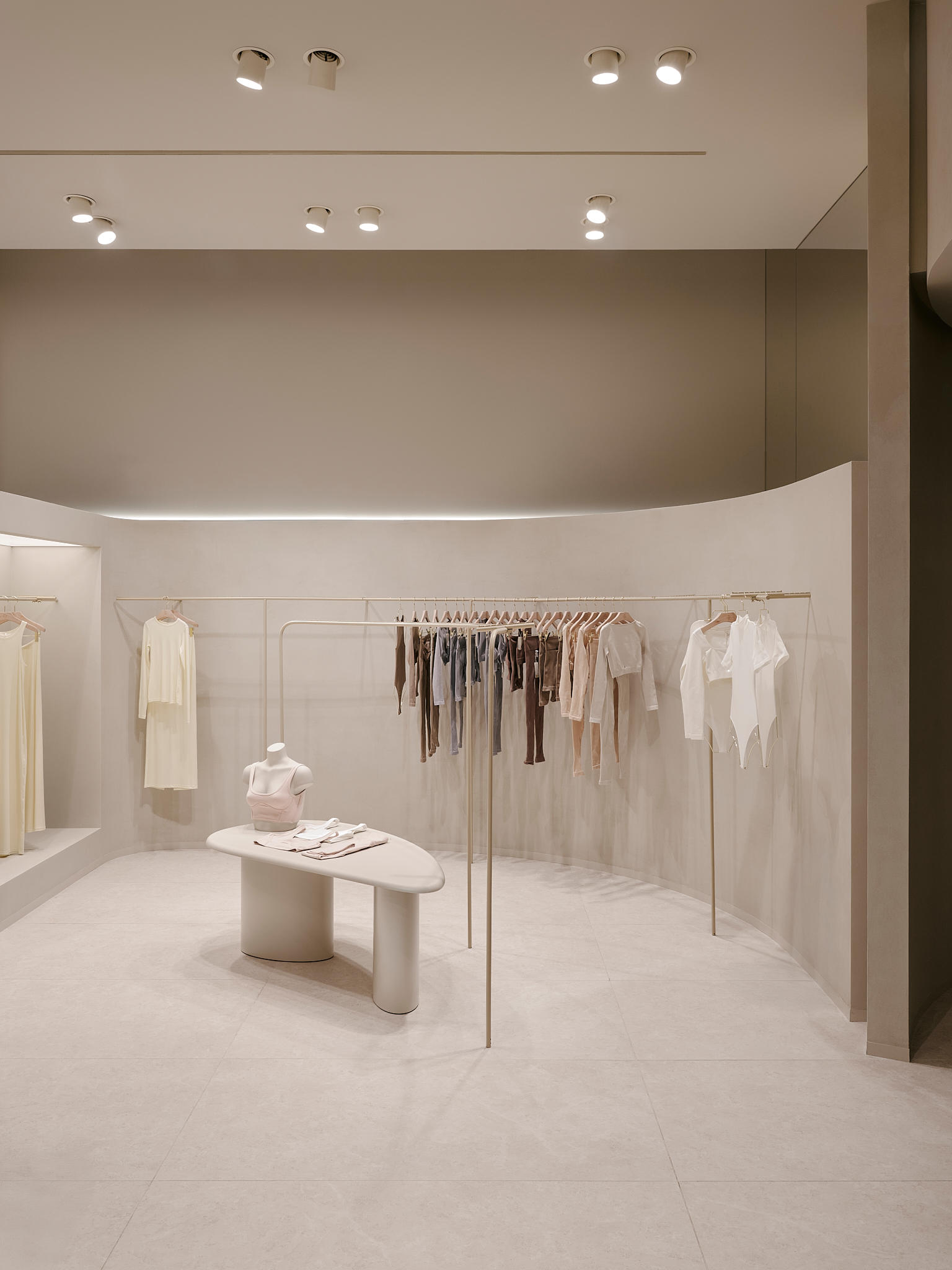
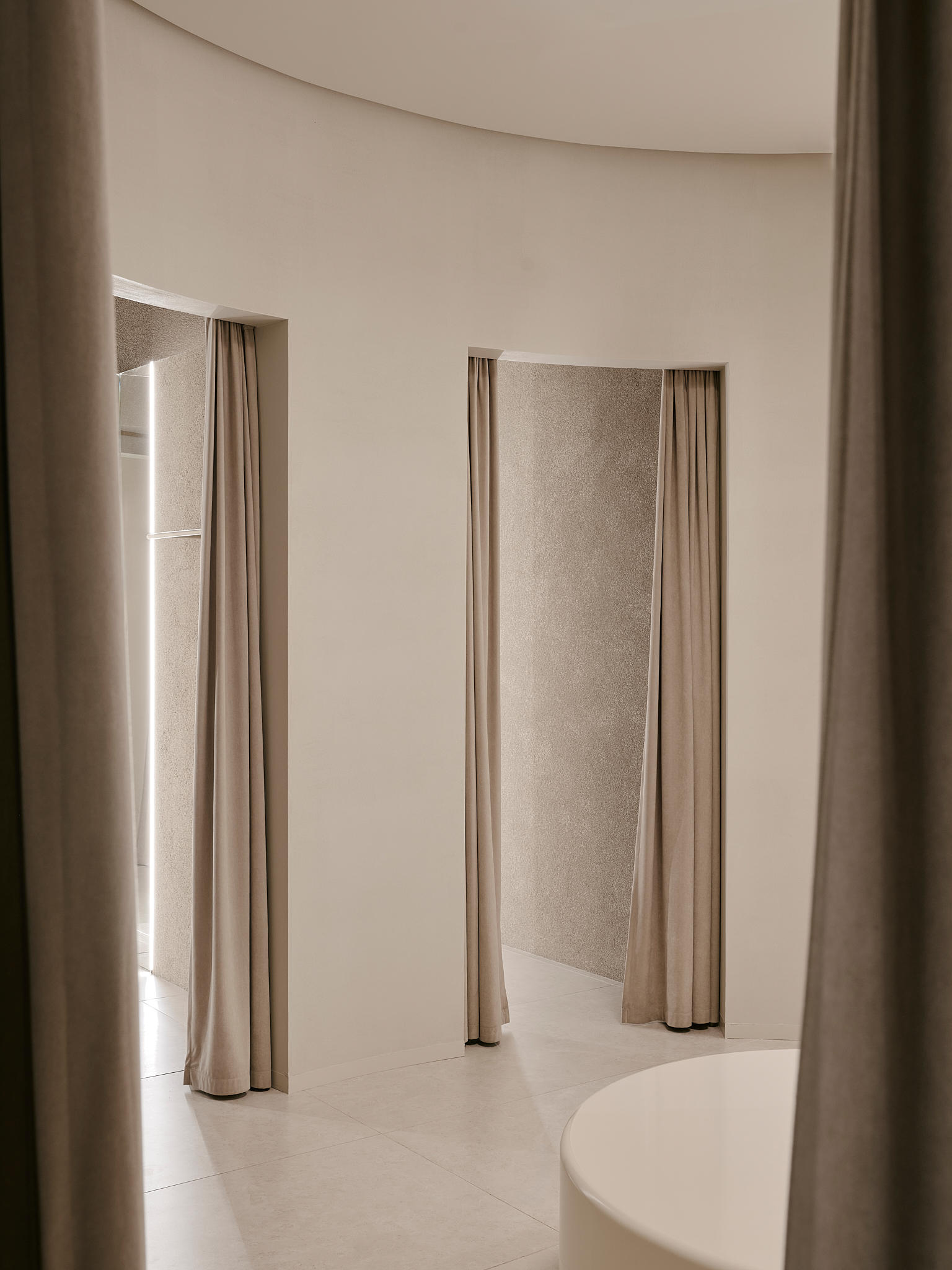
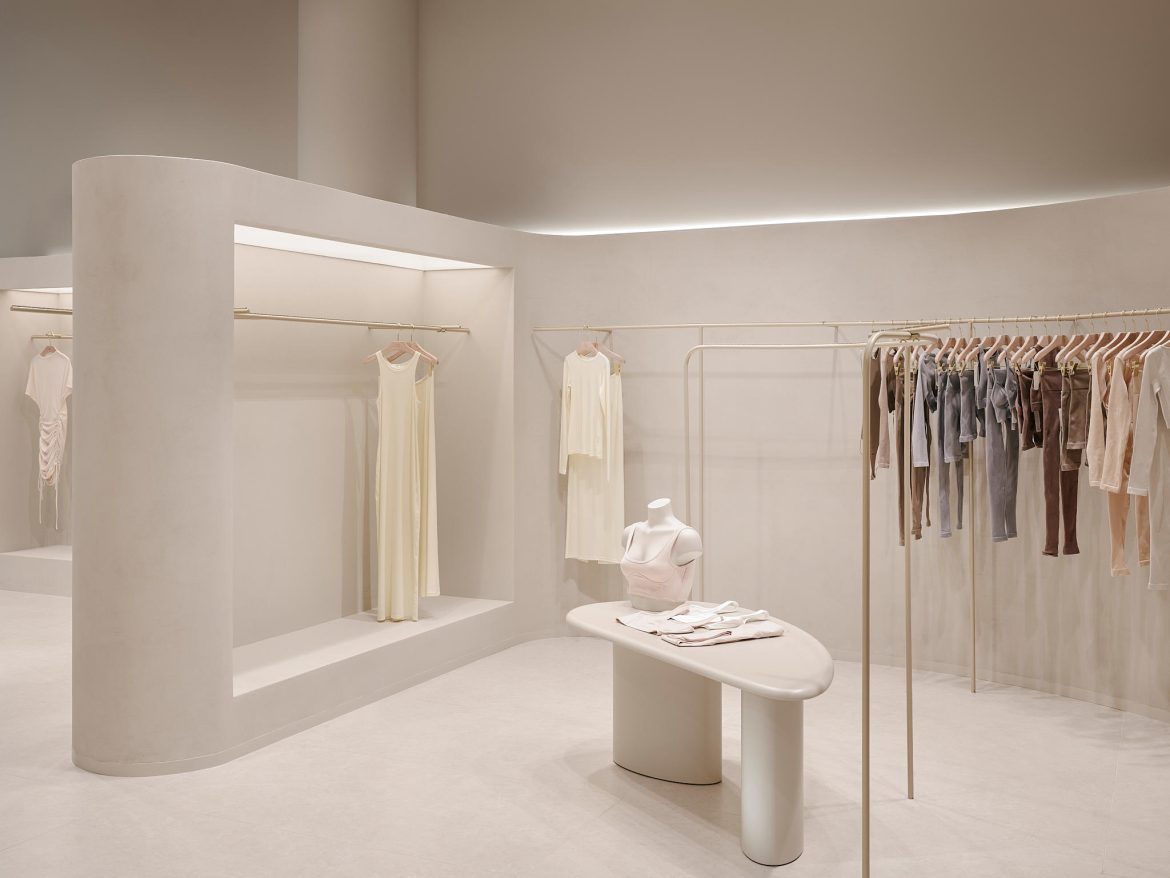
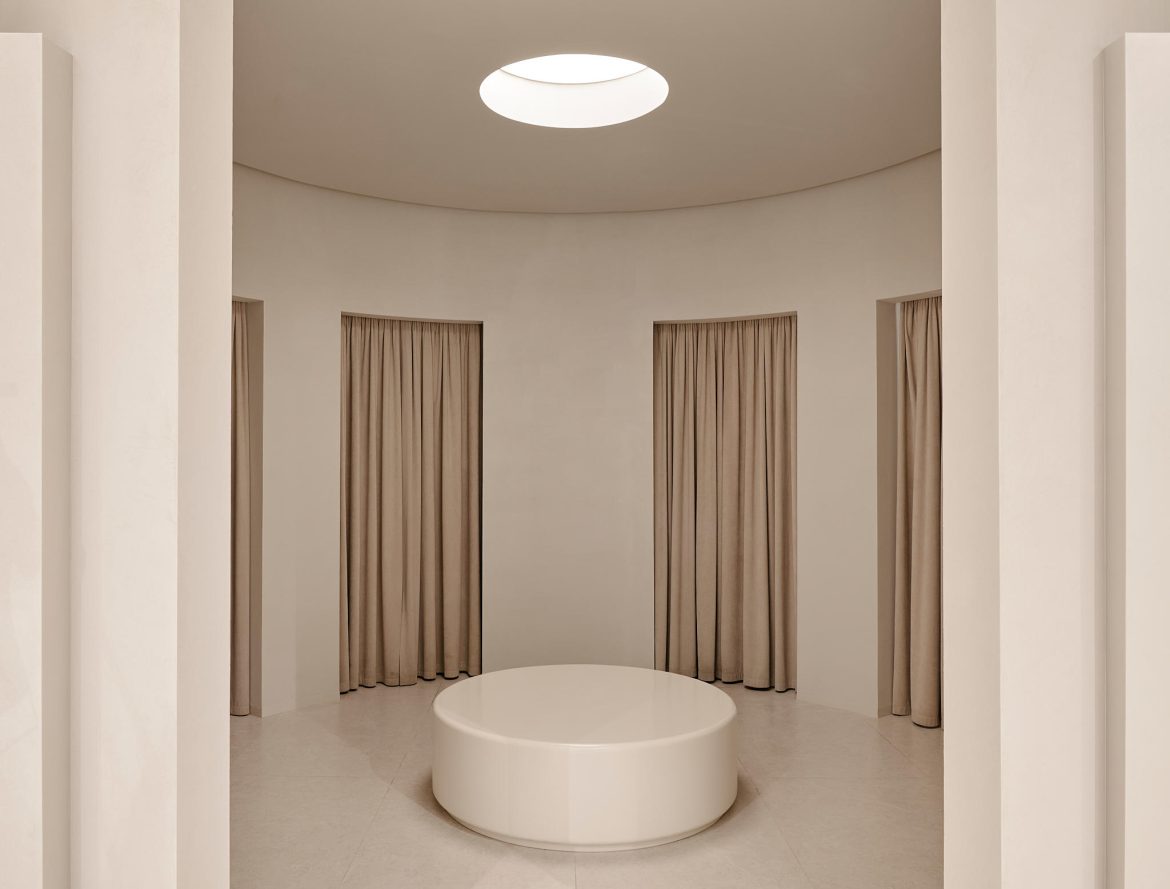
The central idea of the project was to reinterpret the brand’s visual vocabulary using core architectural categories: form, scale and light. The concept emerged from the interplay of soft, fluid plasticity and precise geometric lines, as well as from a deep interest in how a person perceives their own body within the interior. This approach led to the project’s signature element: a sculptural cylindrical fitting room that acts as a luminous altar and the emotional nucleus of the space. Around this piece, the entire store flows as a continuous sequence — from entrance to display zone to the fitting area — forming a clear, legible spatial narrative.
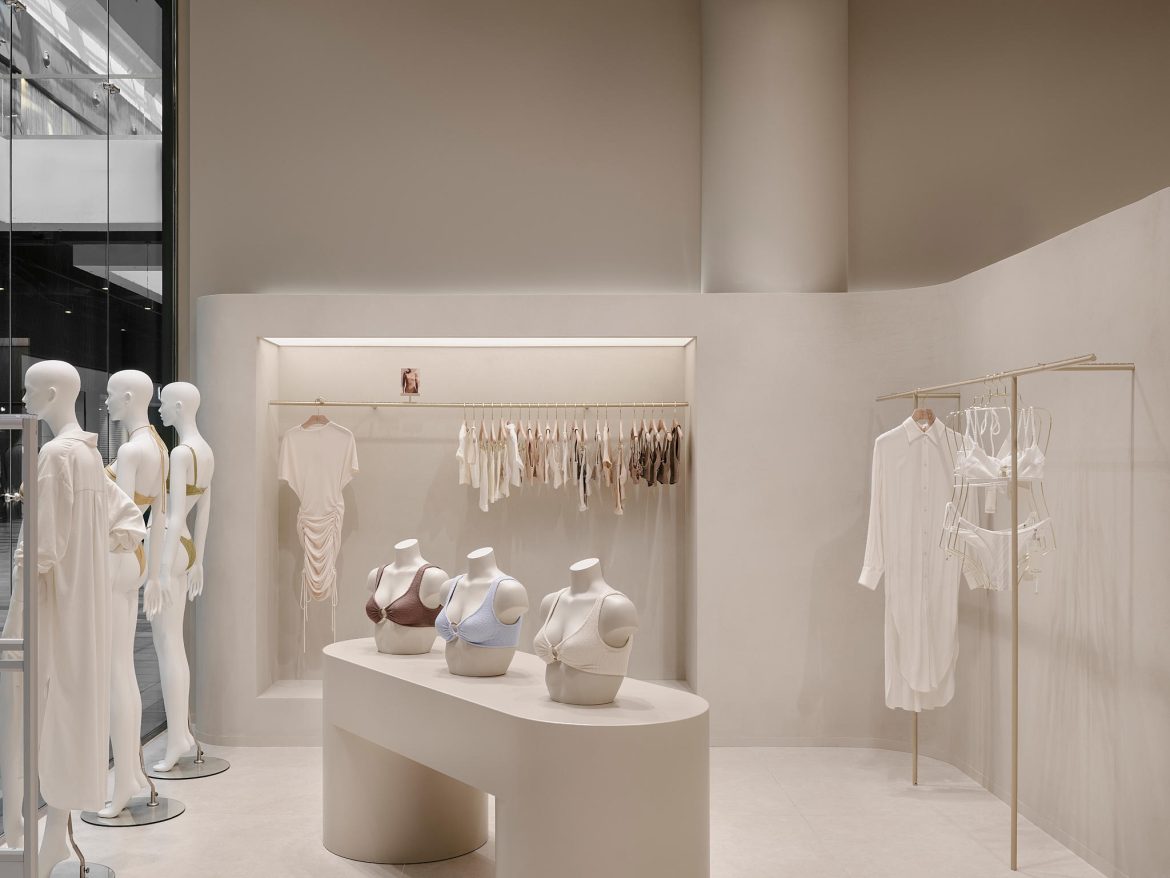
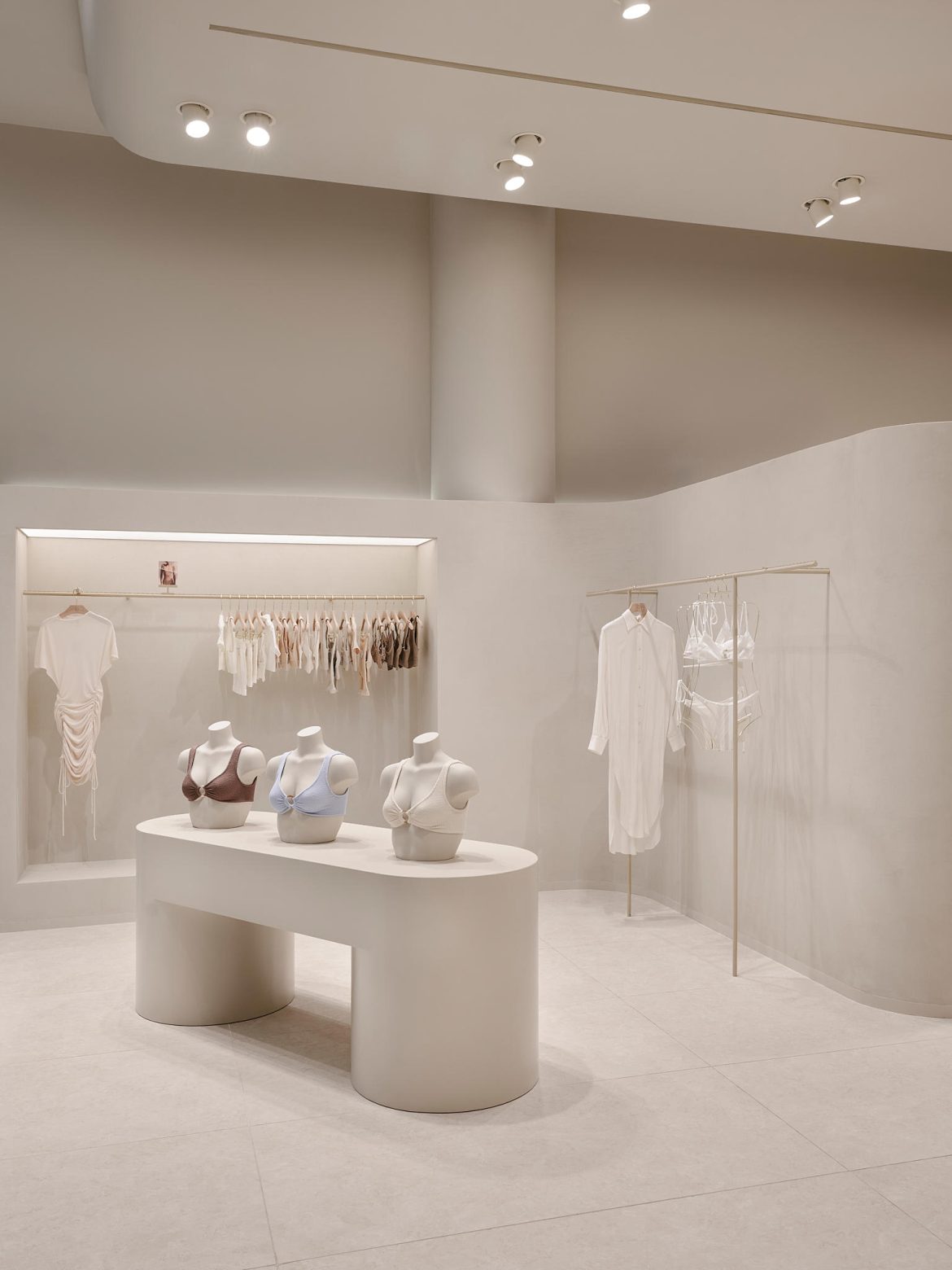
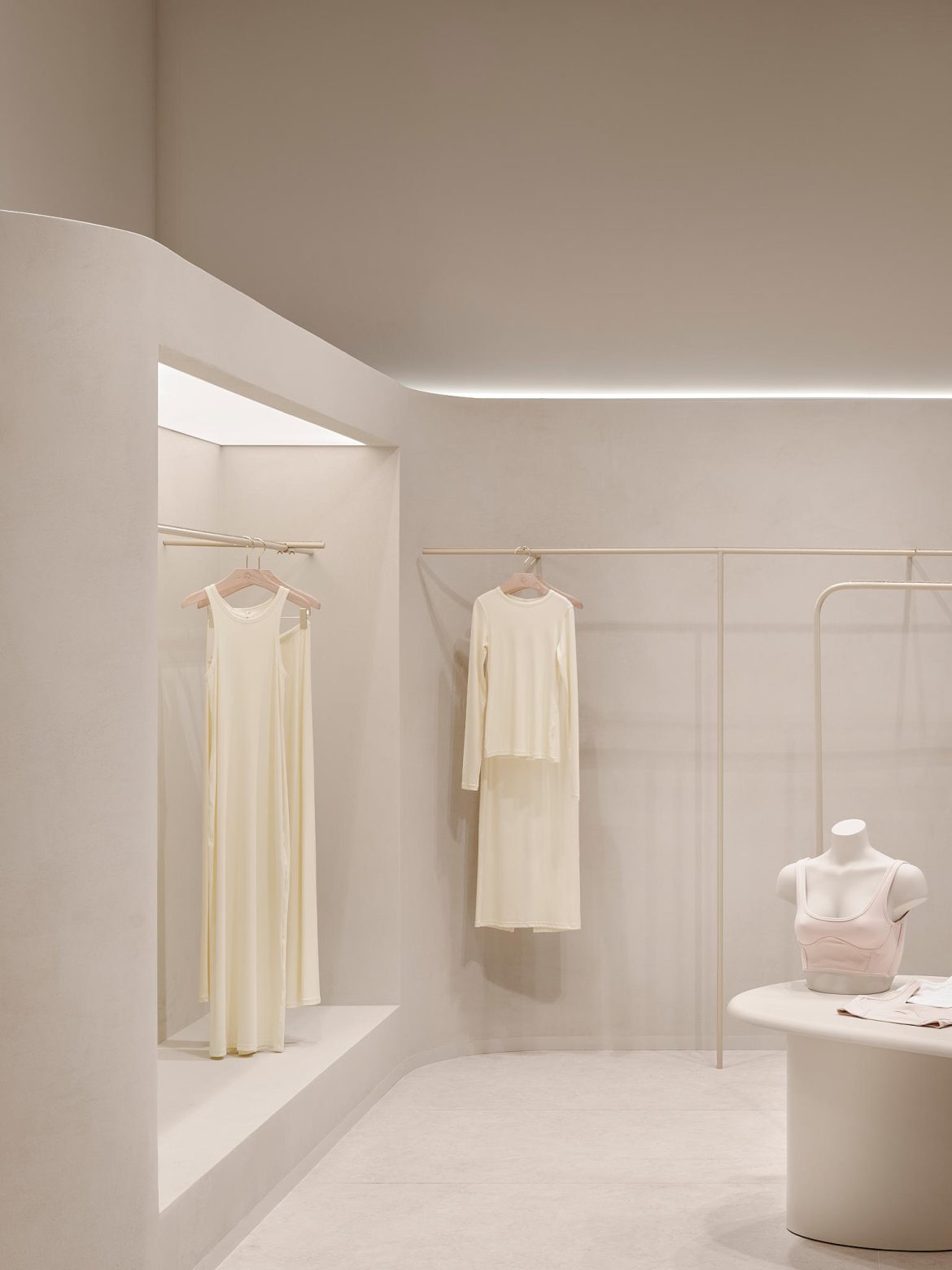
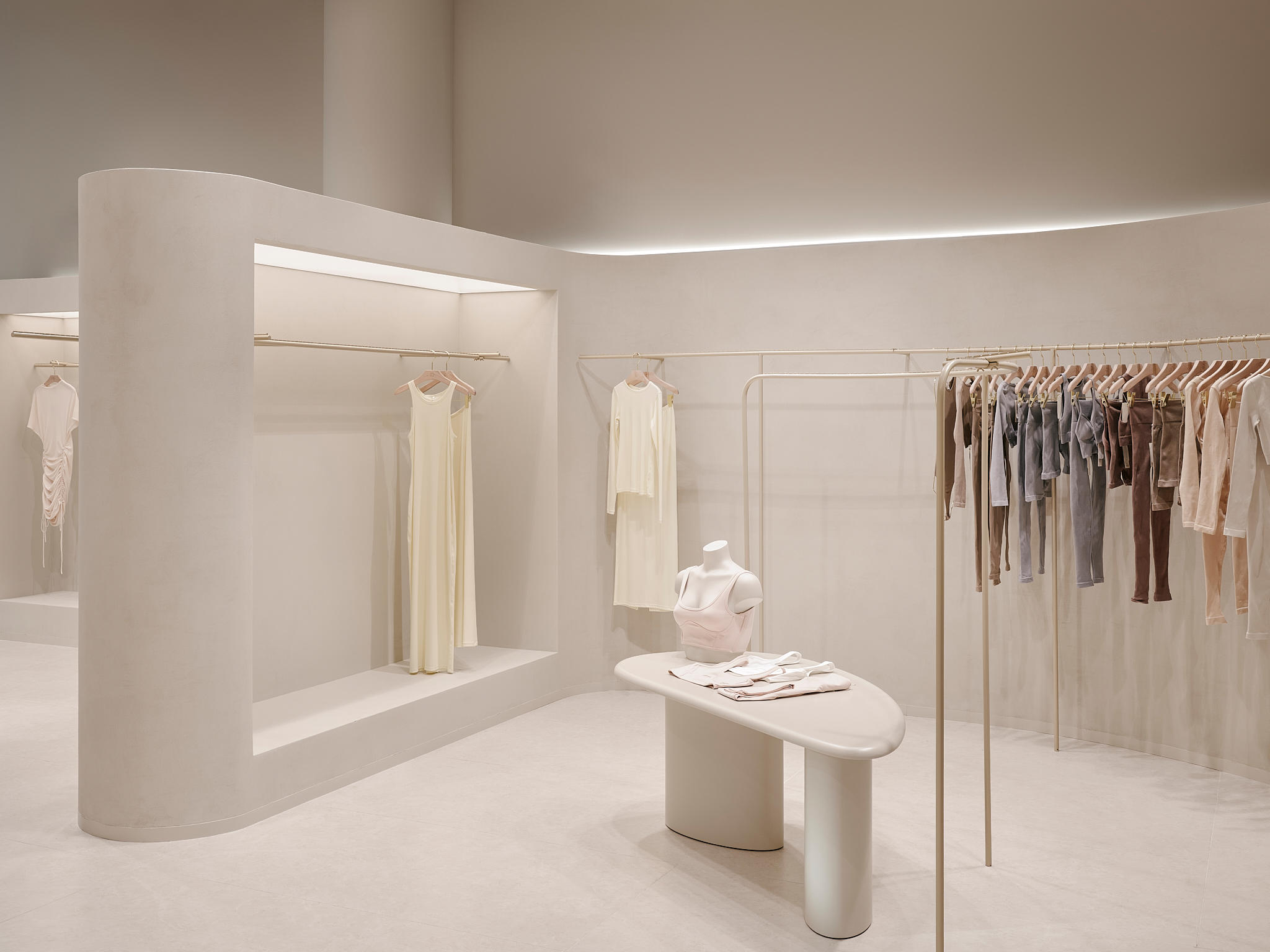
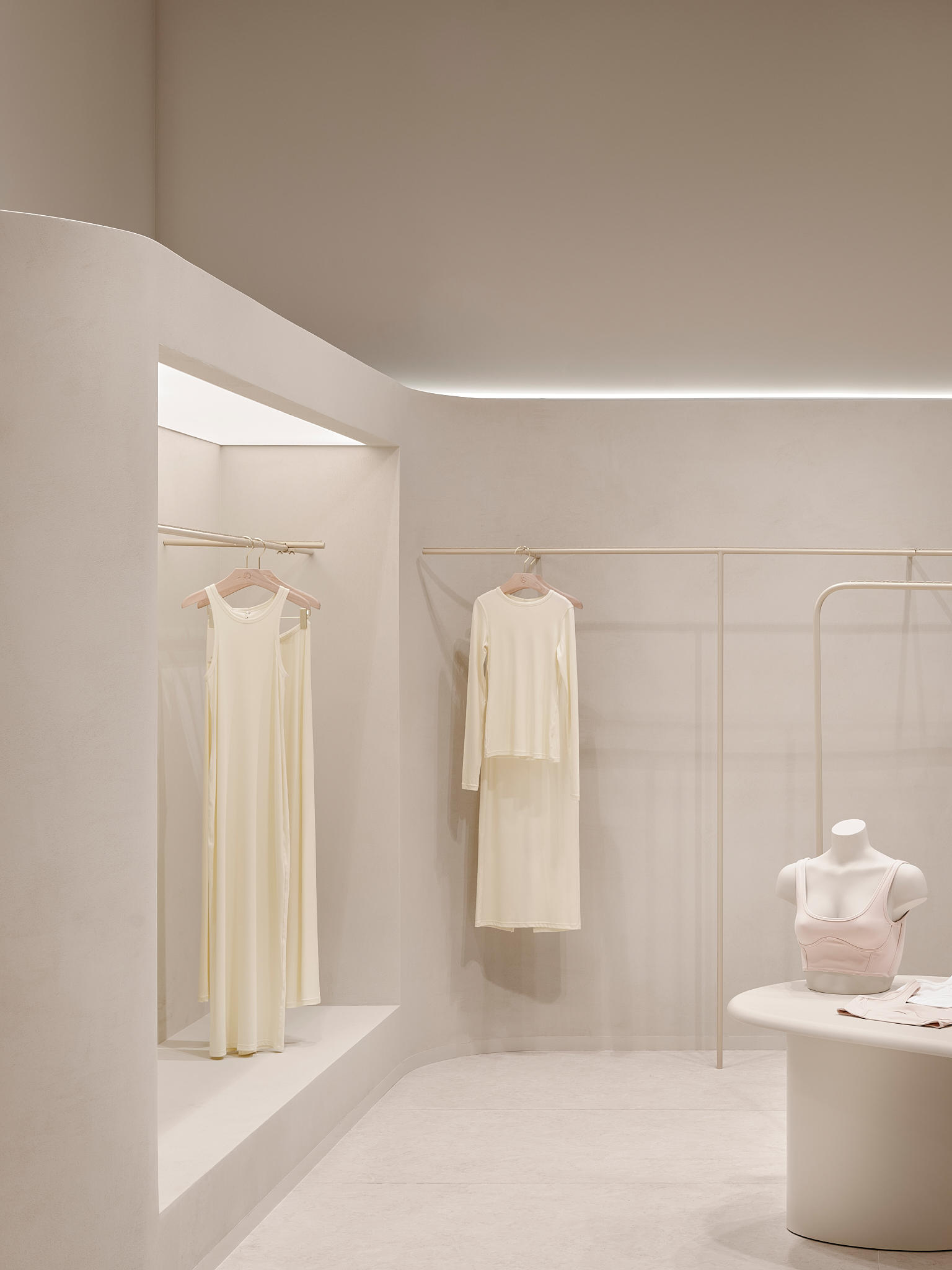
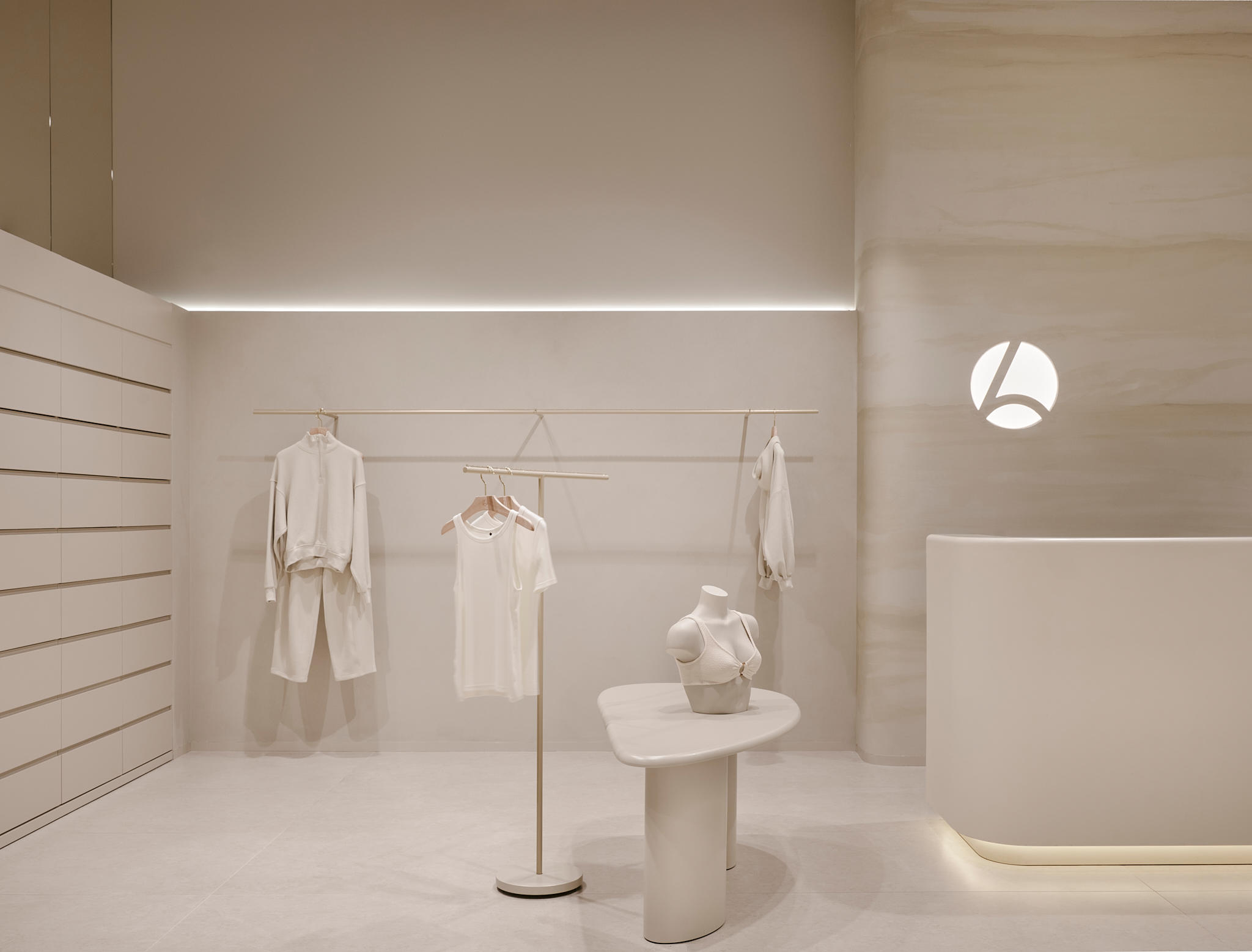
The stylistic direction can be described as tactile contemporary minimalism. Instead of relying on Instagram-friendly drama, bright accents or ornamental layers, the architects chose restraint, warmth and quiet confidence. For a lingerie brand, effectfulness is far less important than an atmosphere of intimacy, trust and bodily comfort. As a result, the interior is built from clean volumes, a monochromatic sand-toned palette, soft ambient light and a nuanced orchestration of reflections. The mood is calm, sensory and emotionally grounding.

YOU MIGHT ALSO LIKE
The road to the final solution involved several design iterations. Early options offered more neutral layouts, symmetrical compositions or stronger chromatic contrasts. While they worked on paper, none delivered the emotional shift the brand was anticipating. The cylindrical fitting room, however, instantly set the right tone. Once introduced, it became clear that this sculptural figure could anchor not only this store, but potentially future locations within the network.
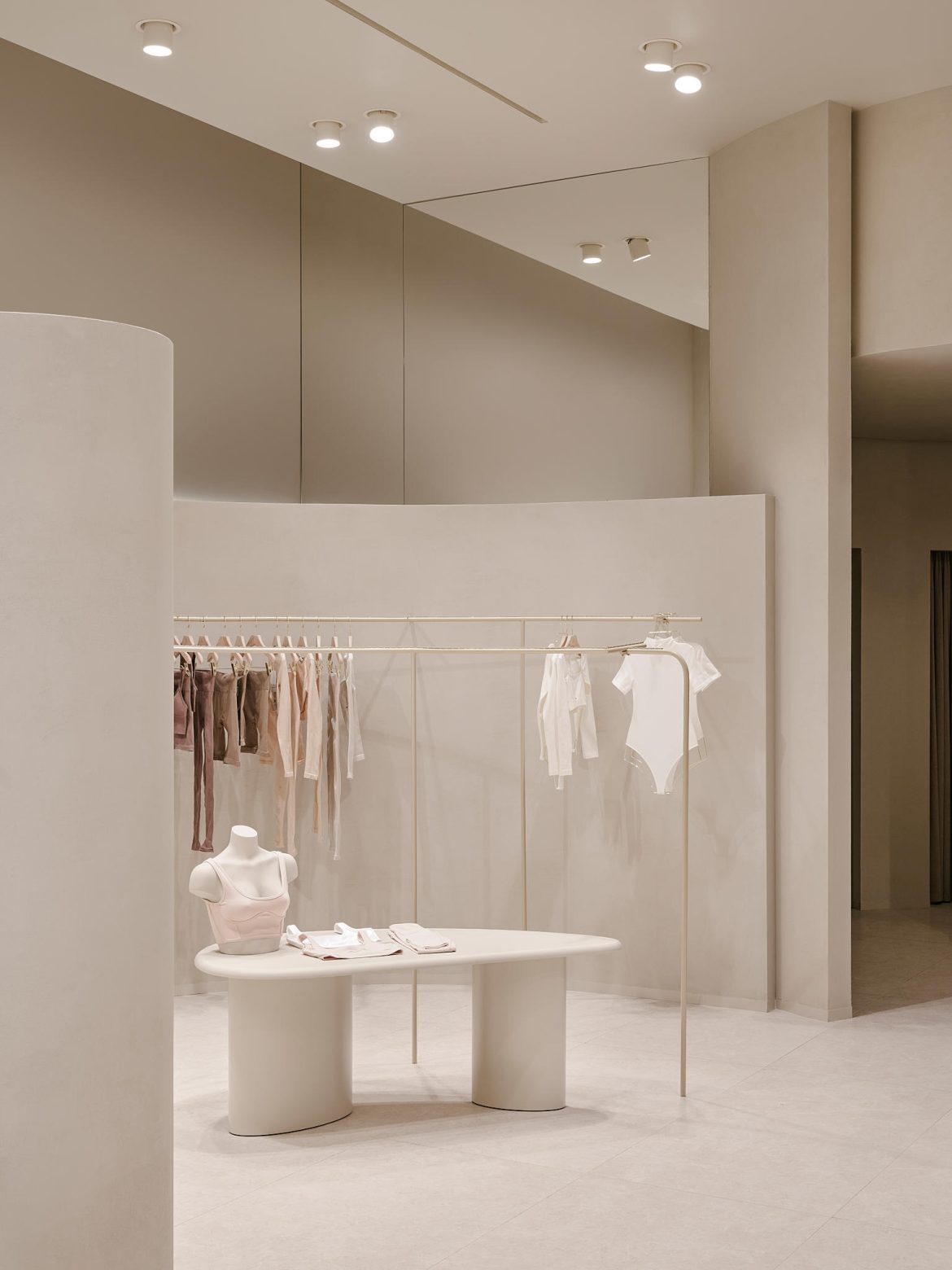
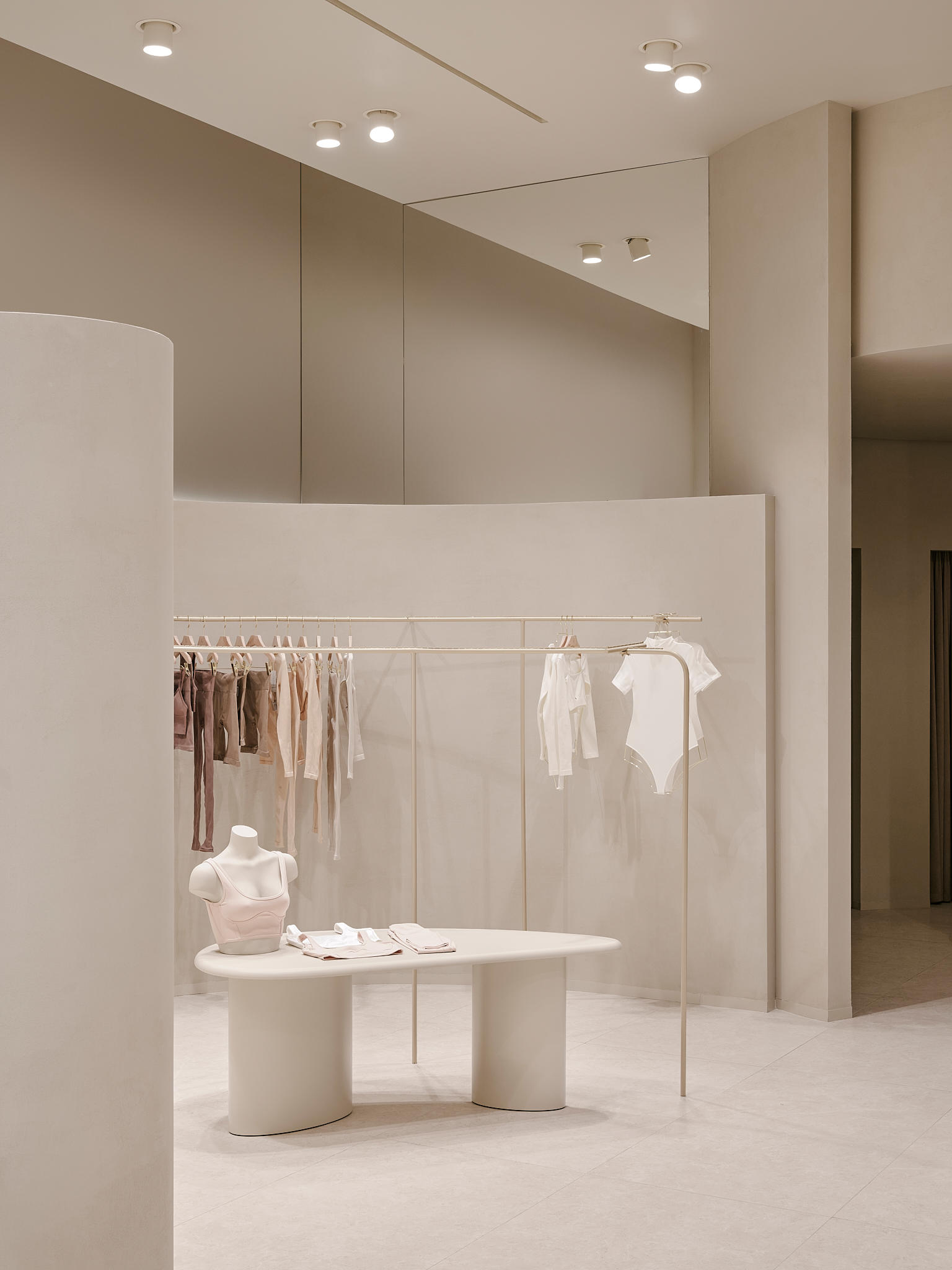
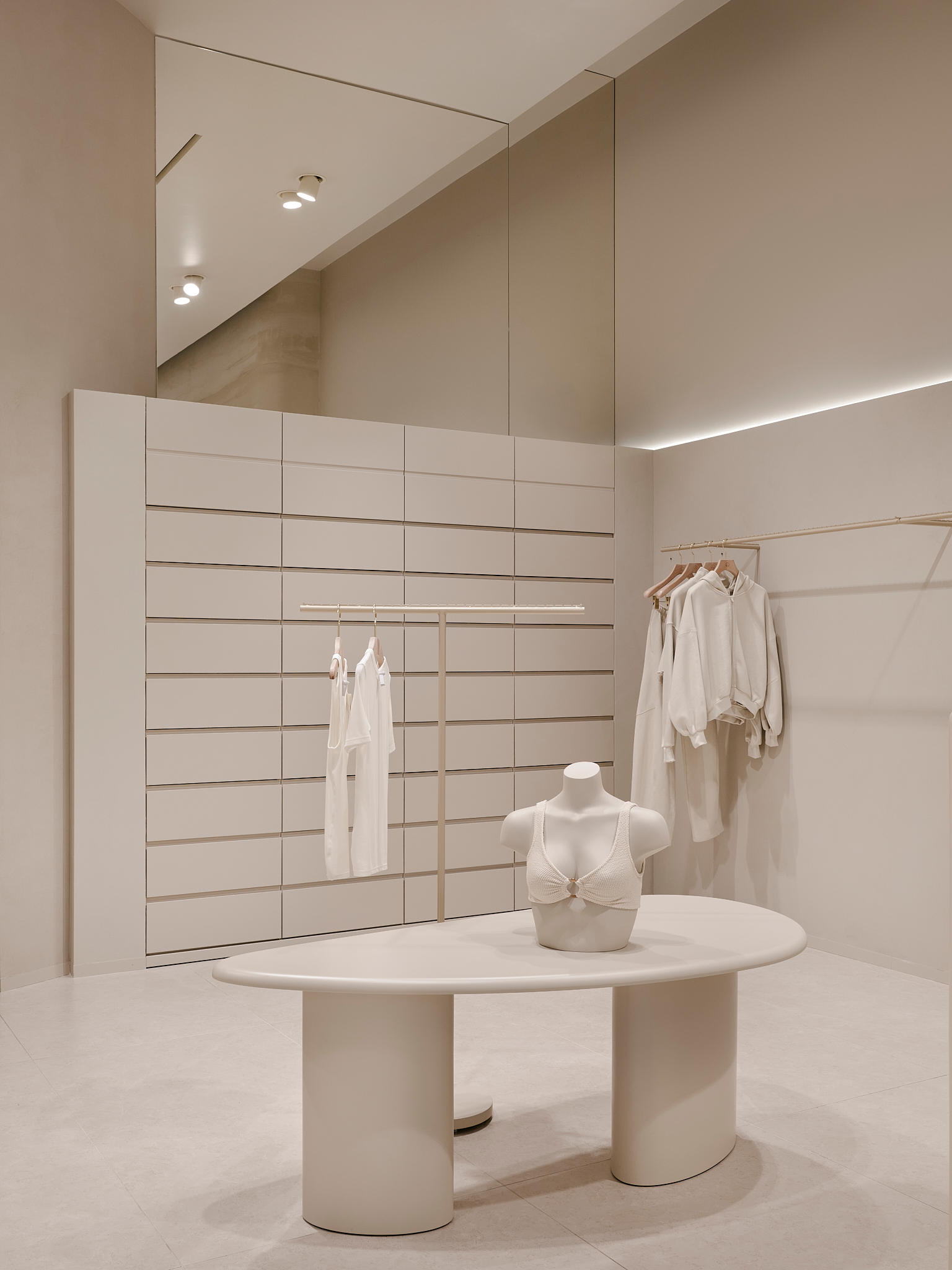
The project presented several technical challenges, particularly due to the elongated footprint of the unit, the generous ceiling height and the requirement to integrate existing engineering systems without compromising aesthetics. Instead of demolishing the raw ceiling, the architects overlayed it with a system of mesh structures and mirrored panels, visually lifting and gathering the space. Lighting in the fitting rooms was another delicate task: it had to flatter skin tones, preserve the true color of fabrics and remain visually expressive. Numerous on-site tests and collaborative adjustments with the client led to a lighting scheme that meets these demands.
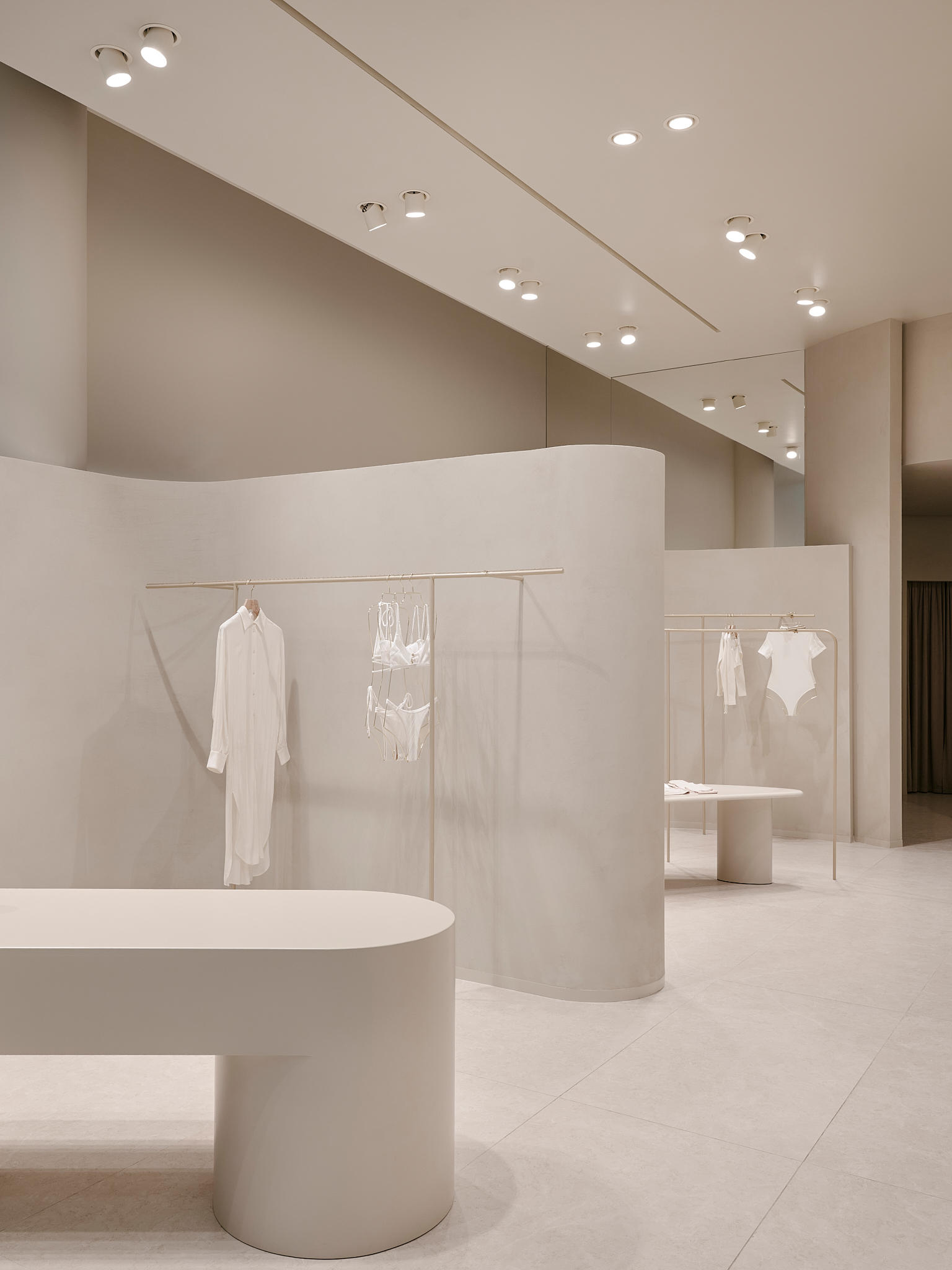
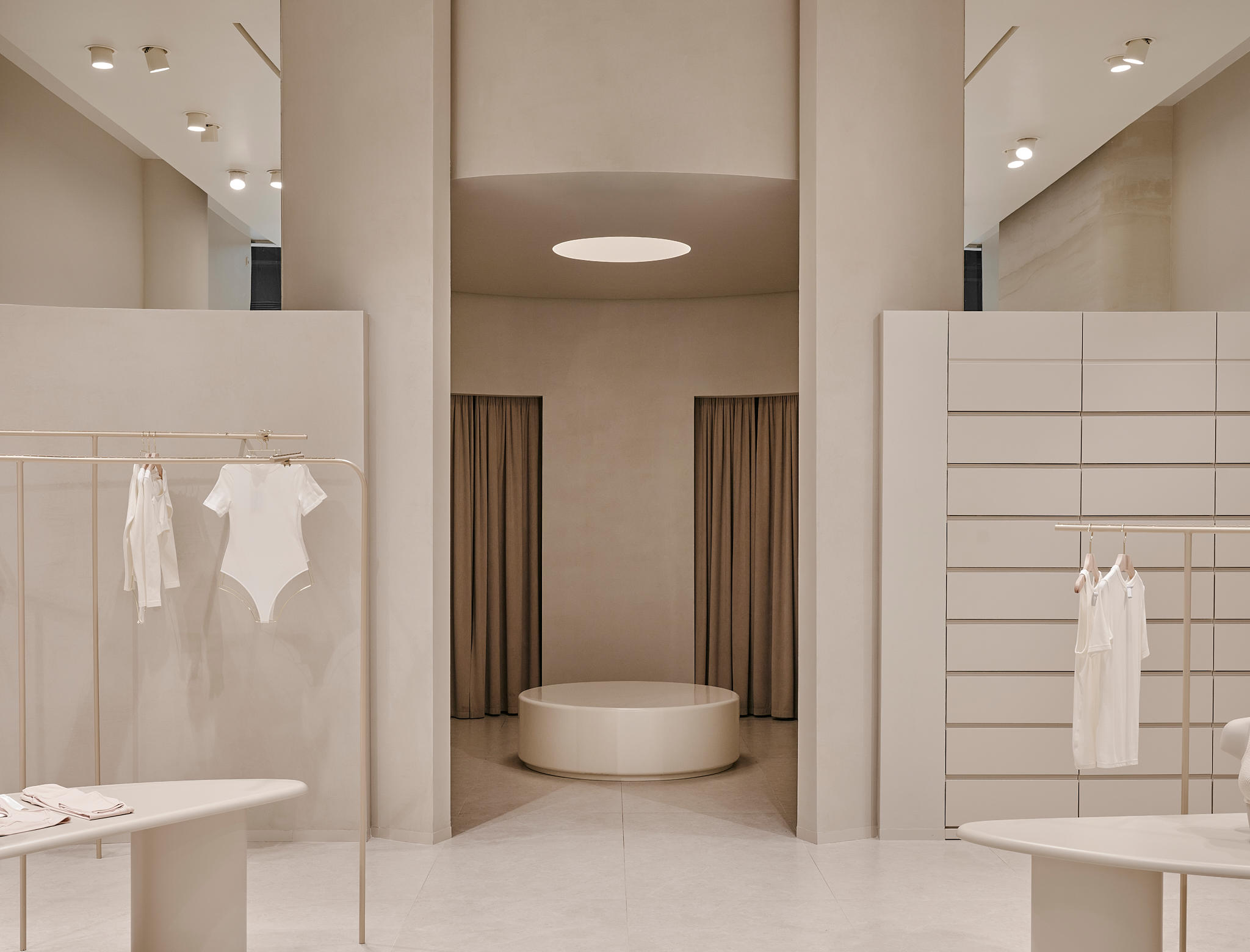
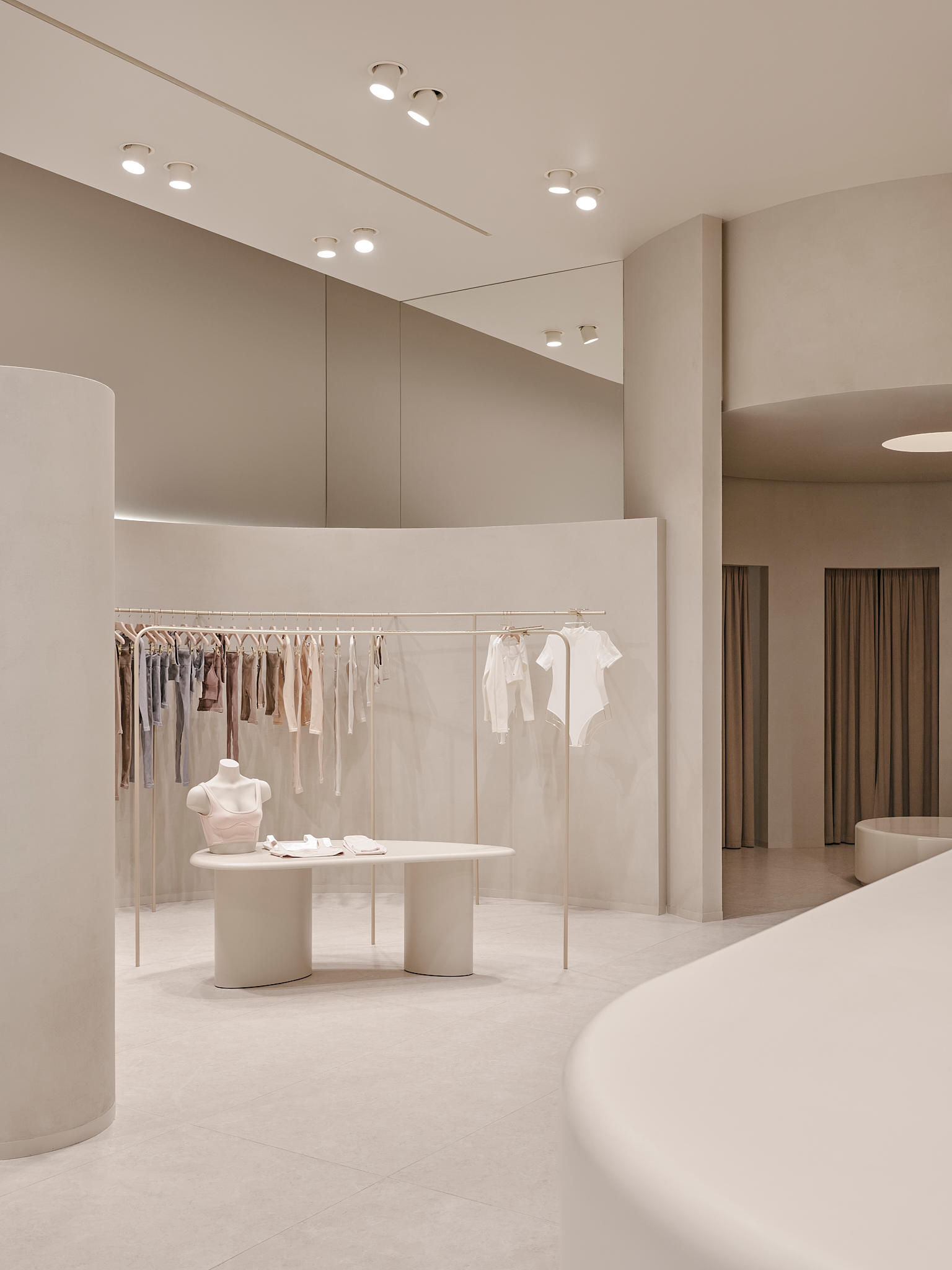
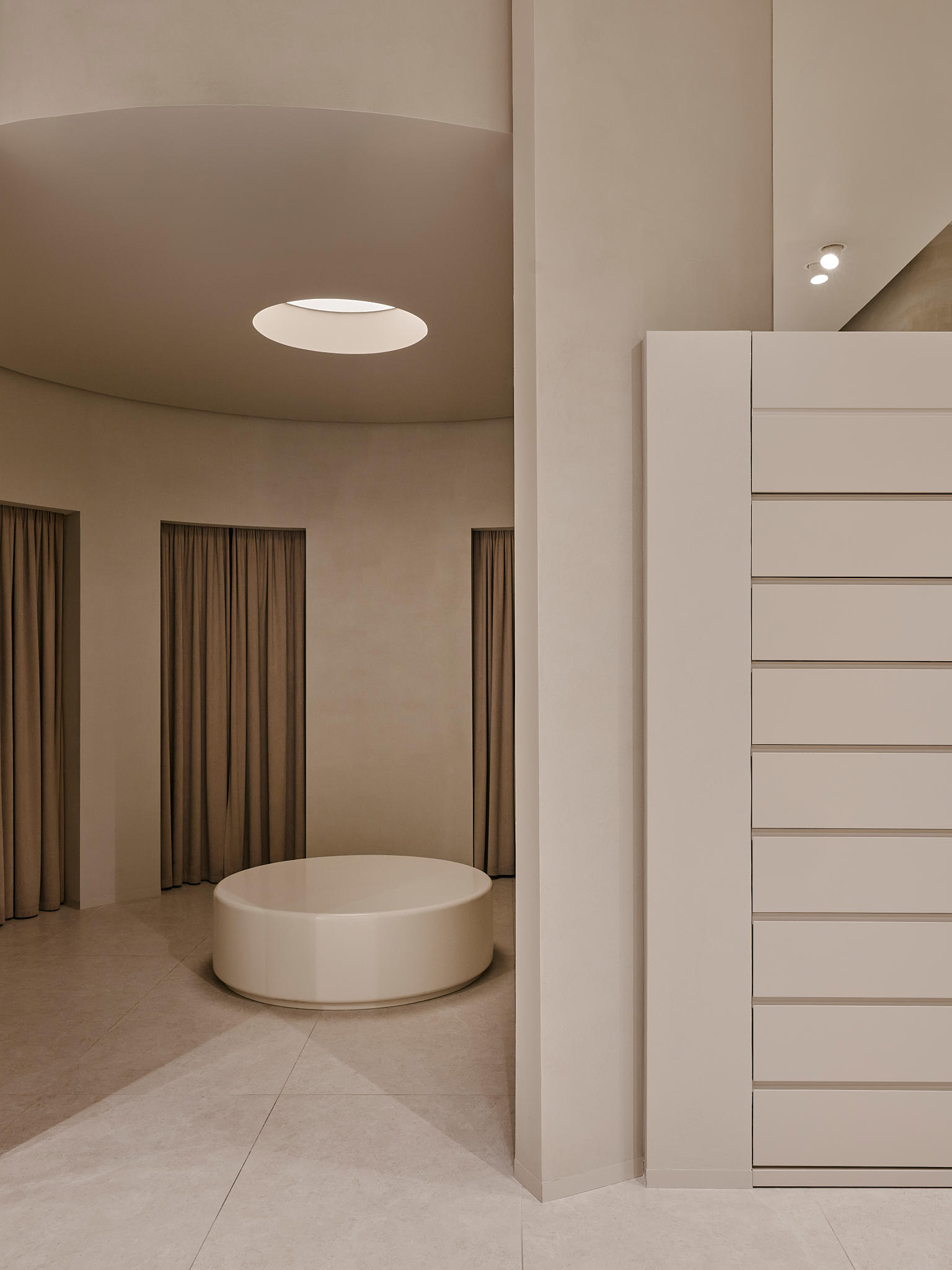
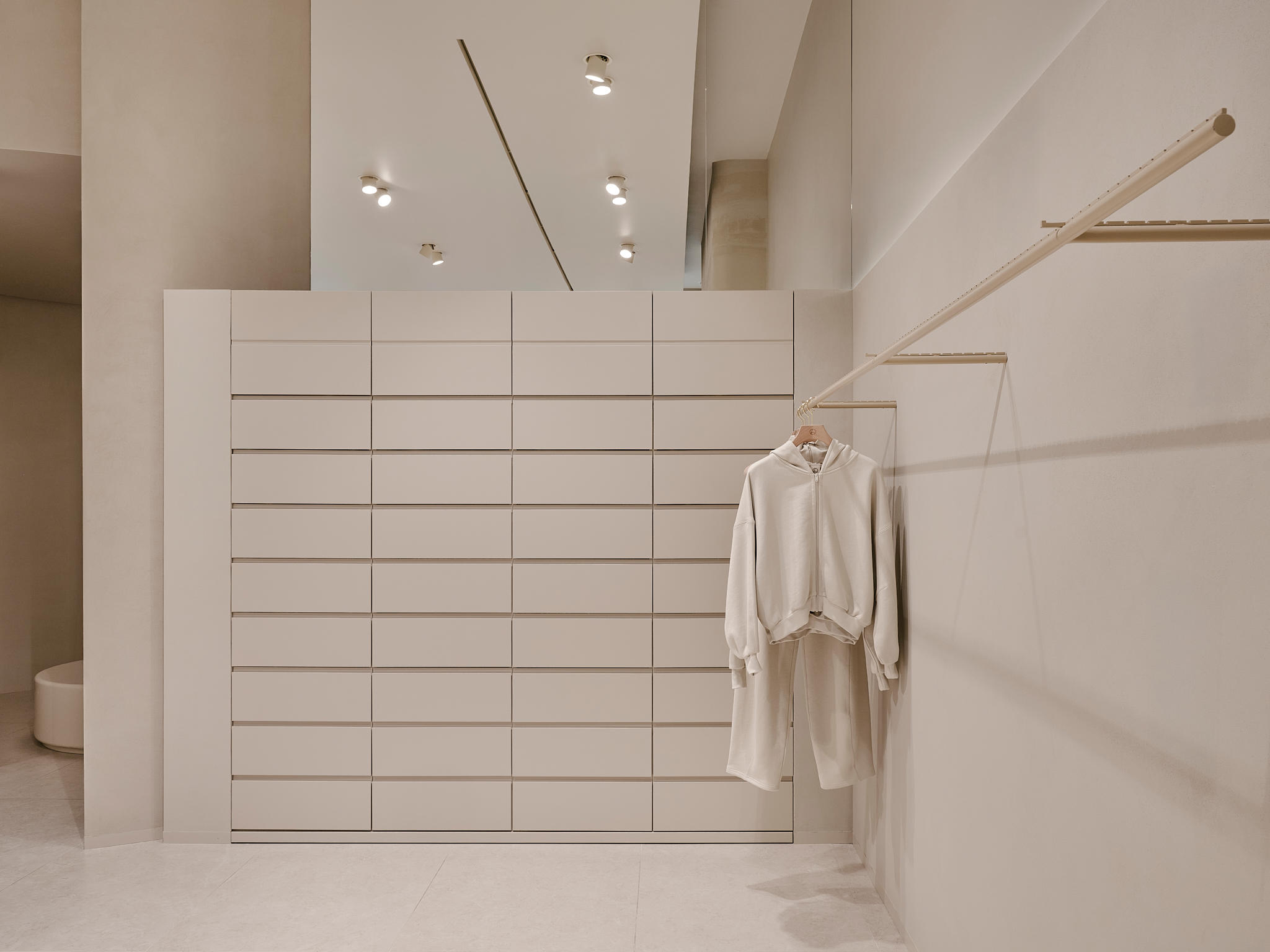
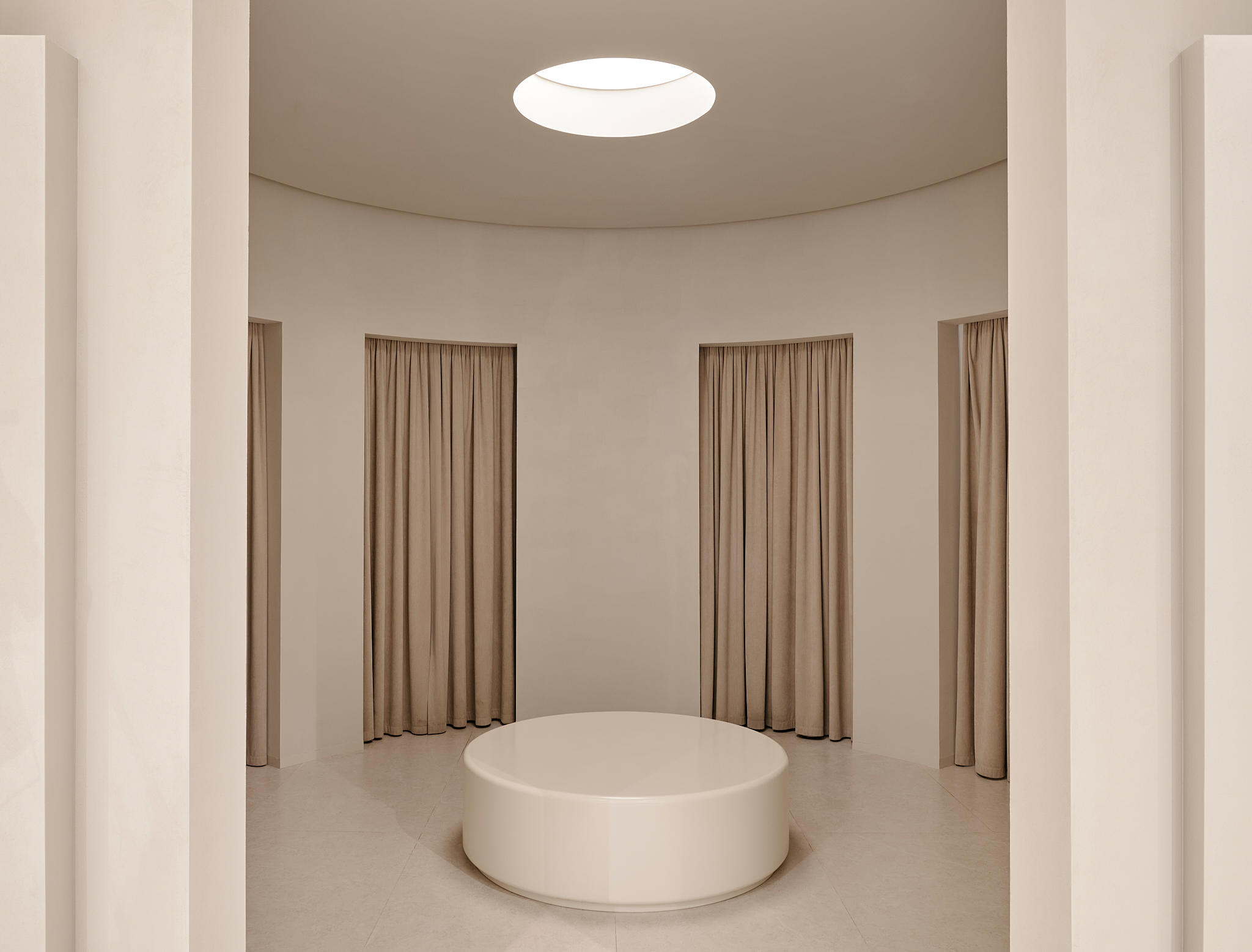
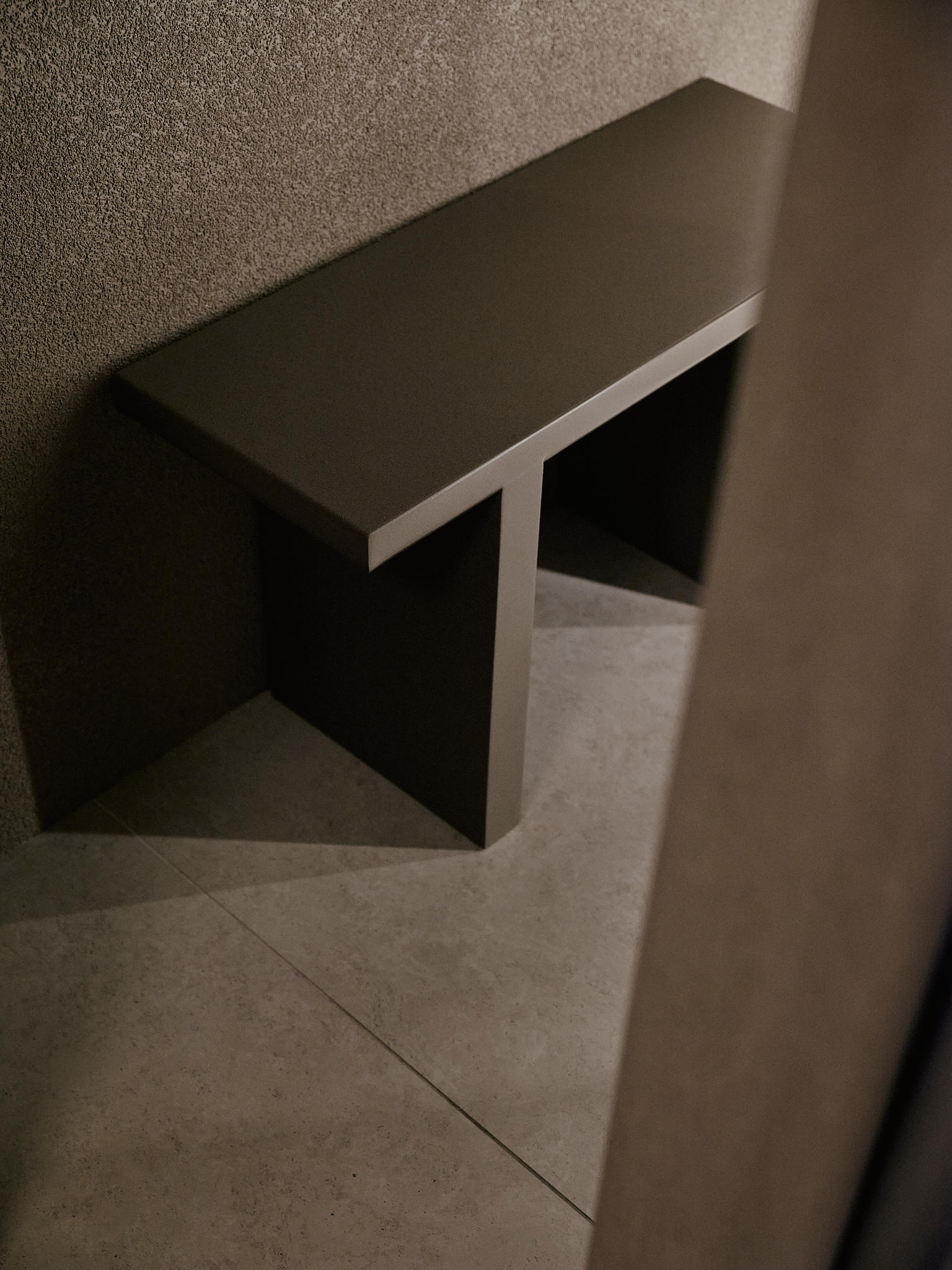
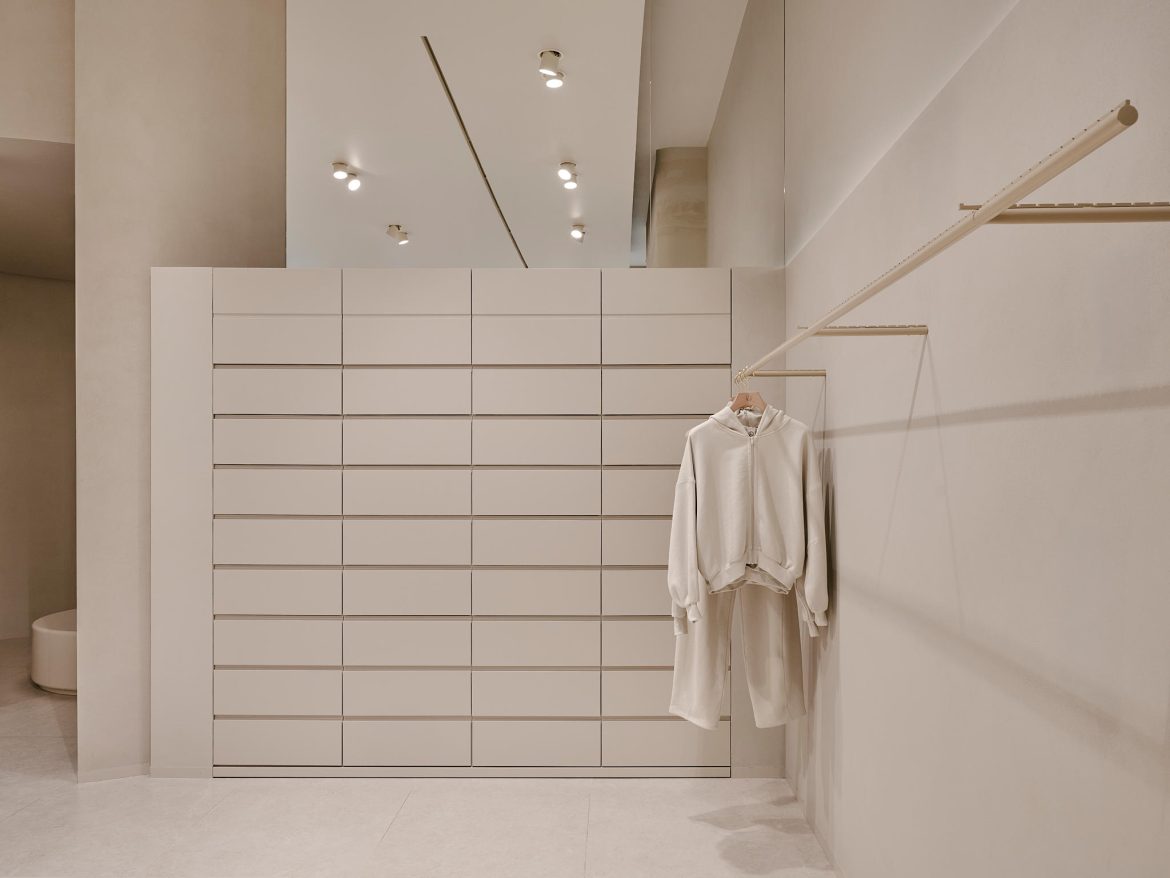
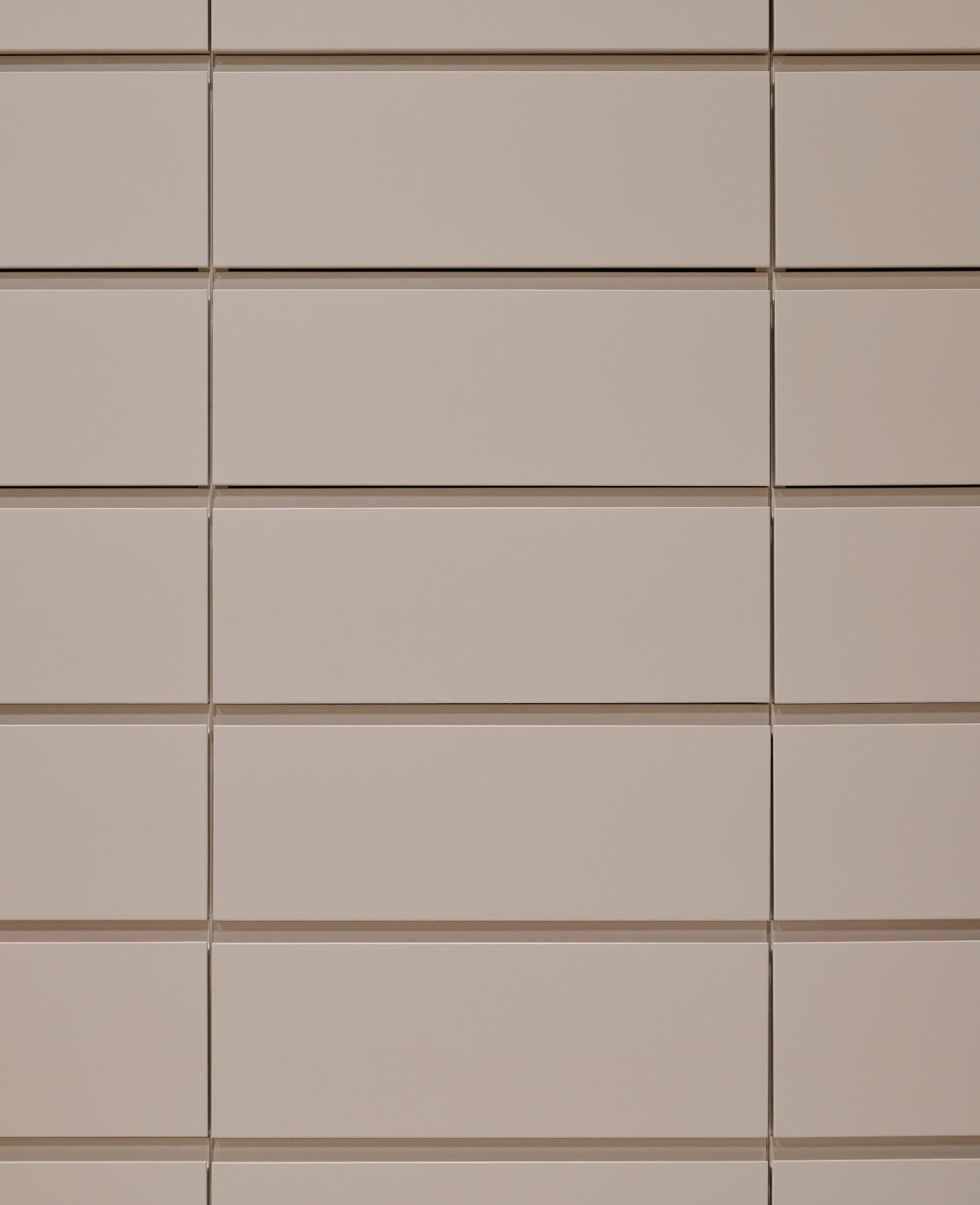
Materials were chosen for their ability to support the idea of bodily softness while remaining neutral to the shifting collections. The monochrome sand plaster evokes skin and warm natural textures, while lightweight metal rails reference earlier Lavarice interiors and give merchandise an airy presence. Matte finishes prevent harsh reflections and allow light to dissolve gently across surfaces. All furniture and retail equipment were custom-designed and fabricated according to the architects’ drawings, ensuring a cohesive, finely tuned environment.
The project became a laboratory for exploring how architecture can communicate through emotional states rather than decorative tools. Lavarice at Salaris deepened the bureau’s understanding of light, bodily perception and the architectural expression of brand values — transforming a commercial interior into a space of quiet resonance and respectful intimacy.