Project name: Tempus- Watch Store
Design firm: Sinitsa Buro
Chief Architect: Anastasia Kolchina
Location: Moscow
Photo credit: Sinitsa Buro
Area: 41 m2
Year: 2026
Project description from design firms Sinitsa Buro
The Tempus watch store project was a development of the brand’s previously developed platform, created jointly with the participation of marketer Vasily Ismanov. Even at the stage of concept formation, the brand abandoned the traditional perception of watches as the only status object. Instead, a new paradigm was proposed: a watch as an accessory reflecting mood, context, and lifestyle.
Initially, the concept was developed for a larger space, but after a while the customer chose a room on Novokuznetsk Street — compact, with different conditions and updated requirements. One of the key changes was the appearance of a service function: an area where you can adjust the strap or perform minor repairs. This required adapting the original idea and integrating all the elements more closely.
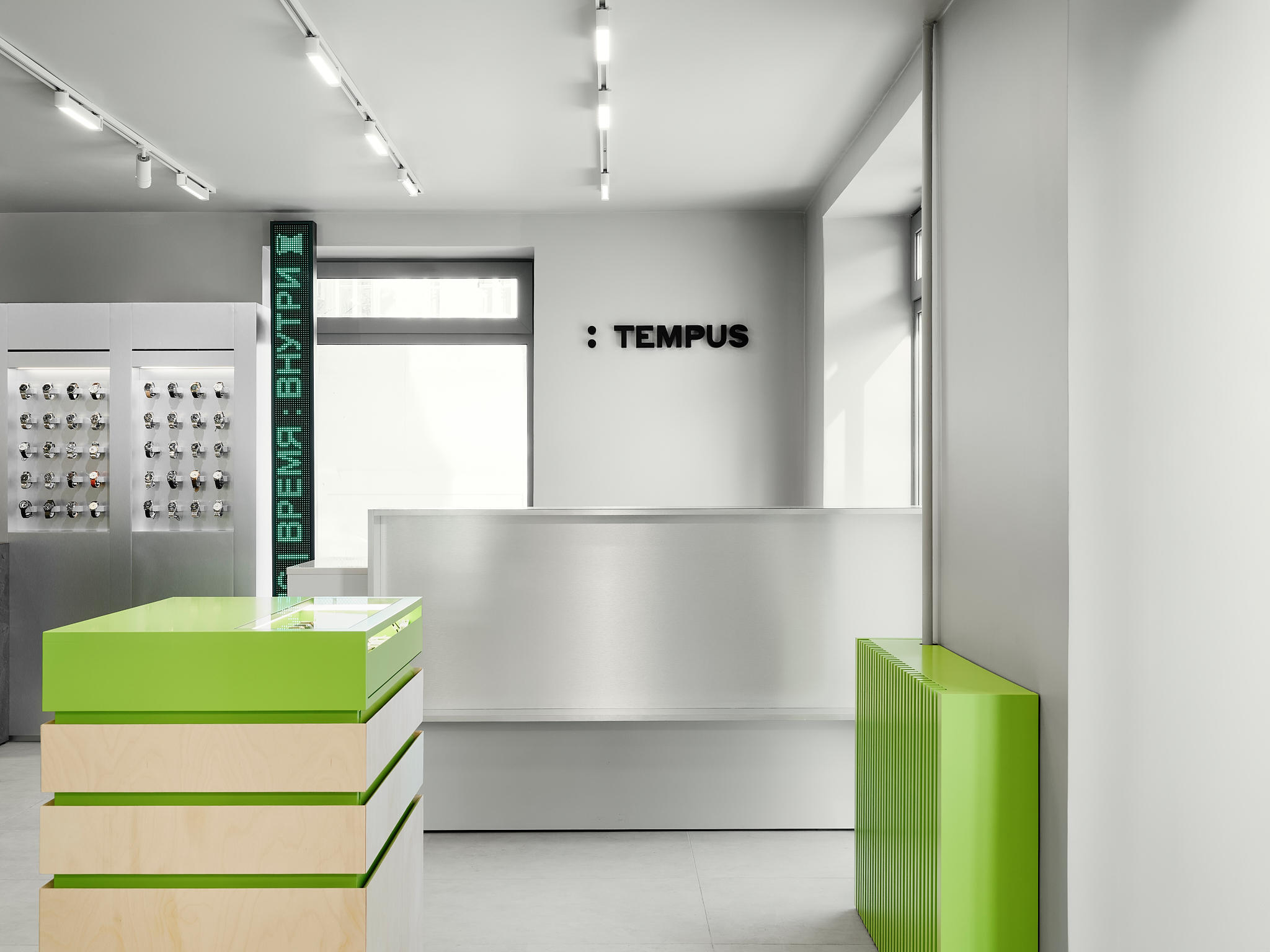
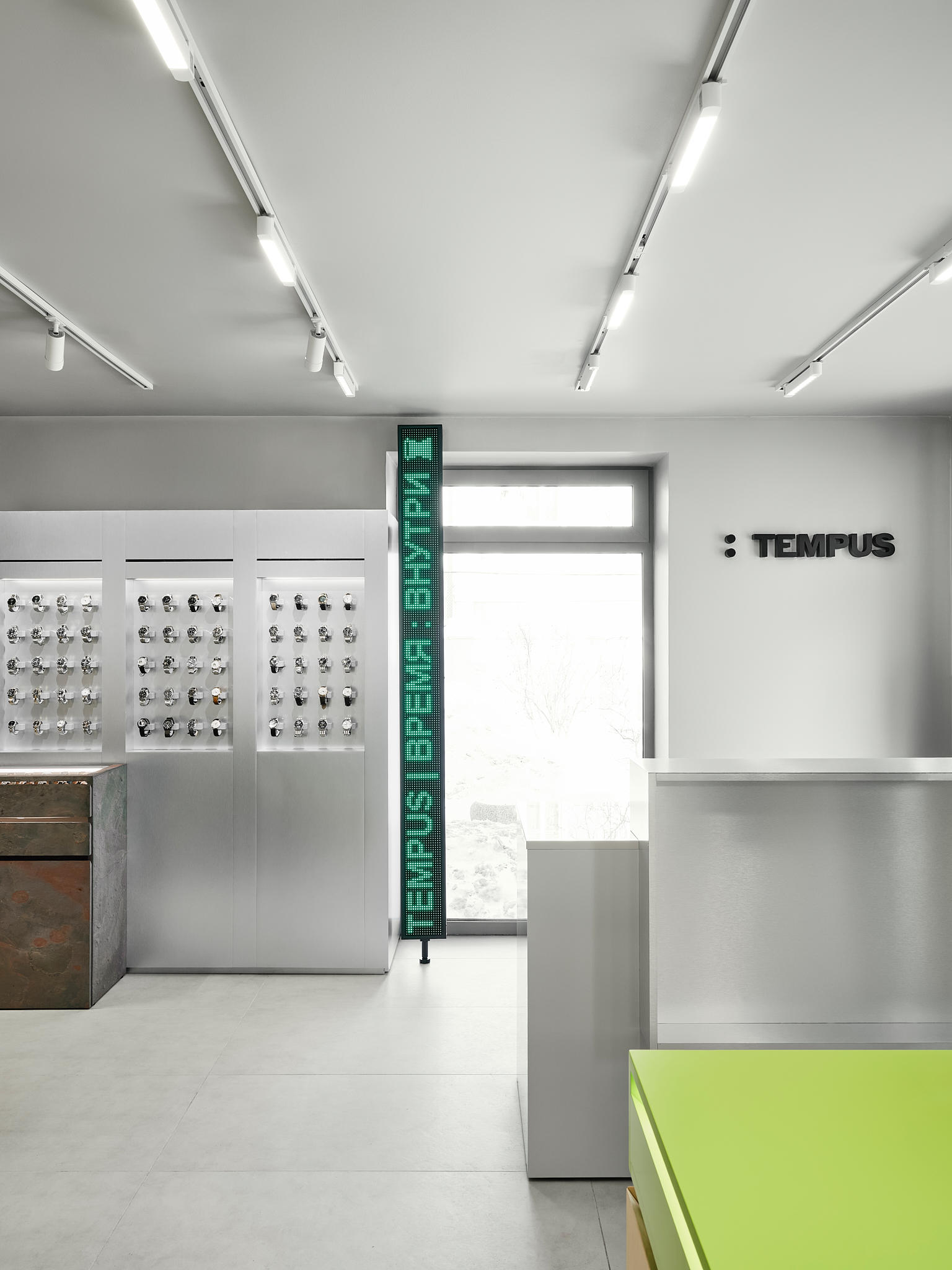
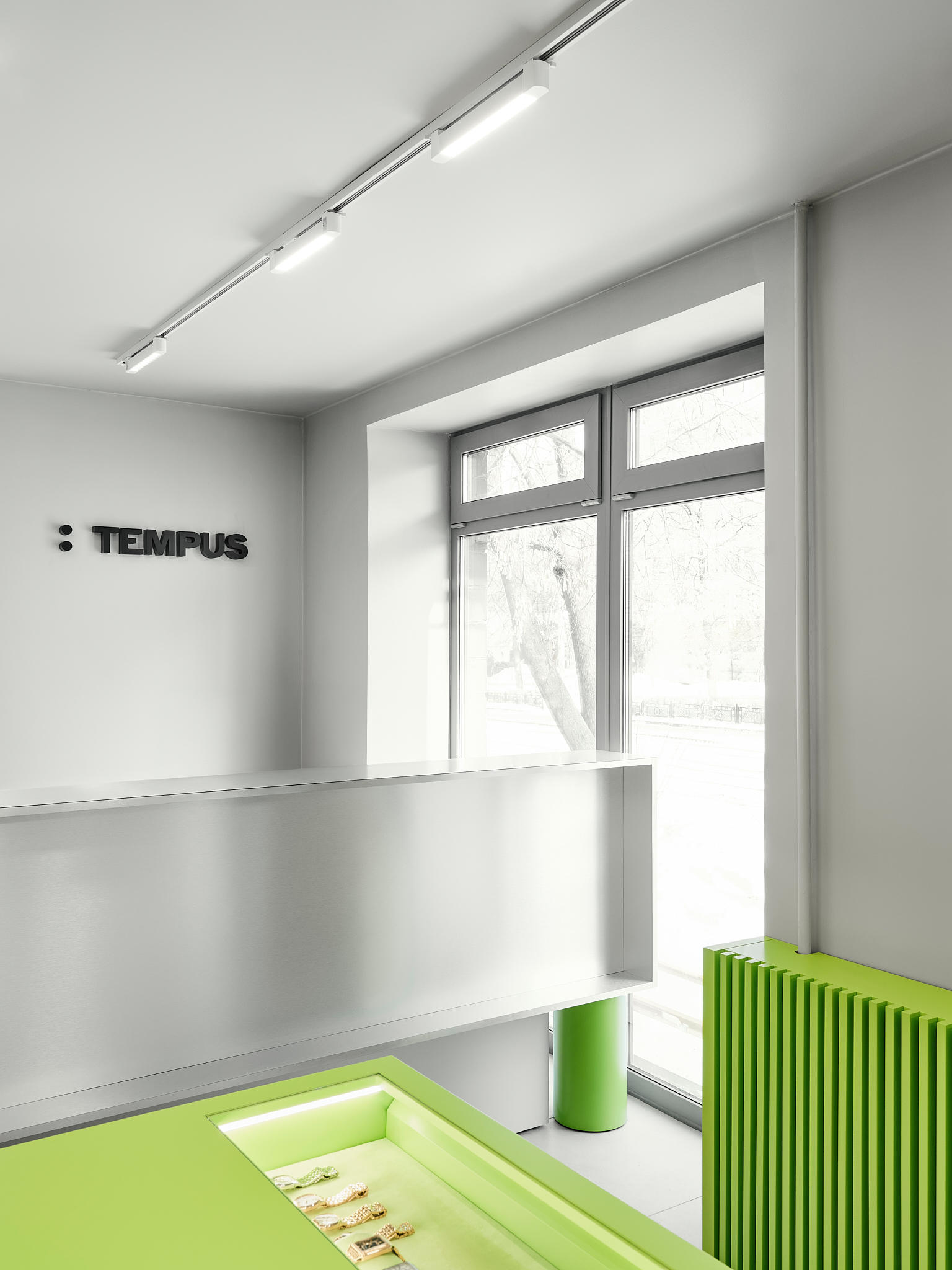
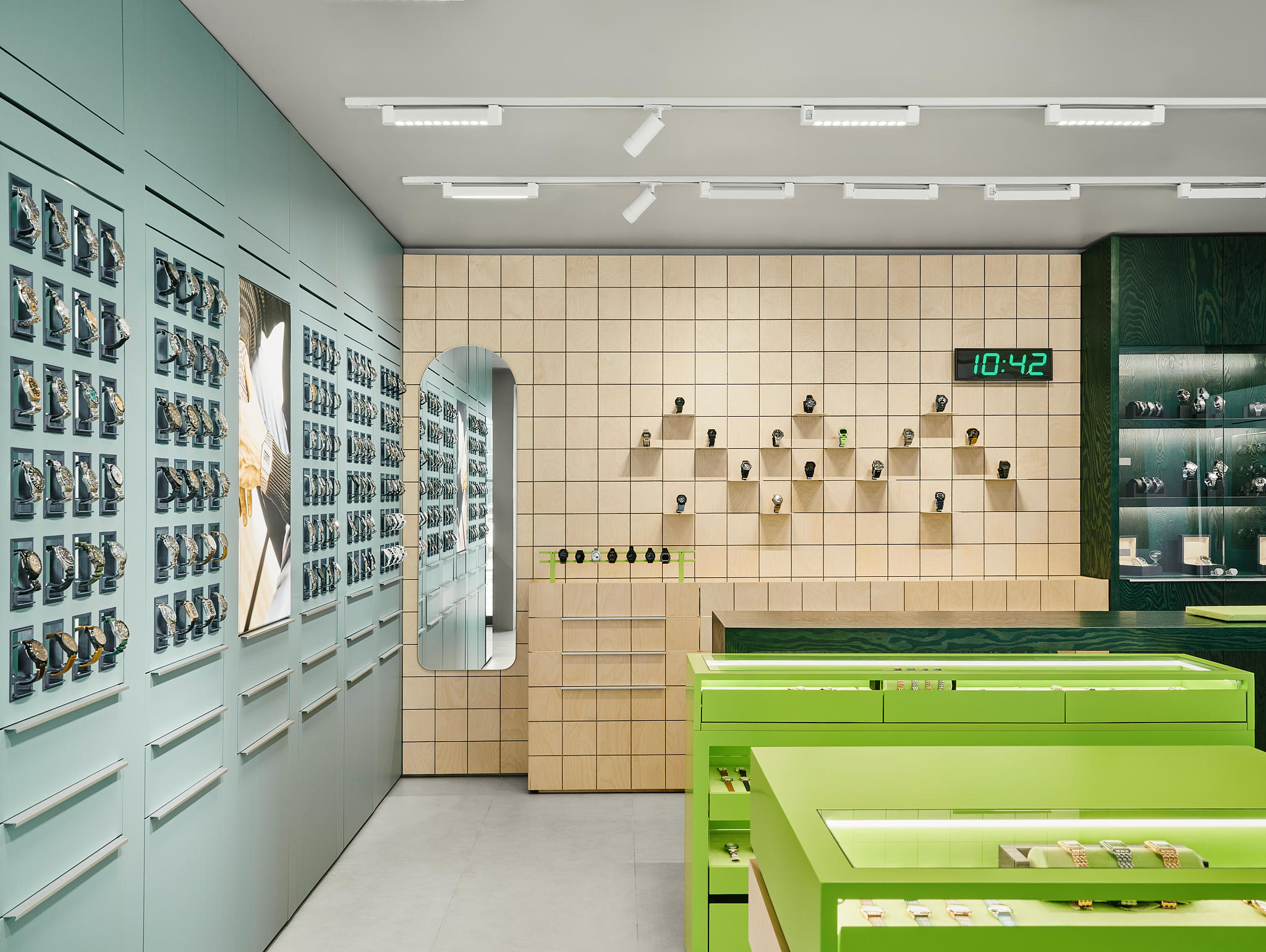
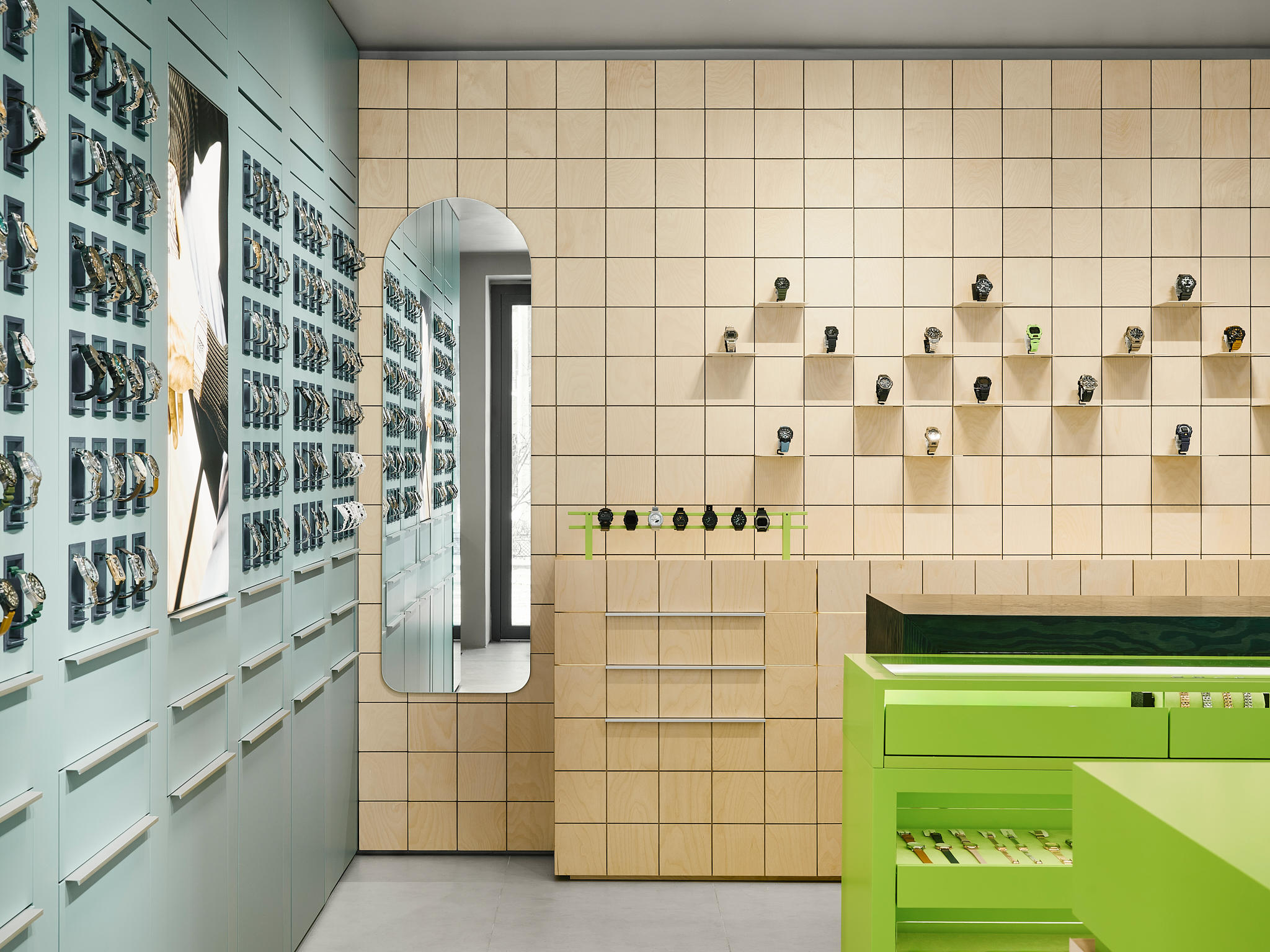
Our task was to preserve the ideological core of the project, but to rethink it under new parameters. As a result, the interior has become more concentrated, but at the same time saturated — each zone has received its own character, remaining part of the overall system.
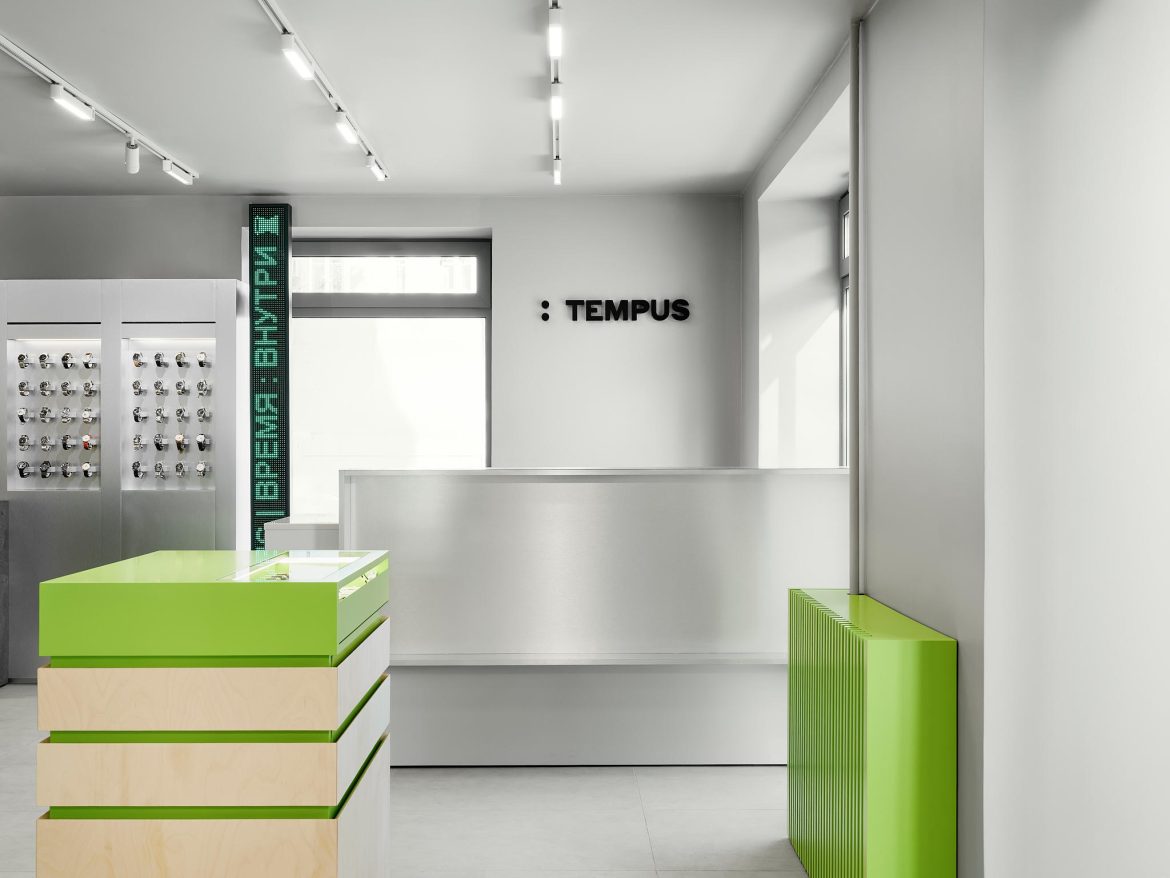
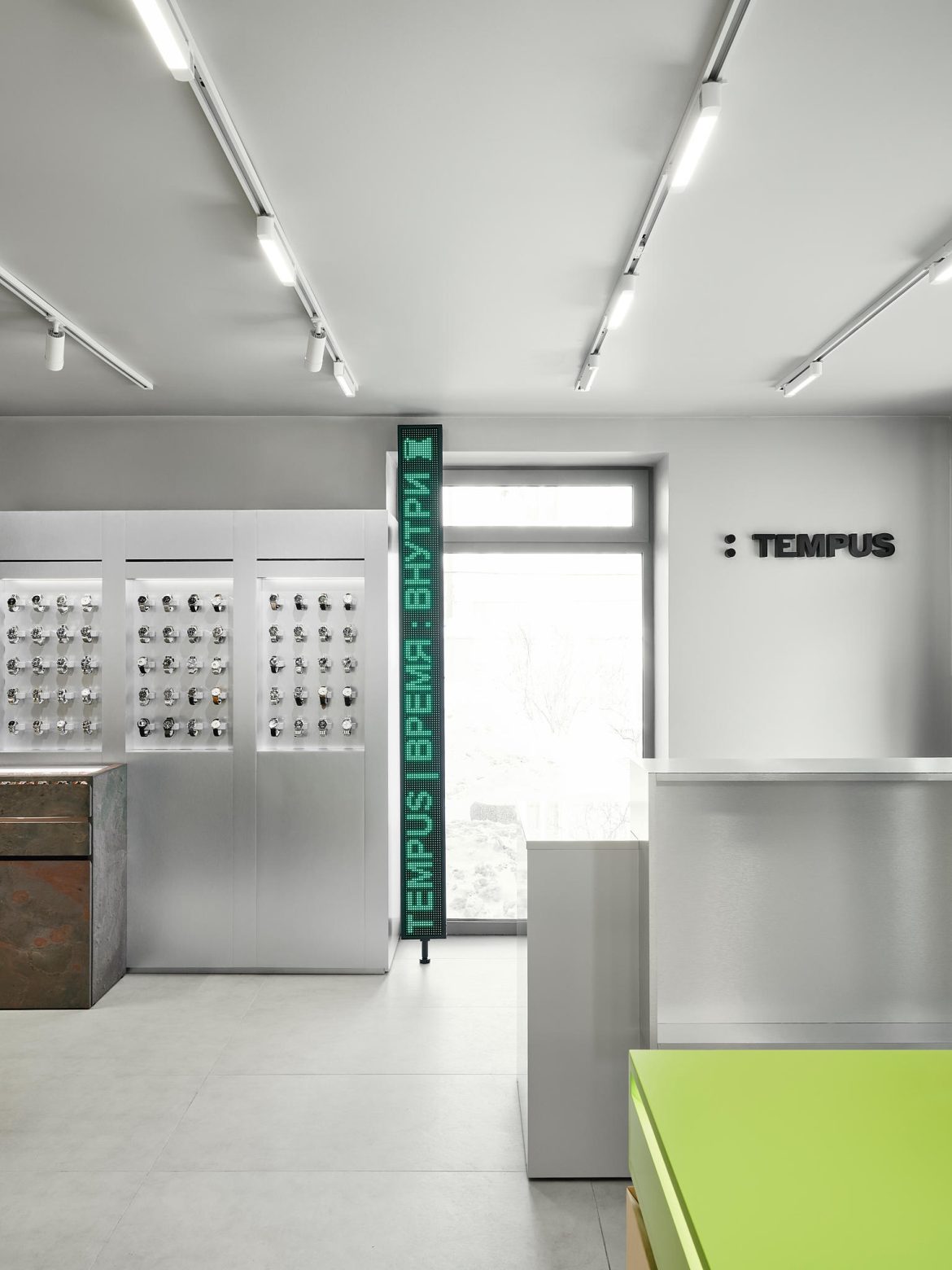
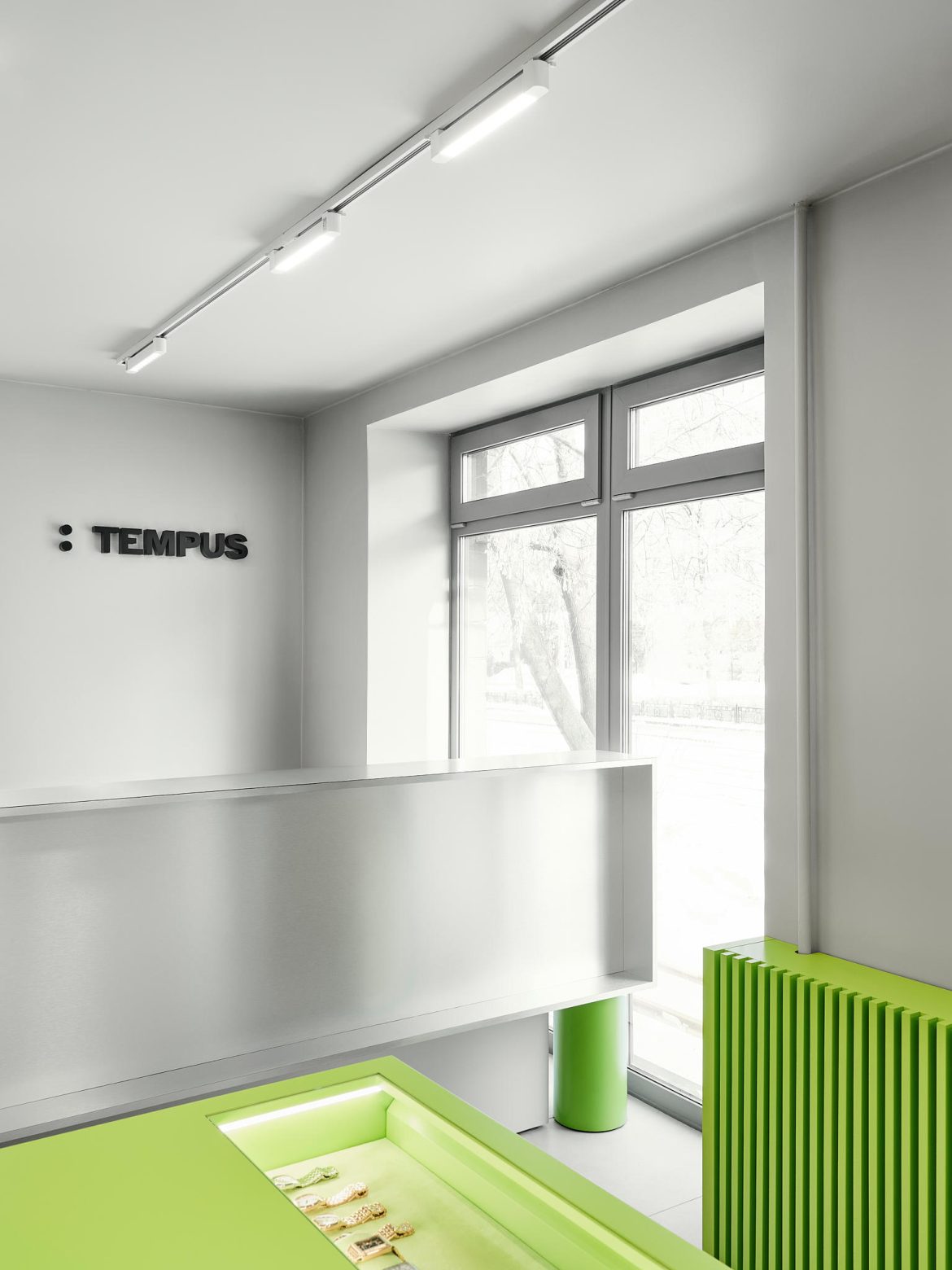
The space had good initial characteristics: a large number of floor-to-ceiling windows, the presence of bathrooms and utility rooms, as well as a flexible planning structure. Significant changes affected the entrance group — the vestibule, which occupied a significant part of the area, was dismantled and the staircase was updated. This allowed us to open up the interior and make it more open and inviting.
YOU MIGHT ALSO LIKE
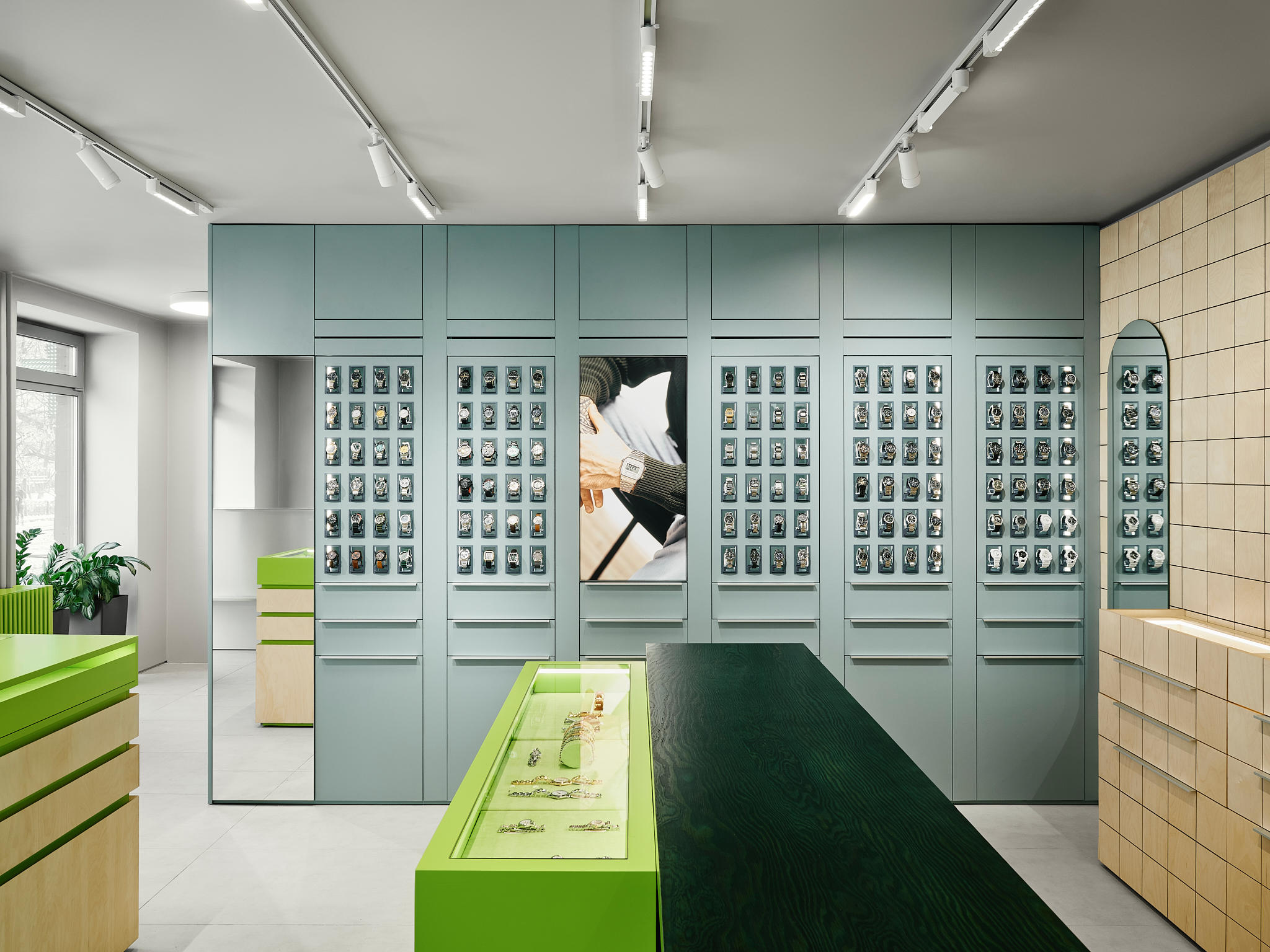
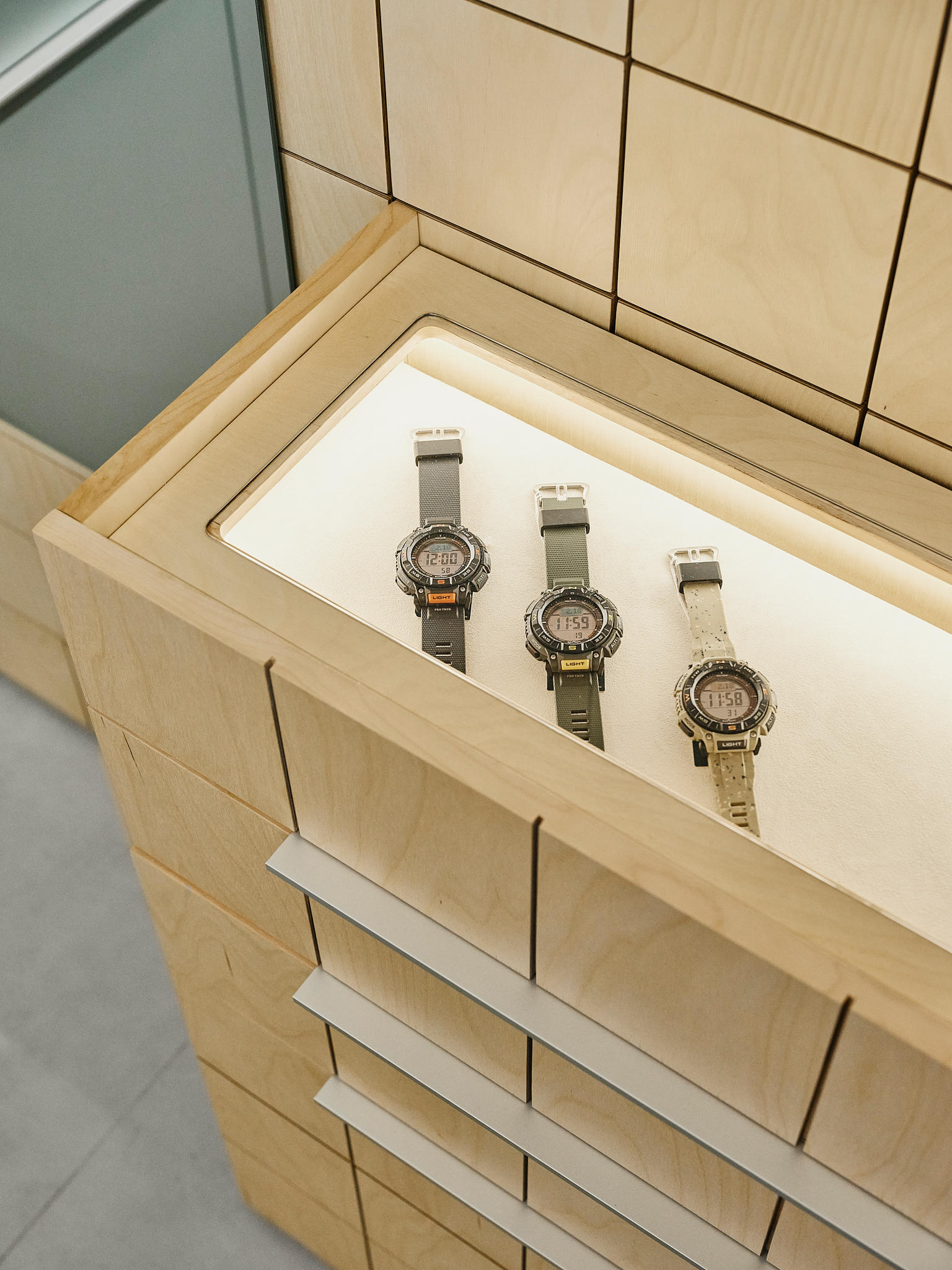
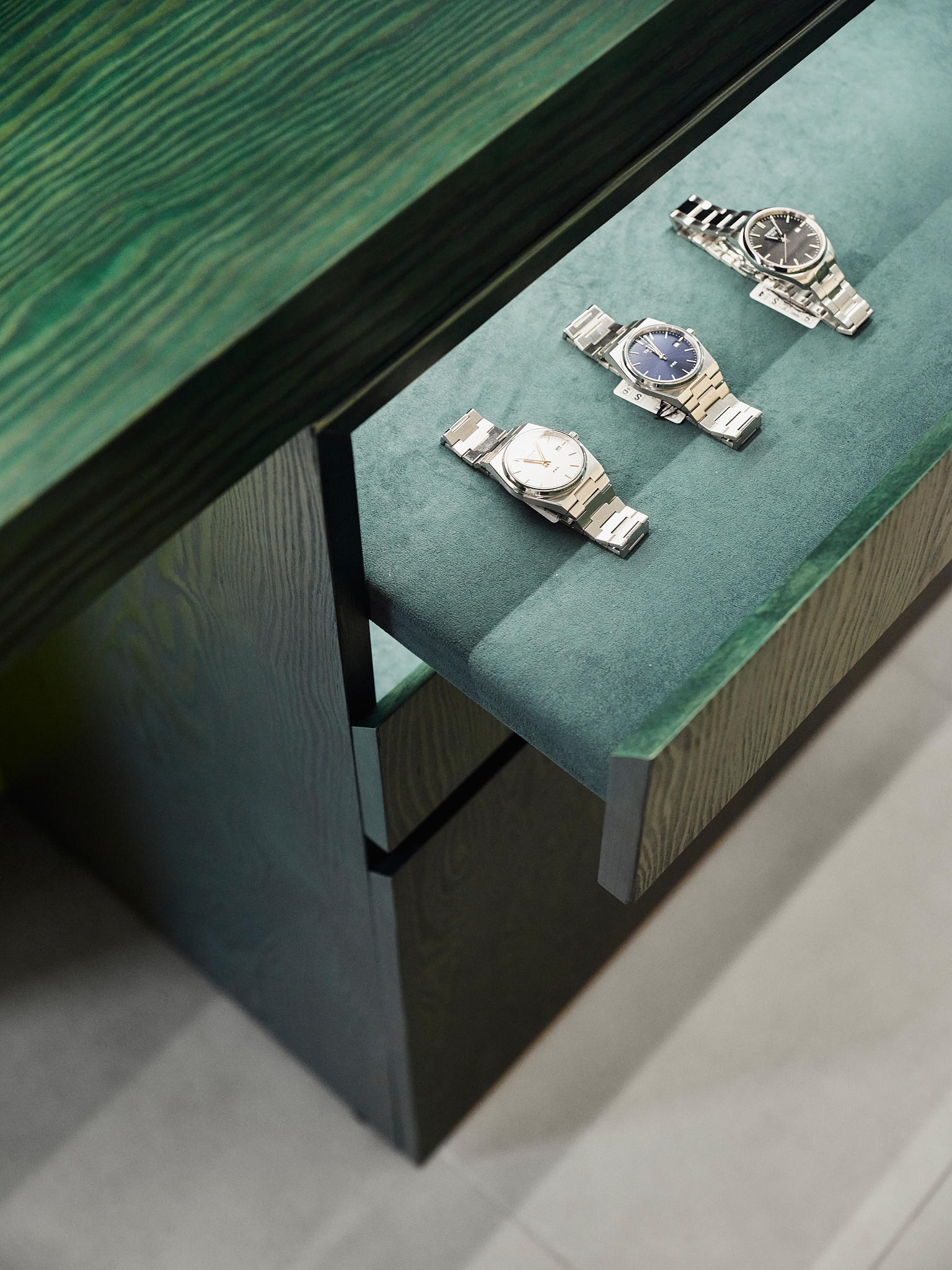
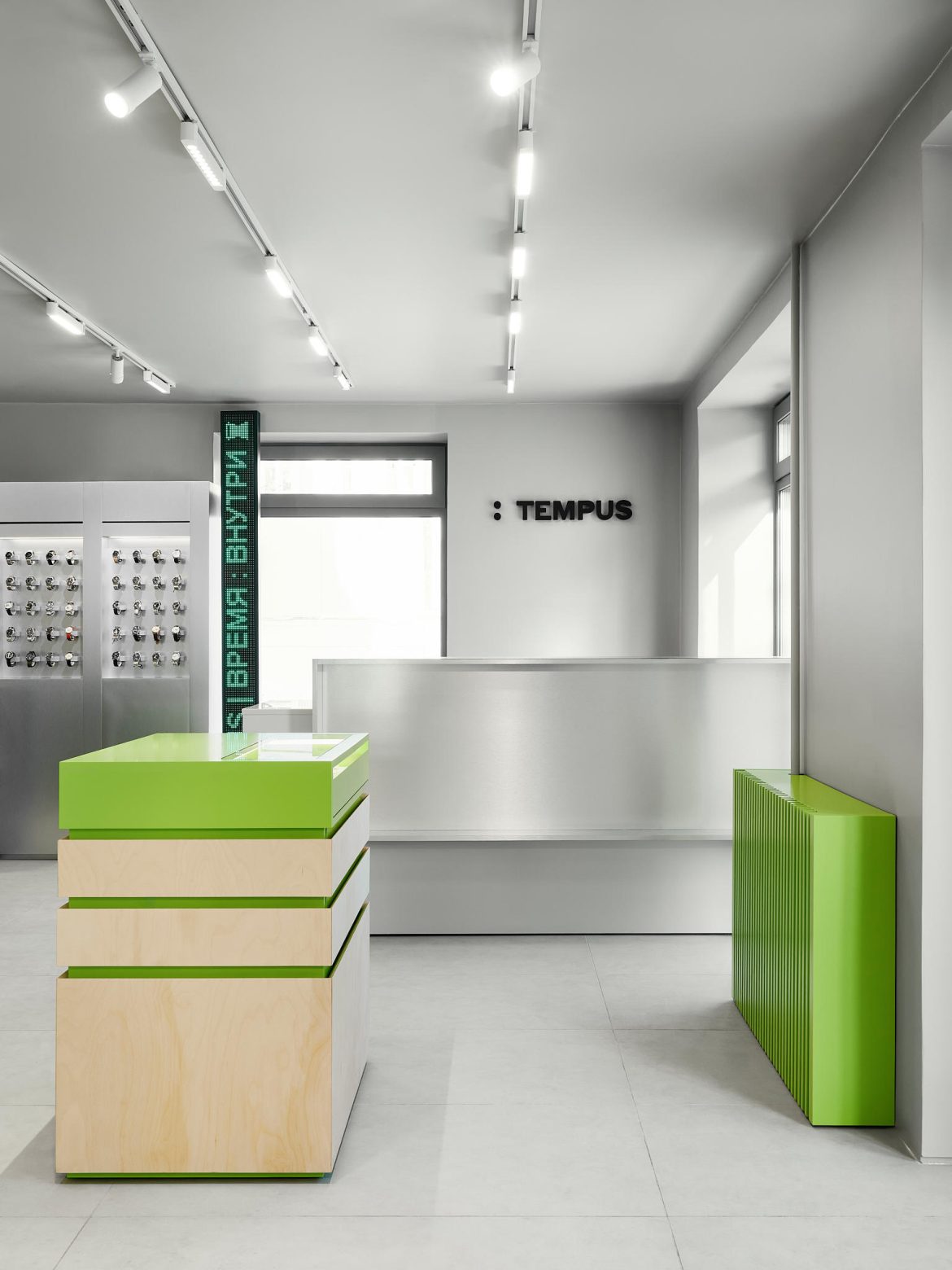
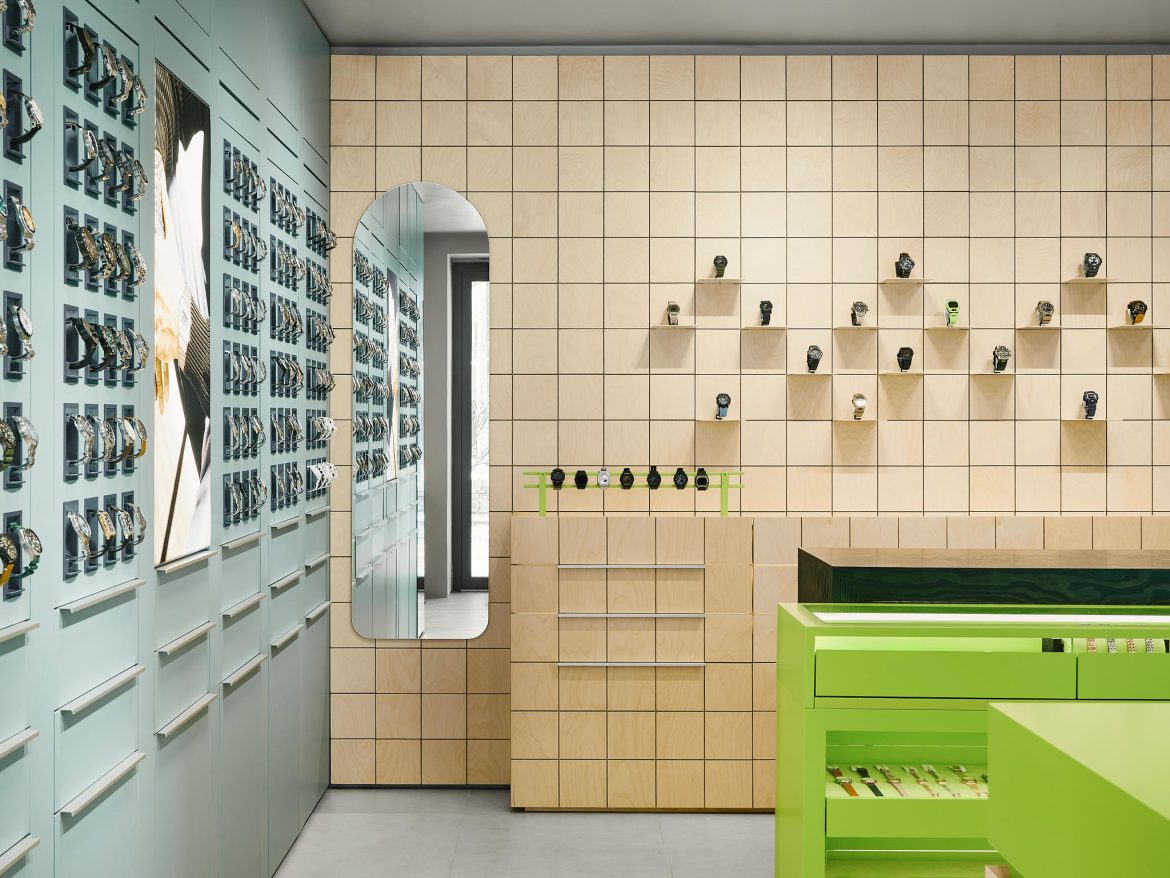
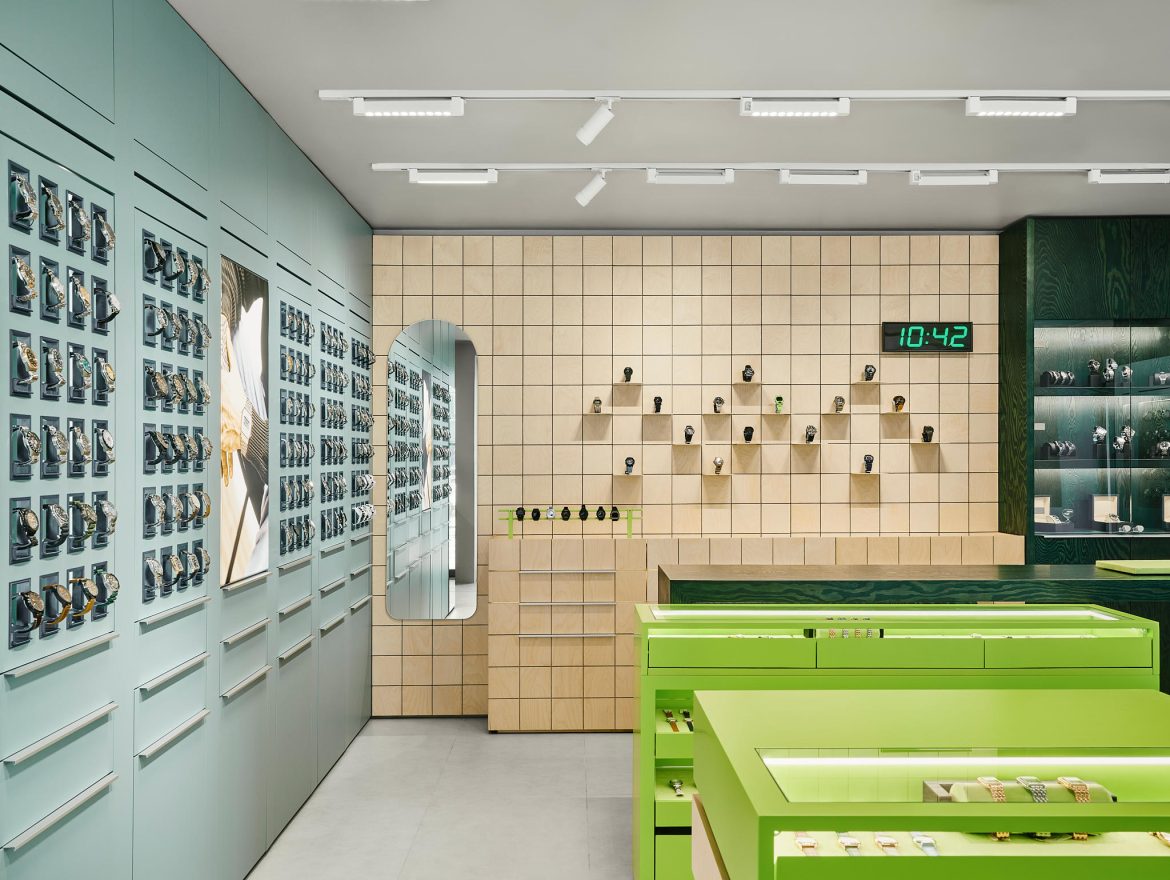
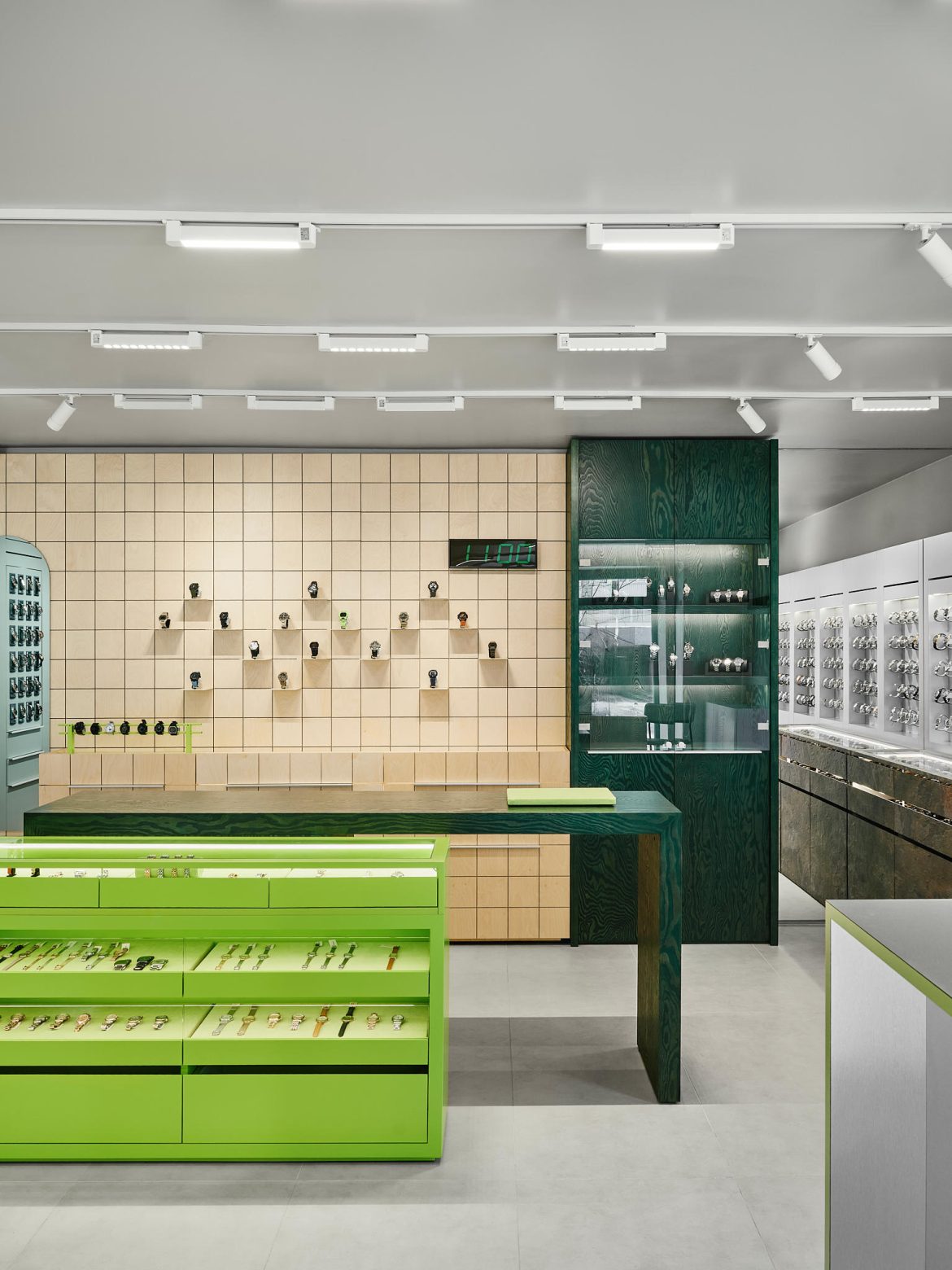
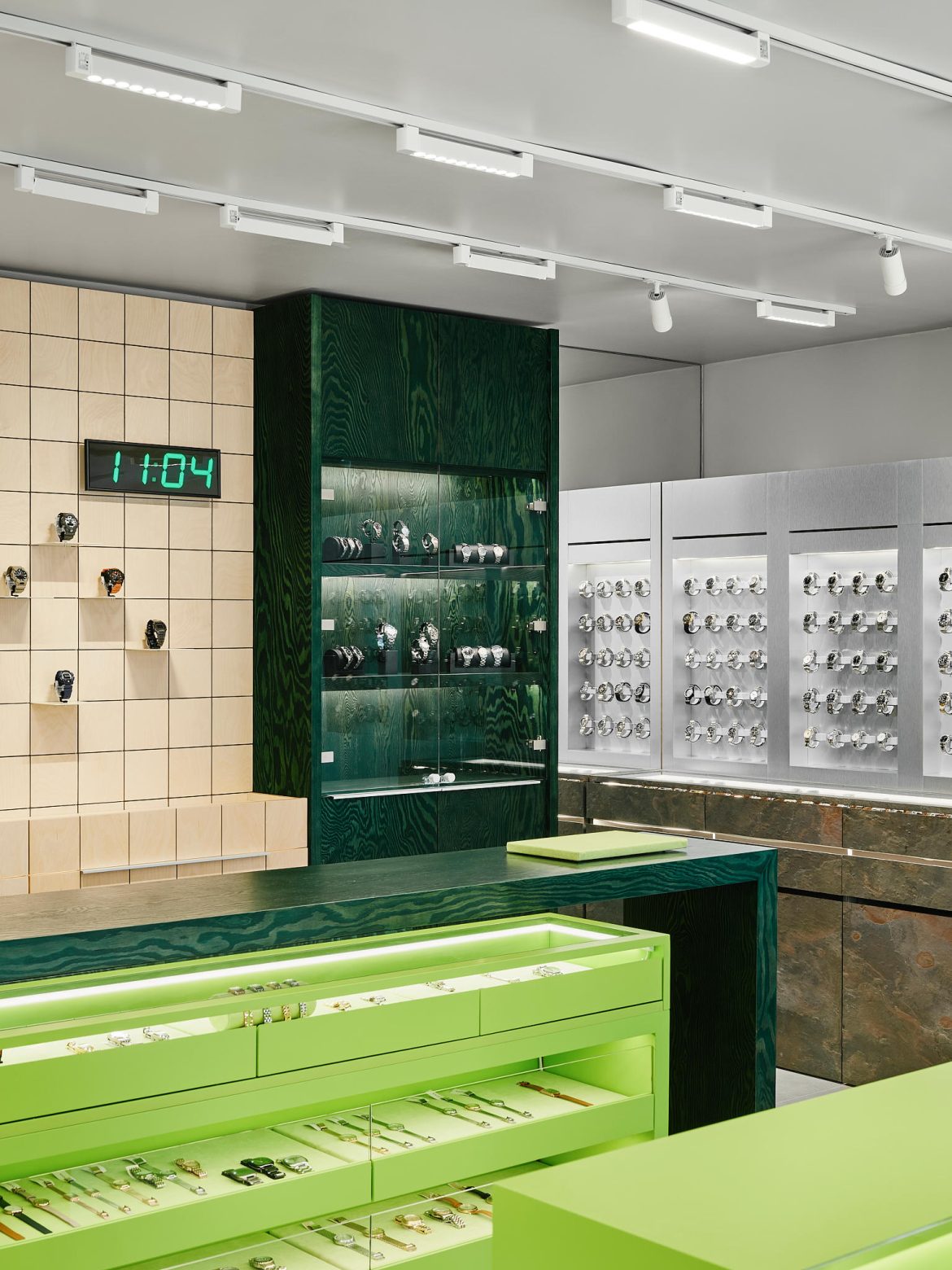
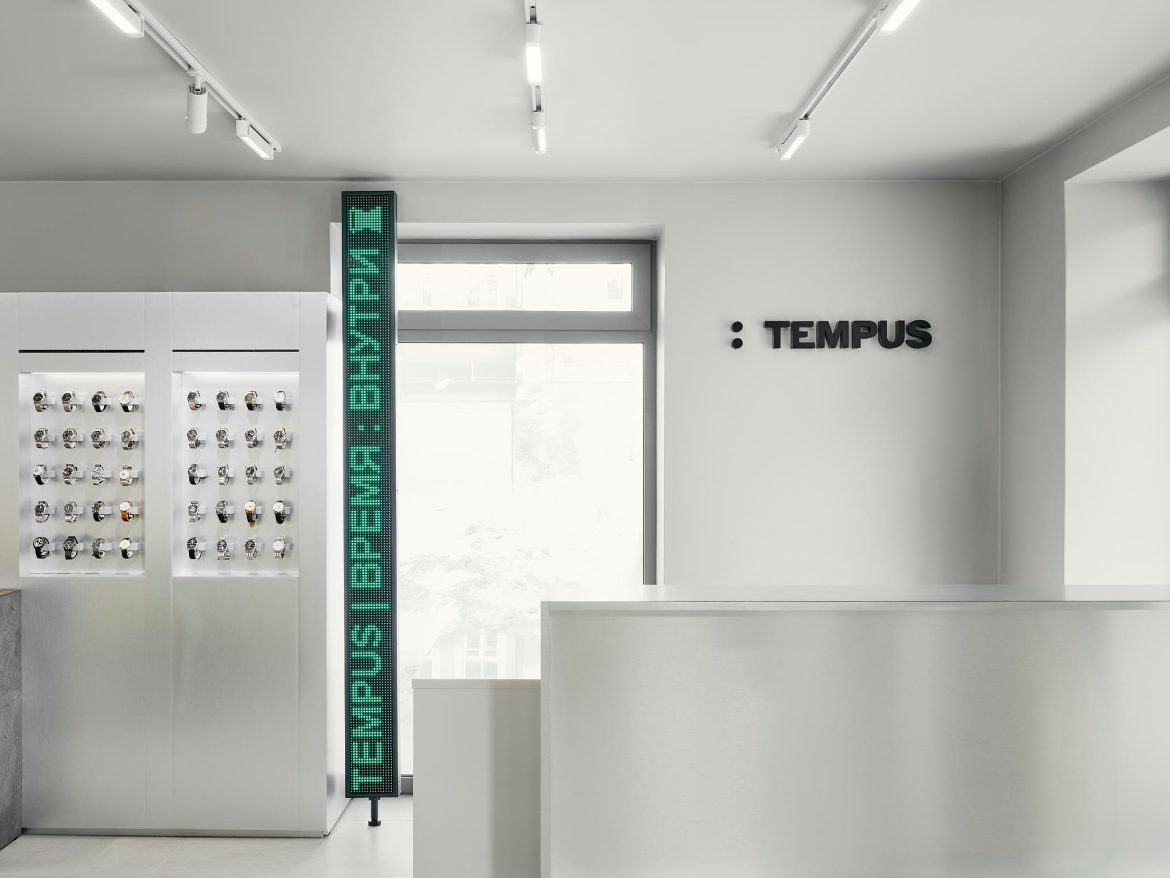
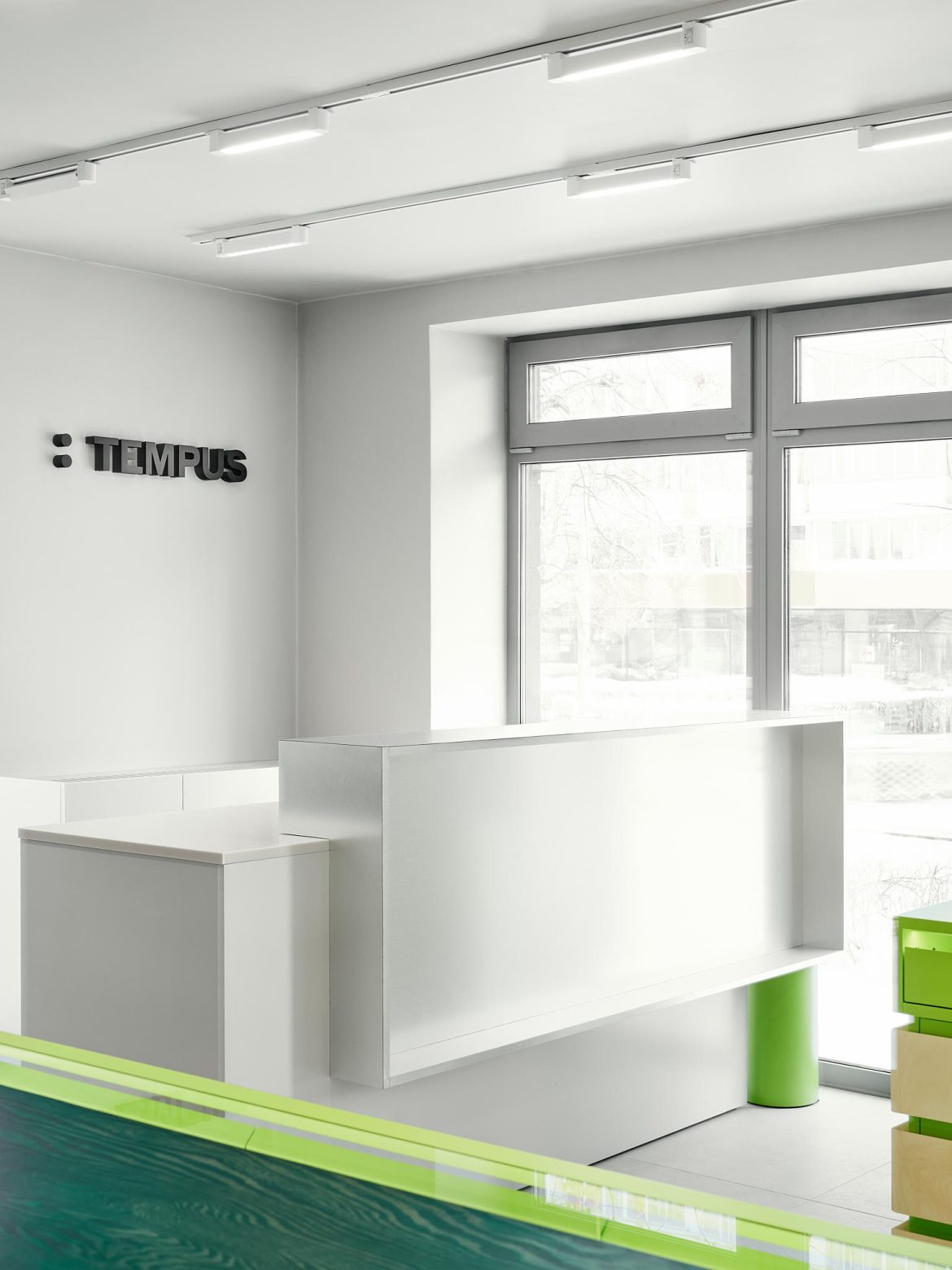
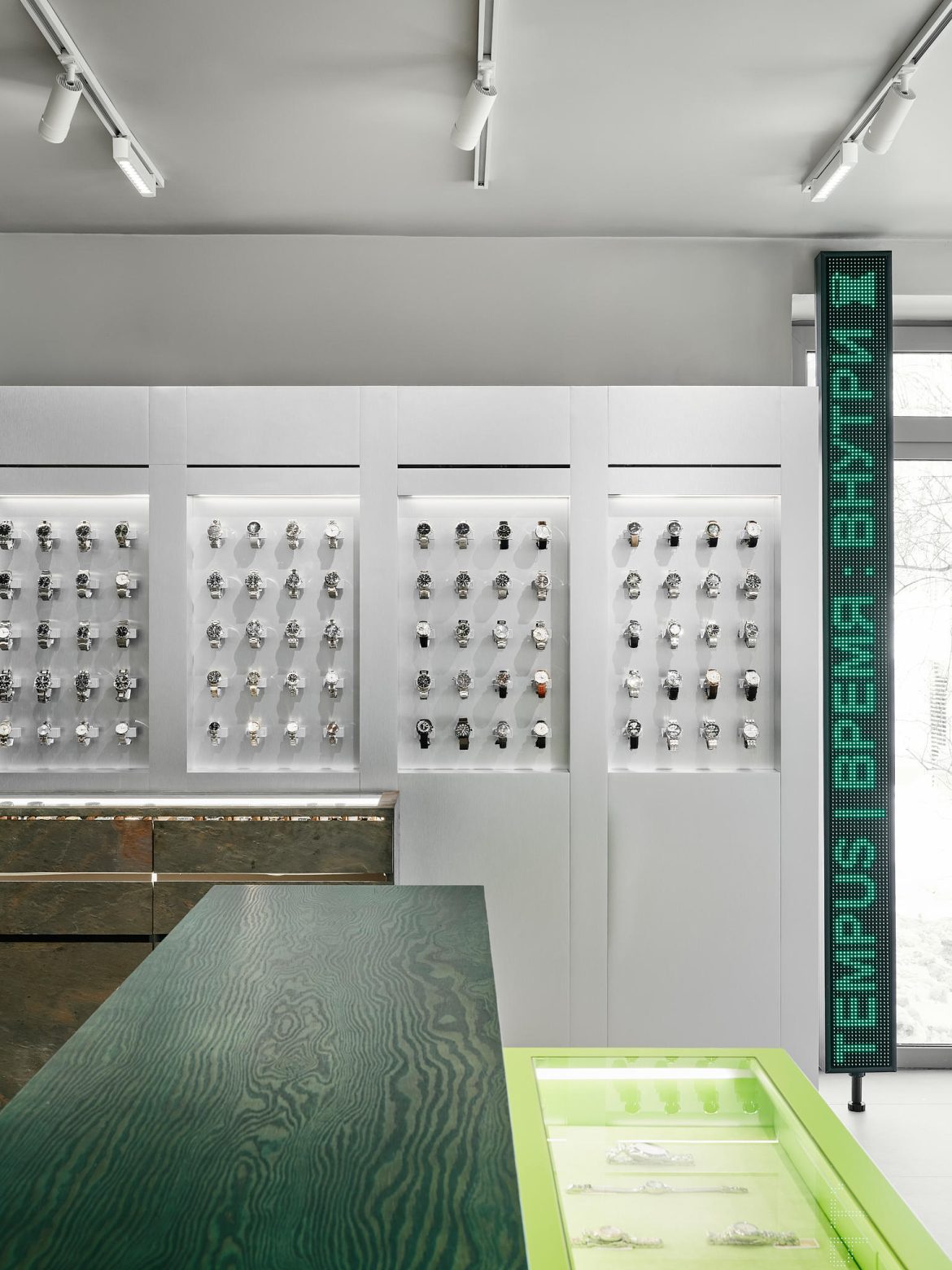
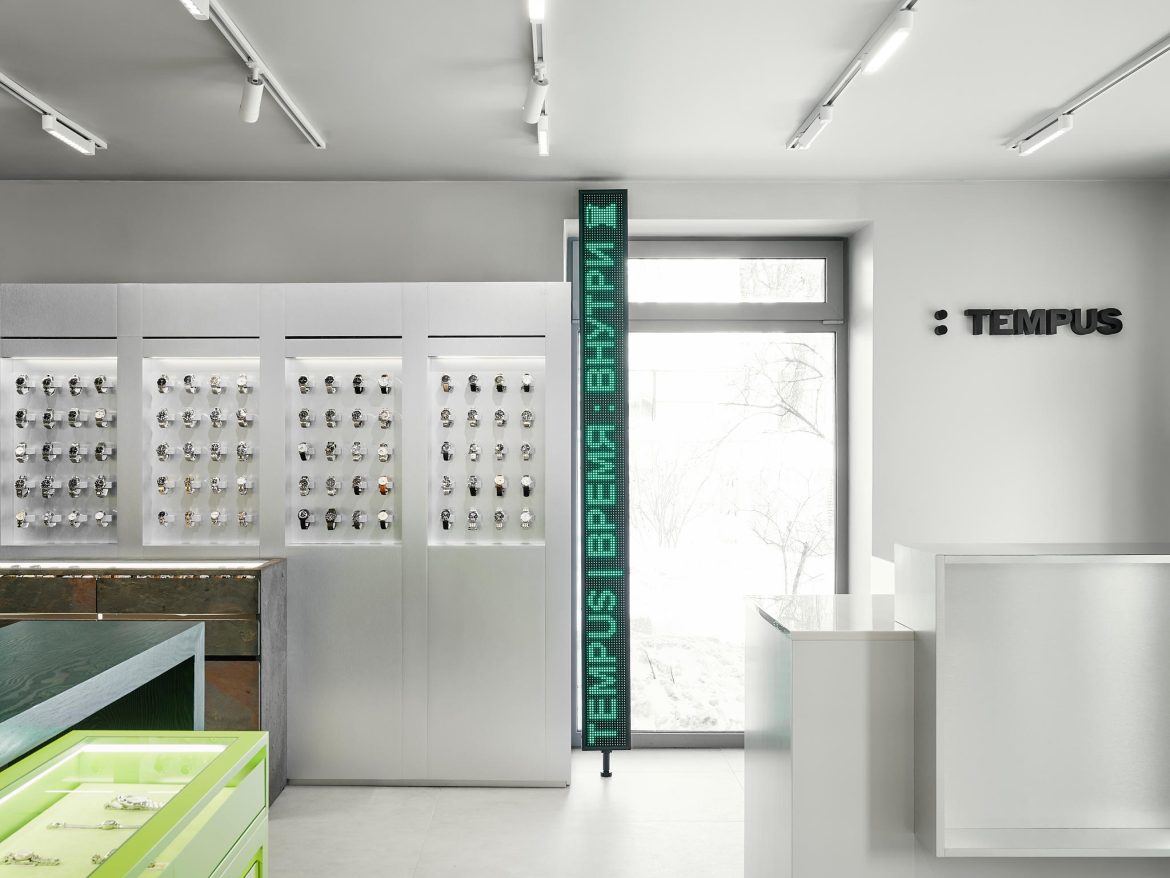
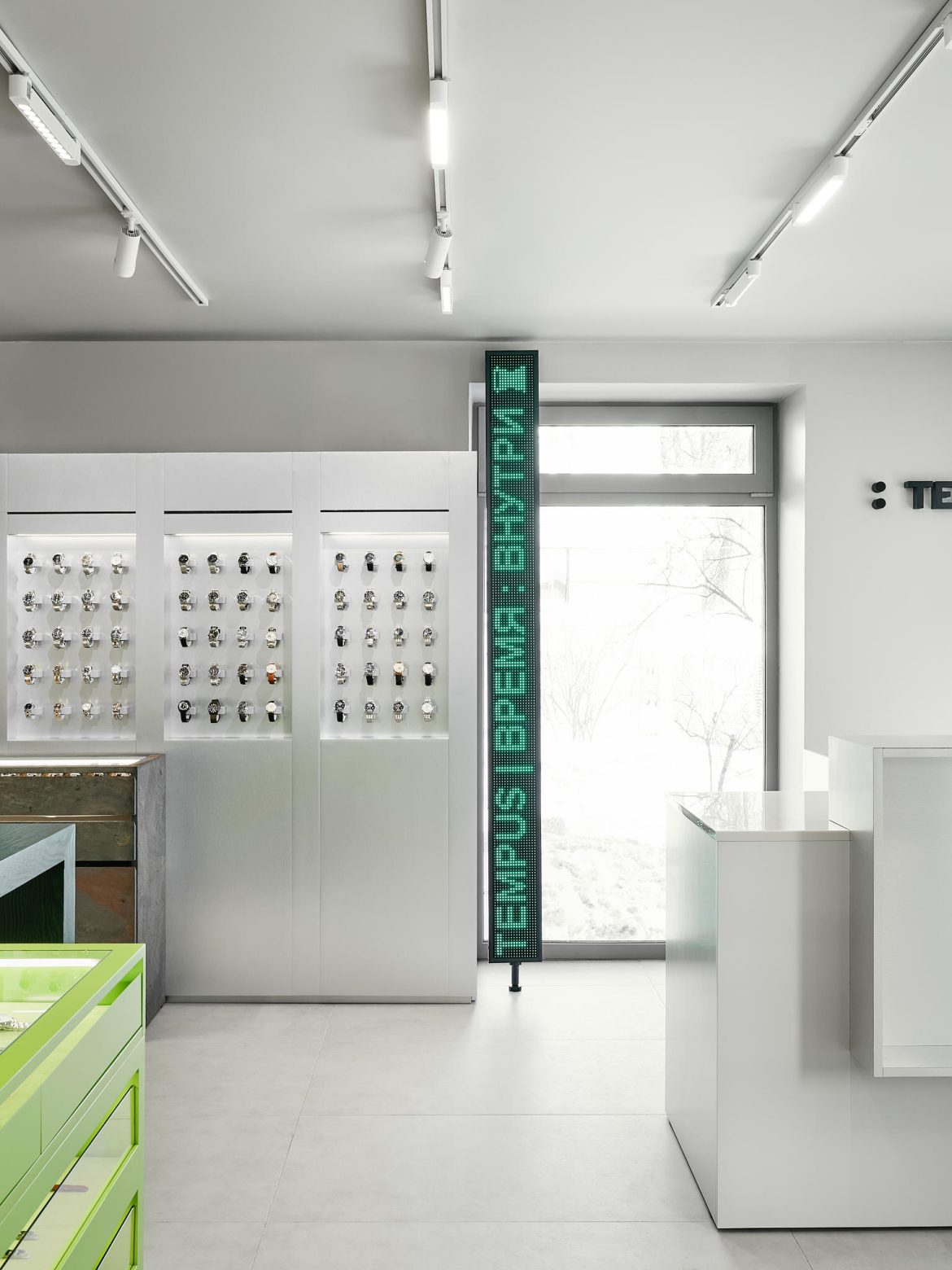
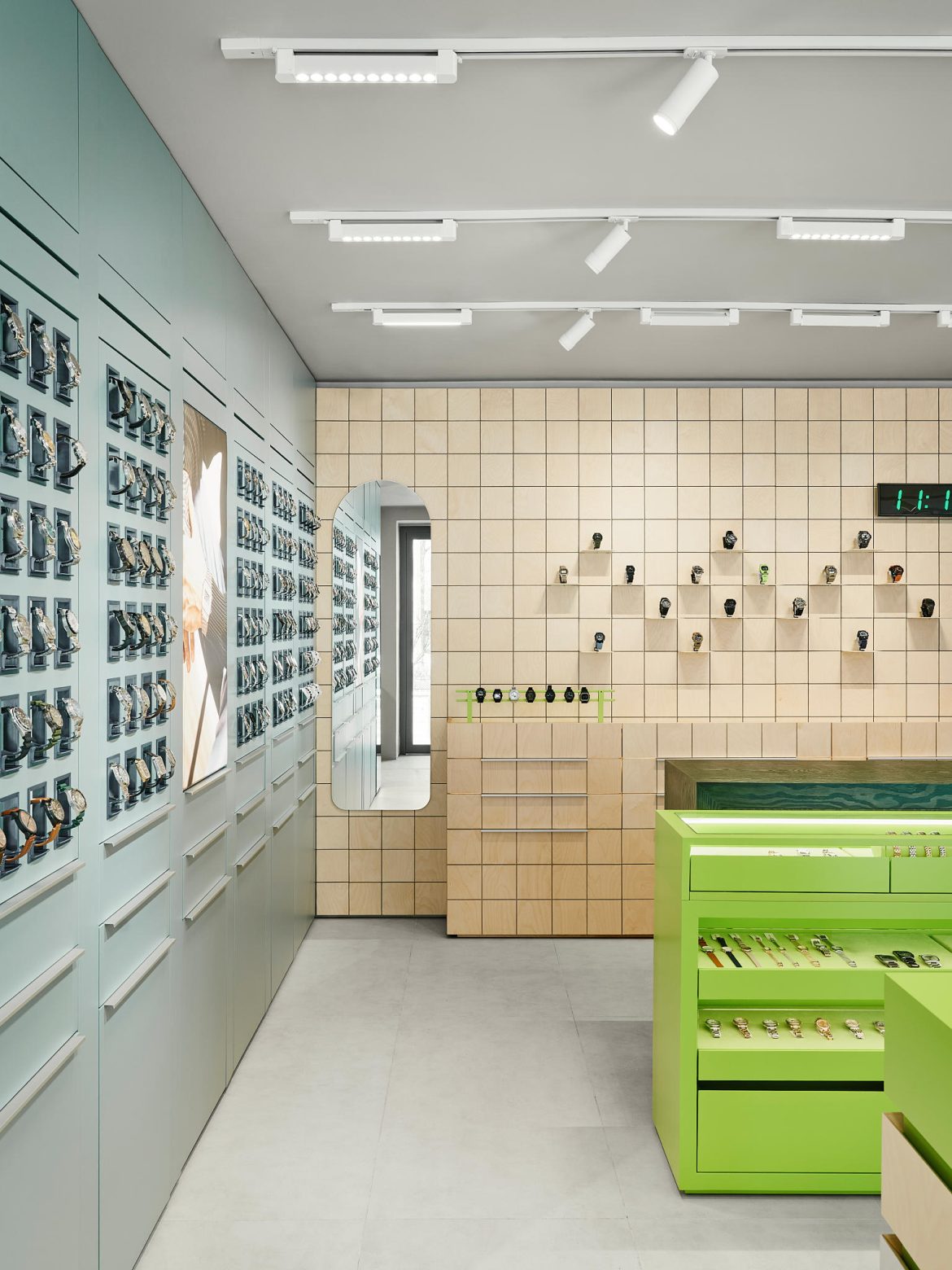
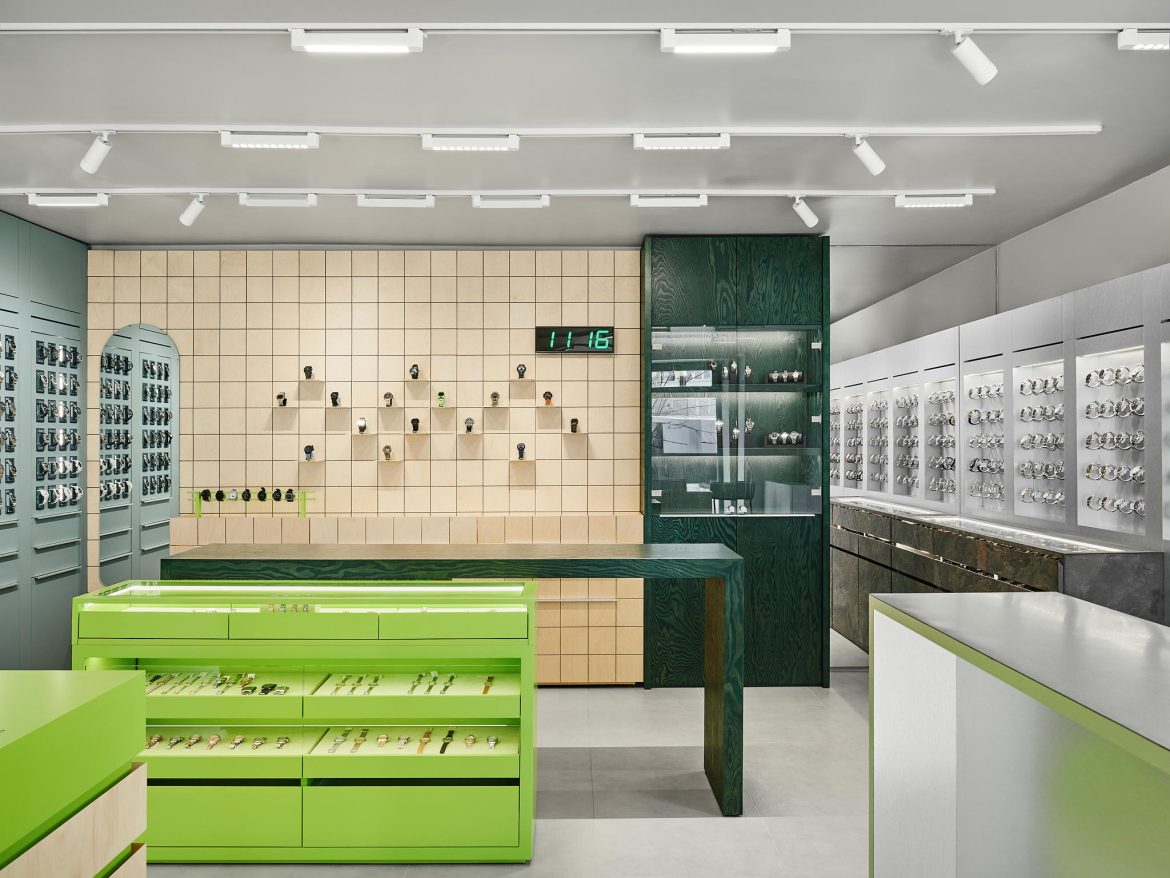
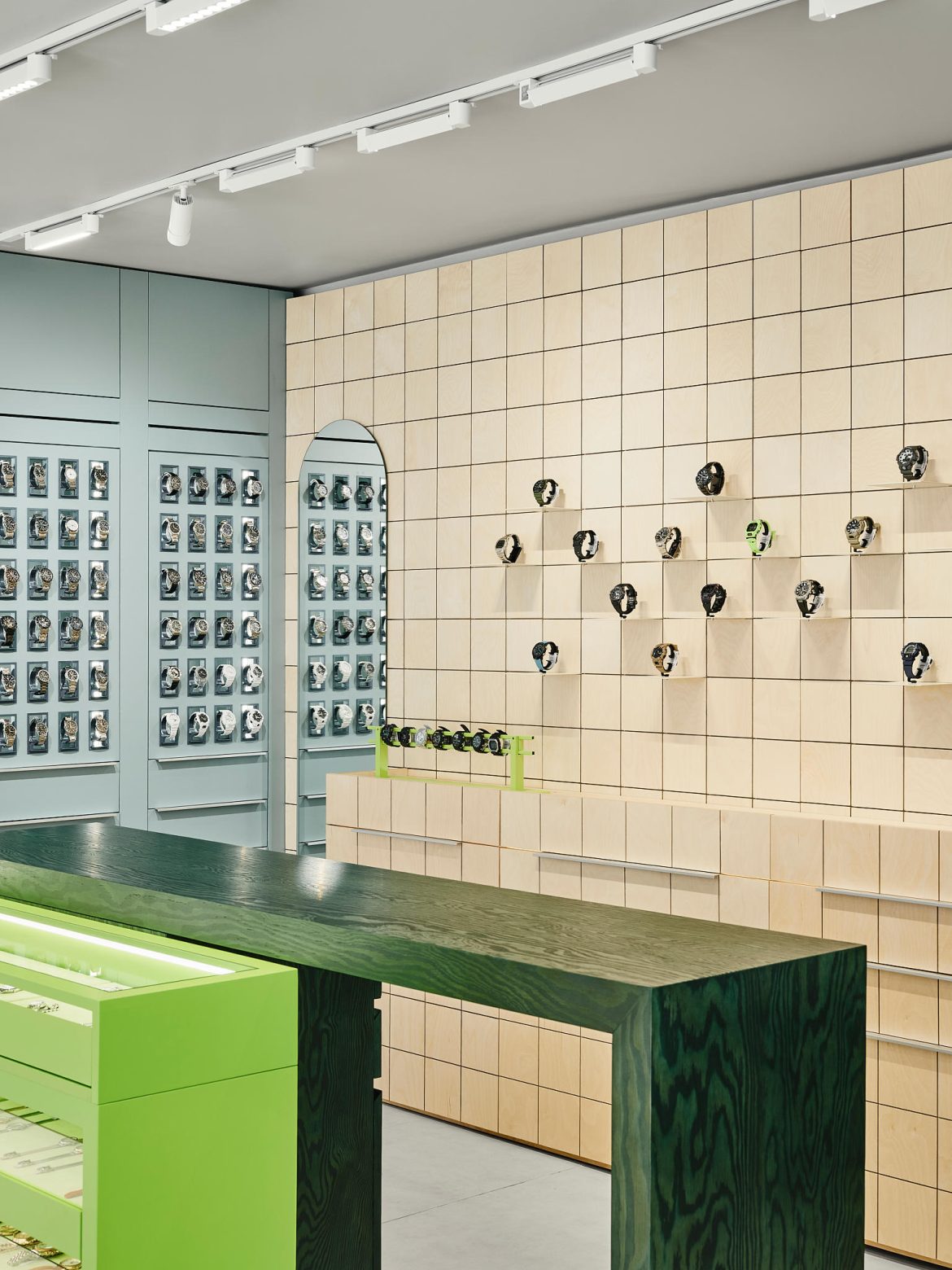
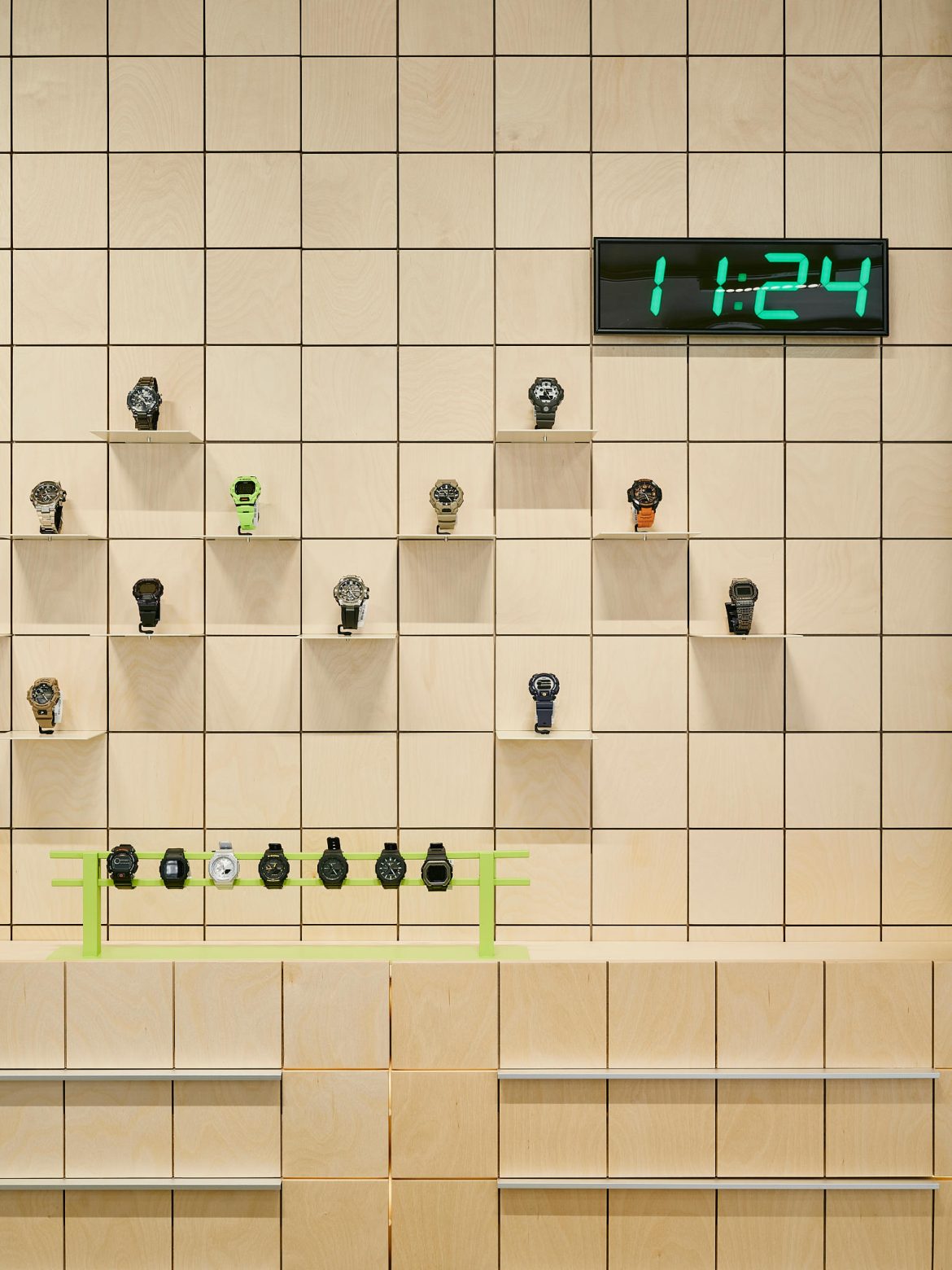
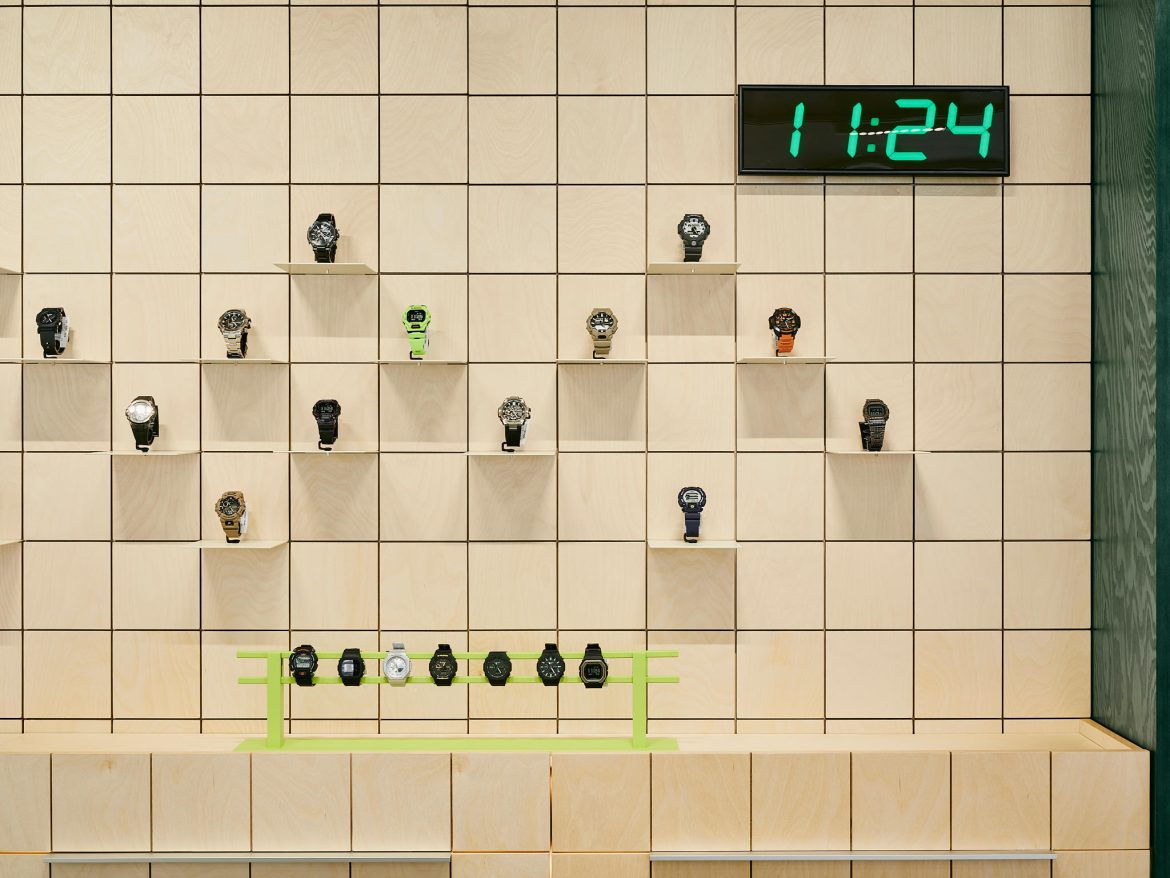
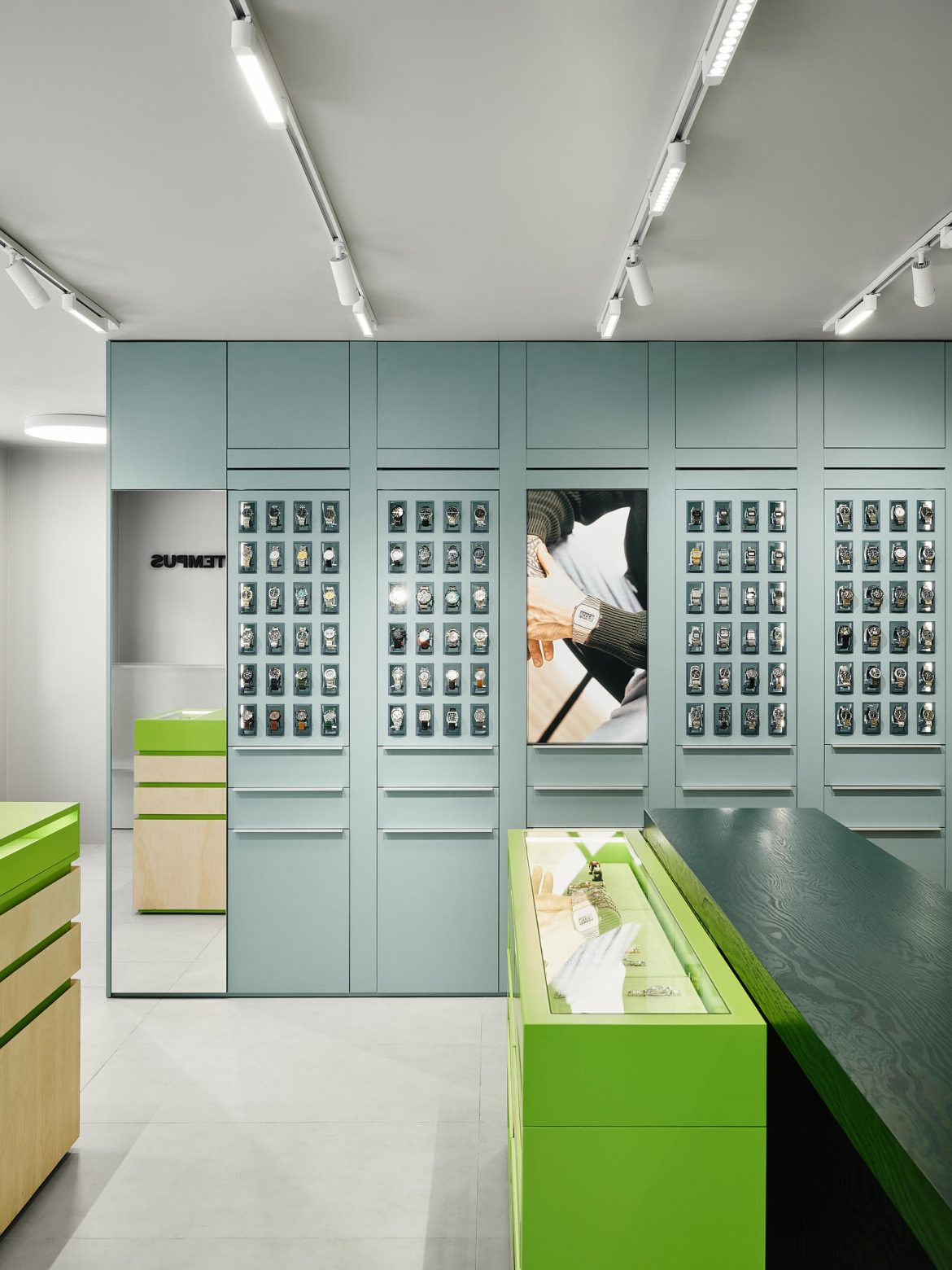
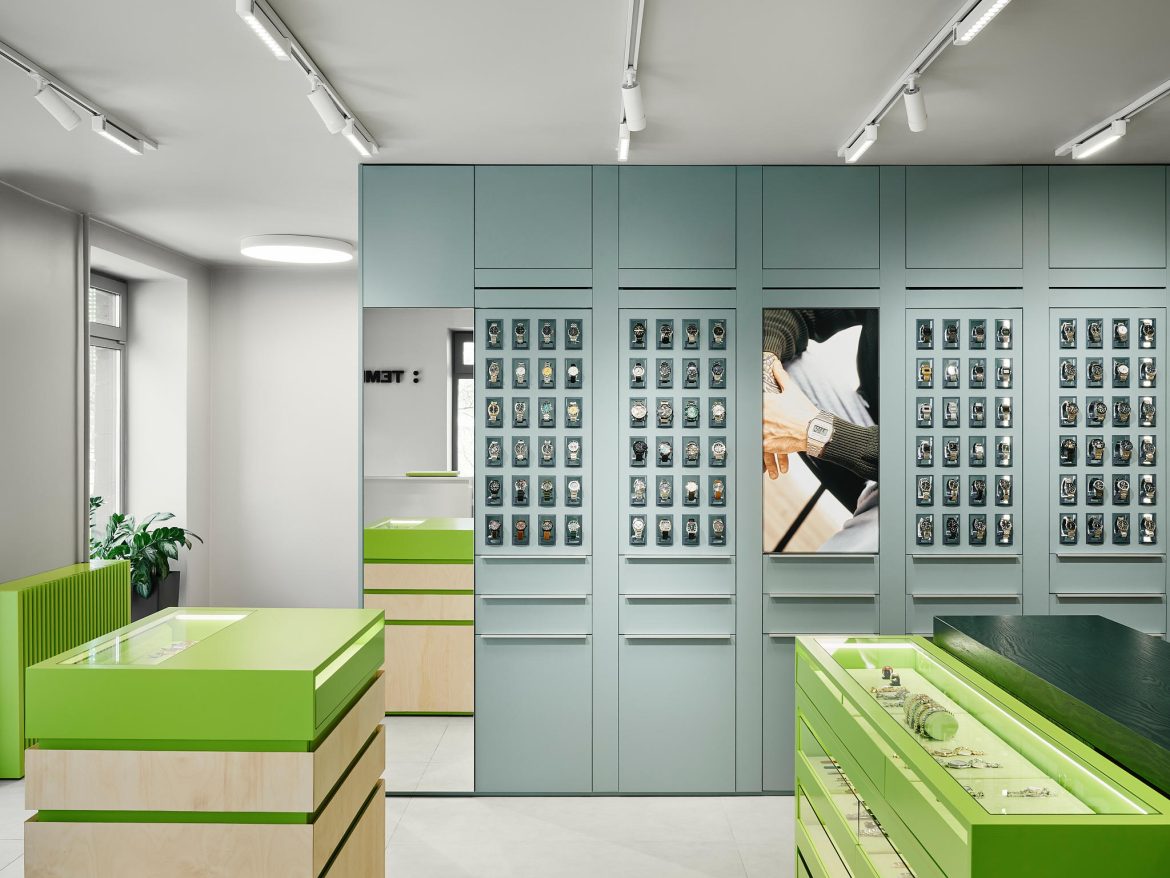
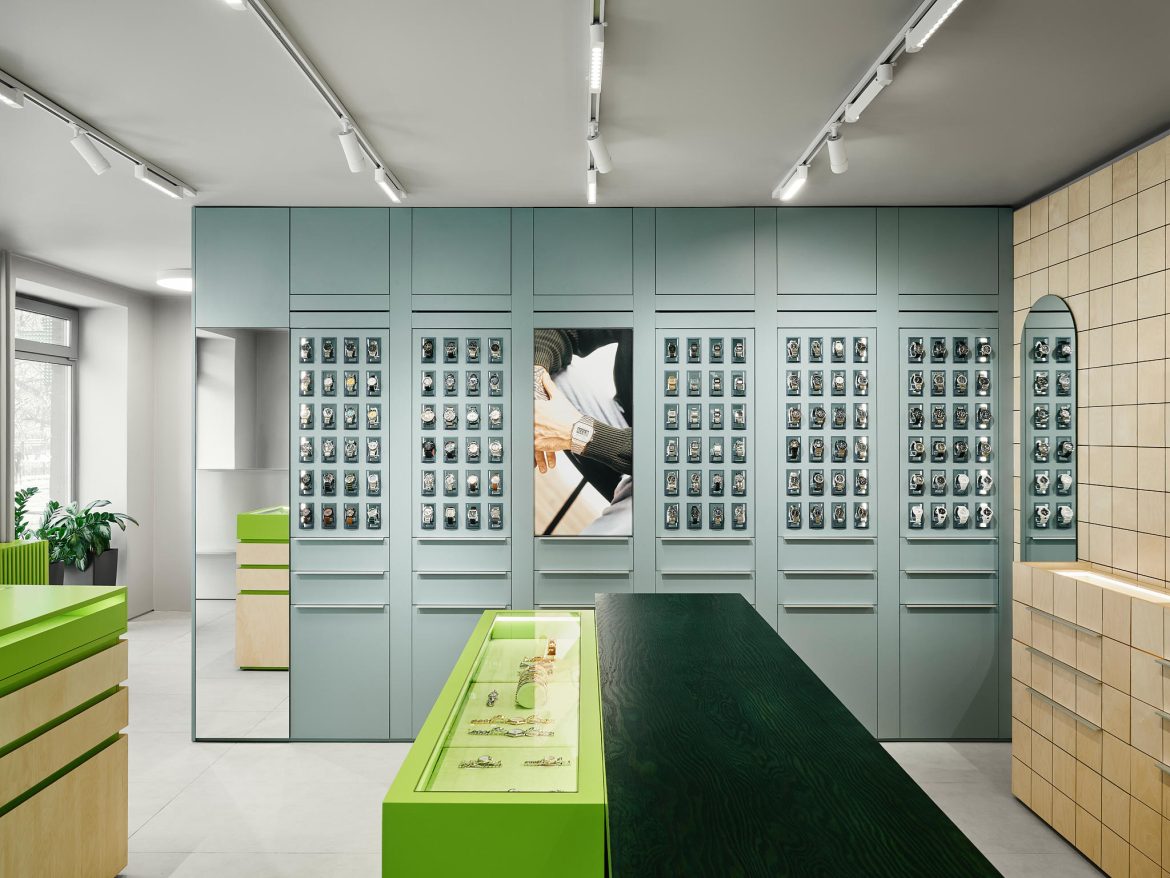
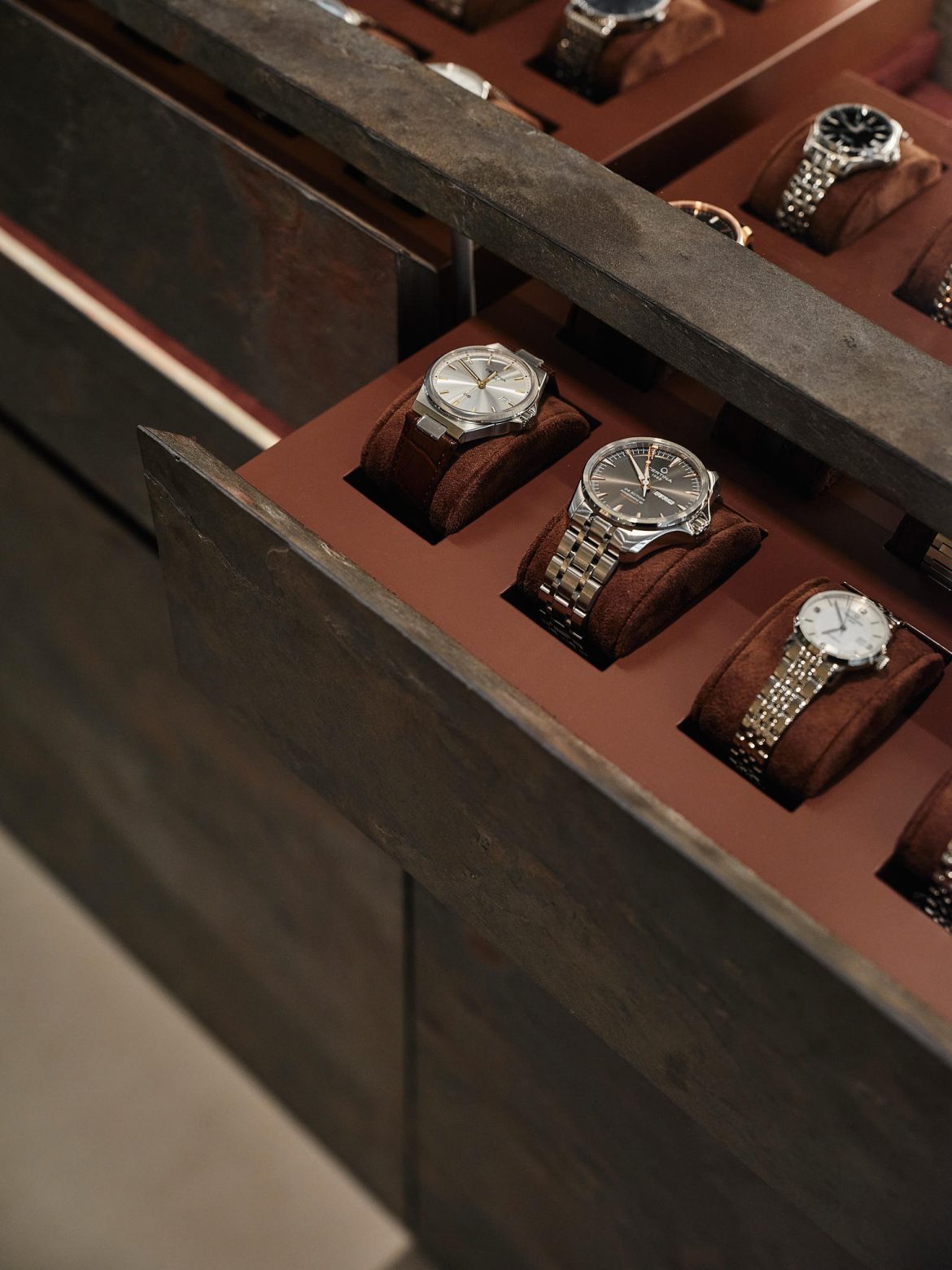
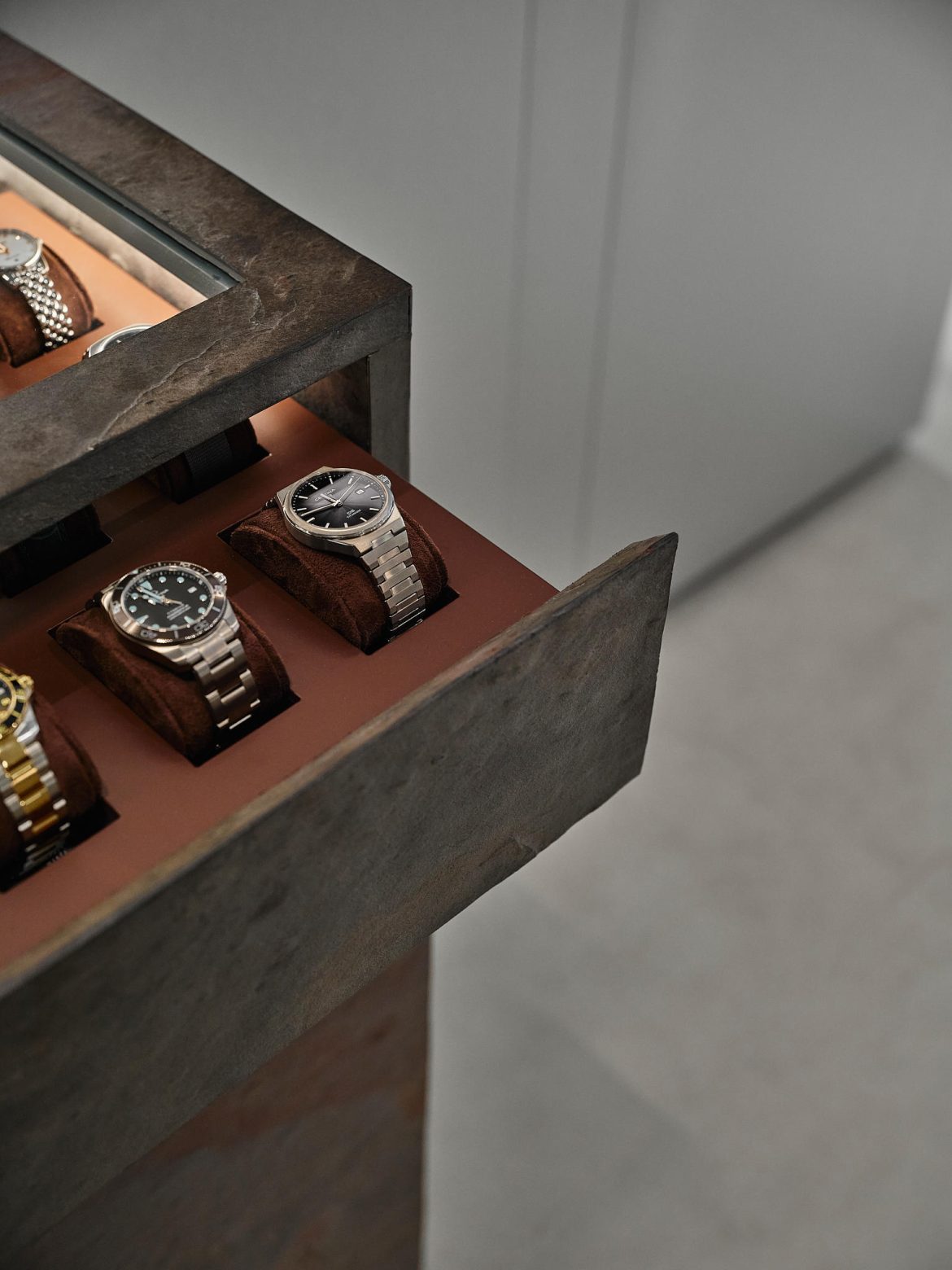
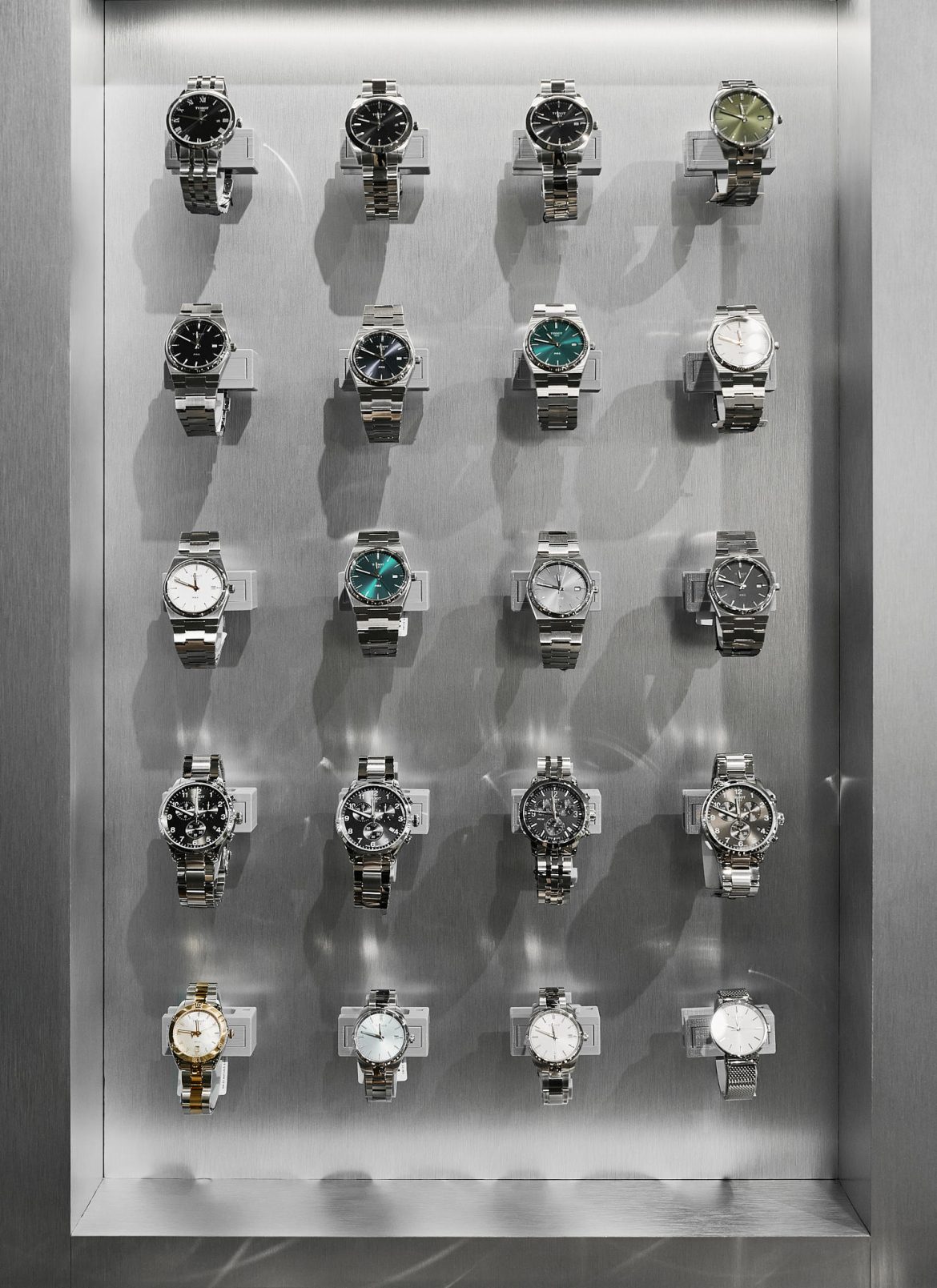
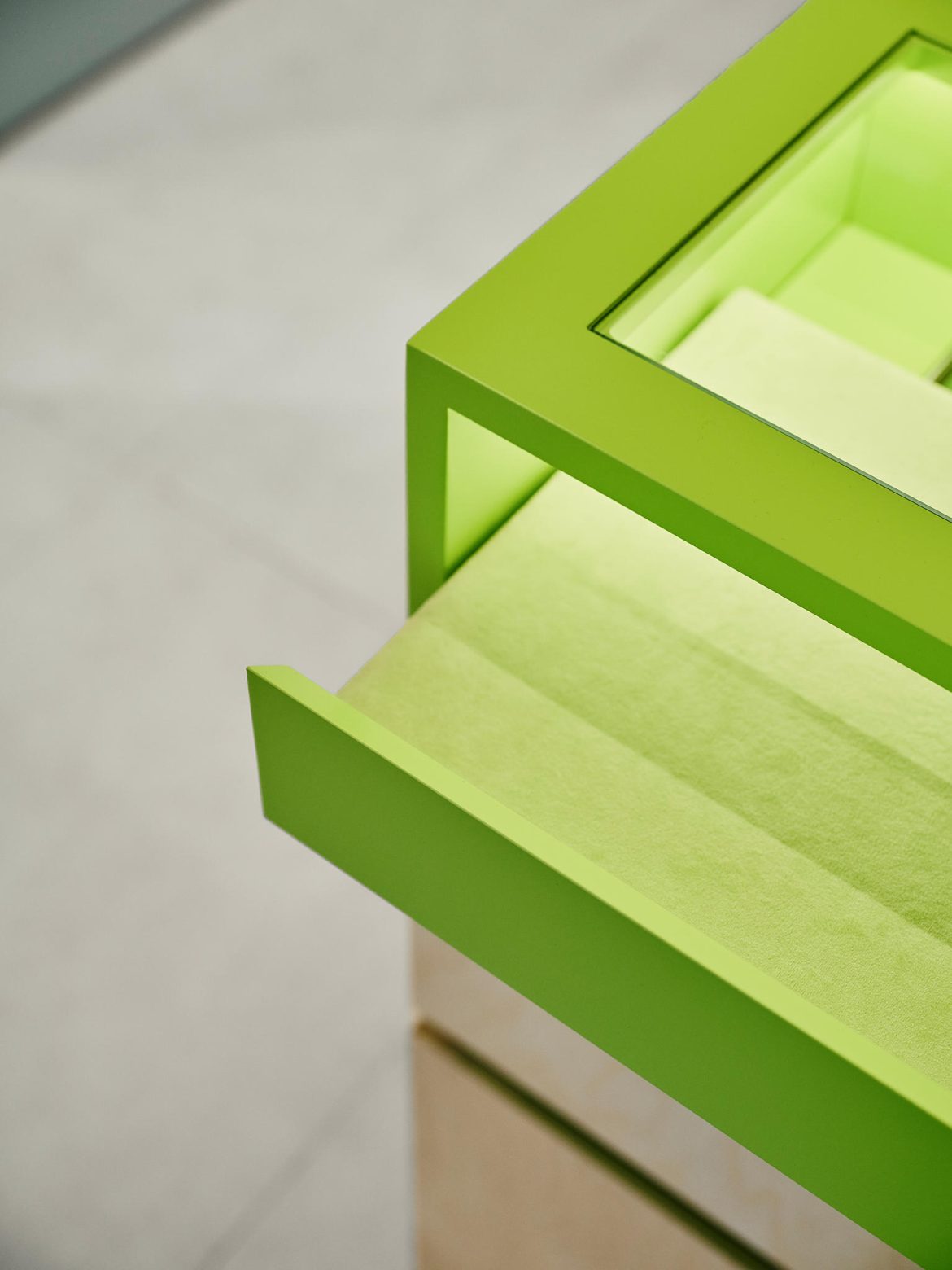
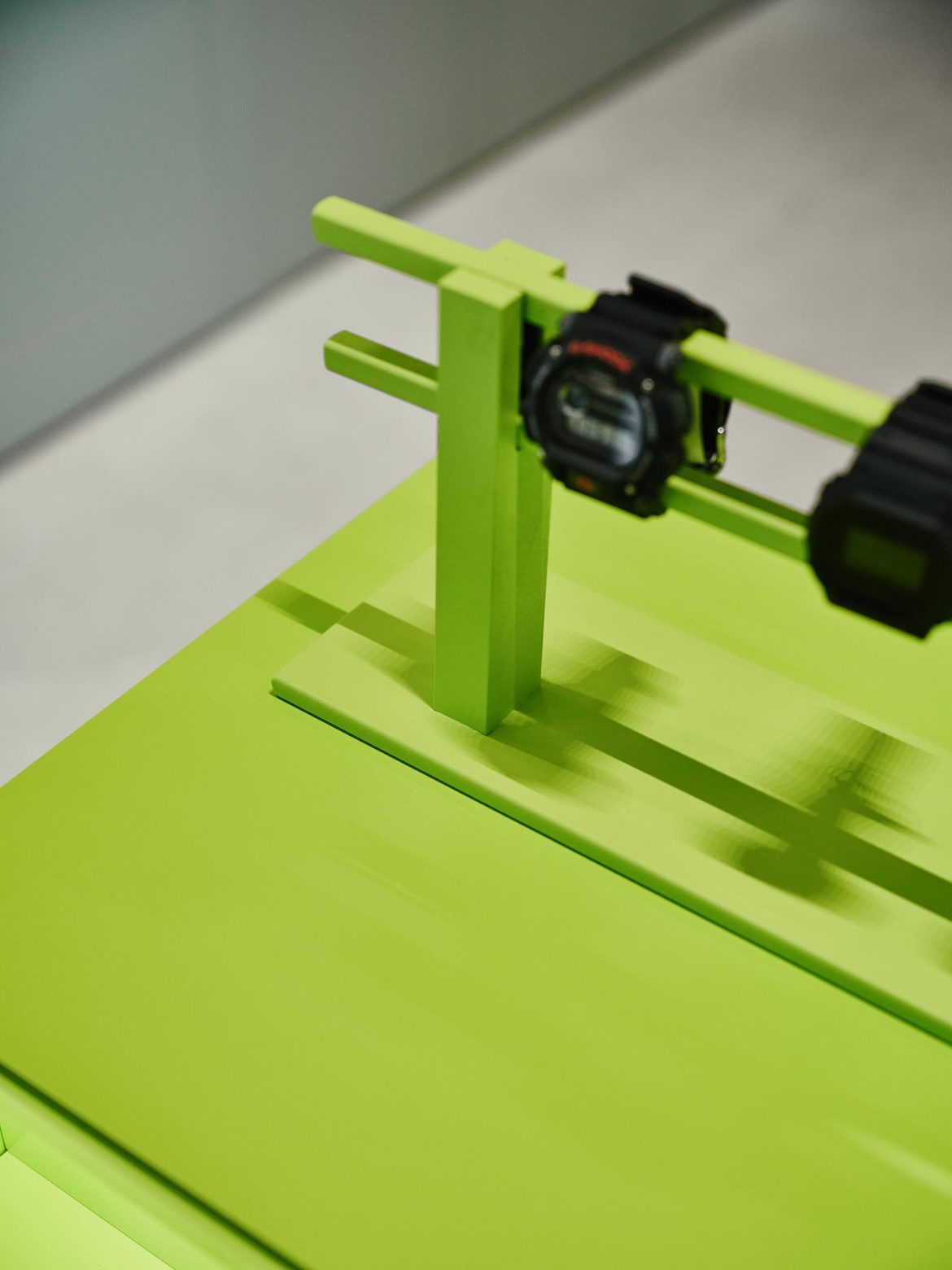
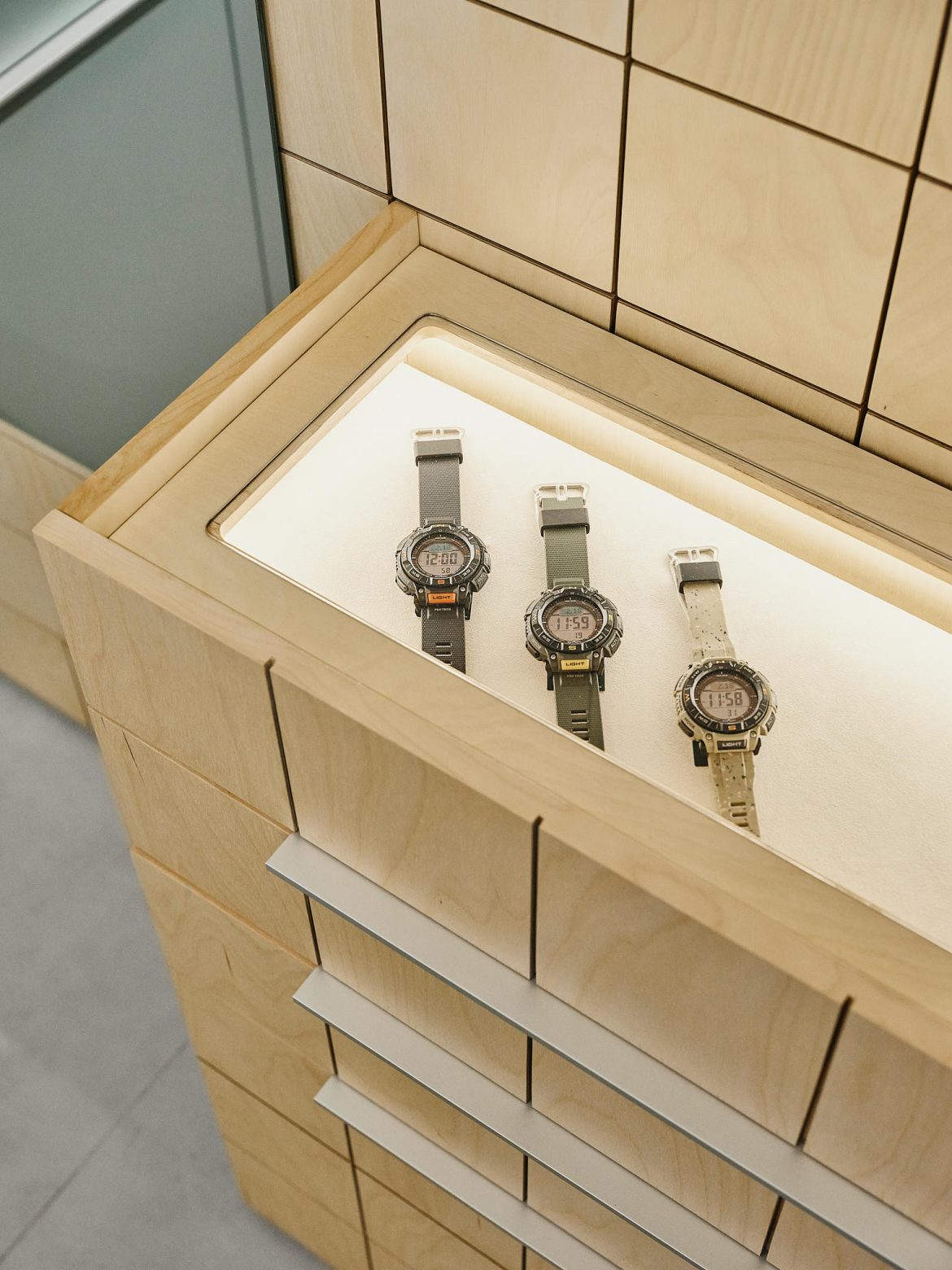
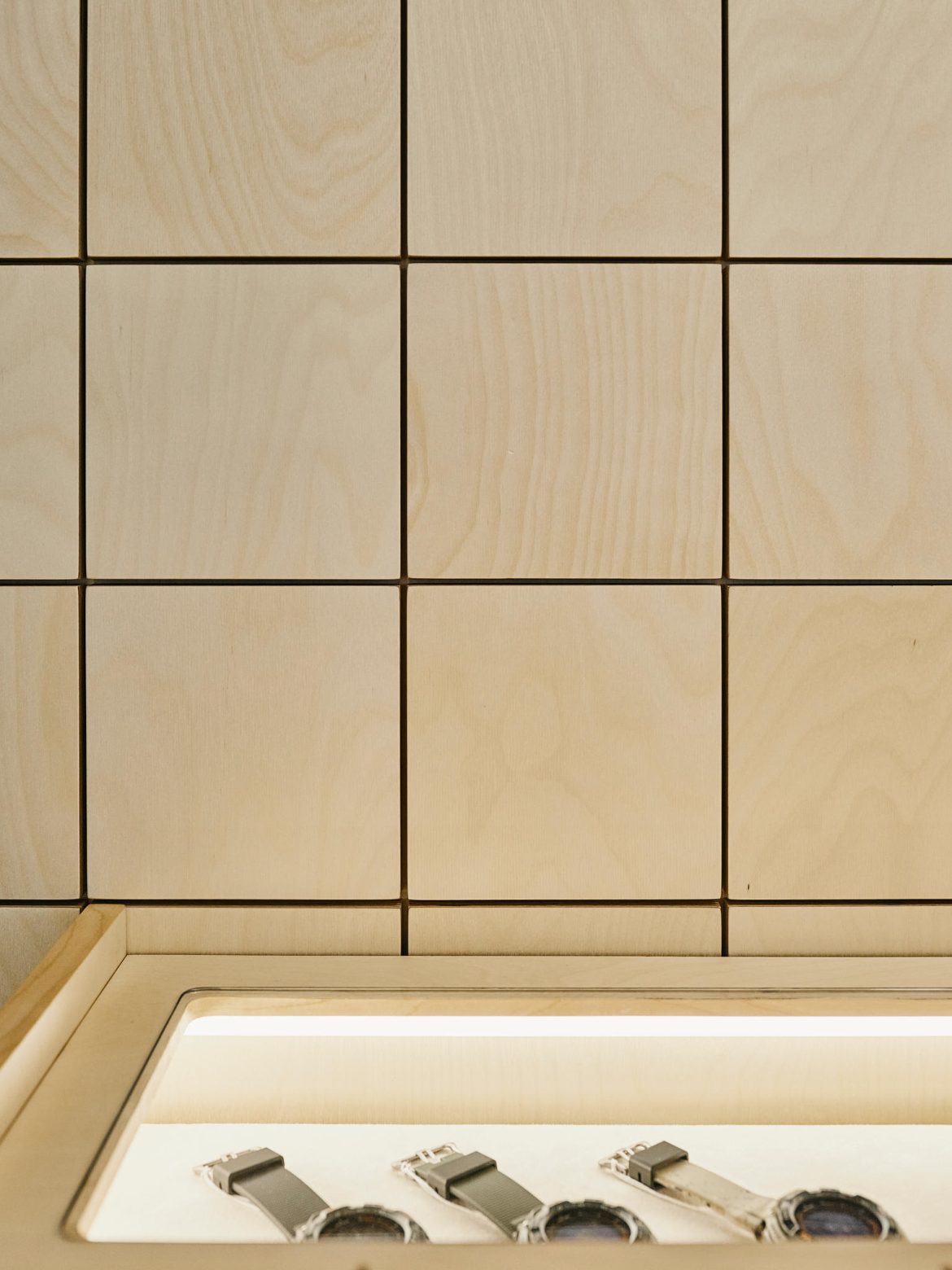
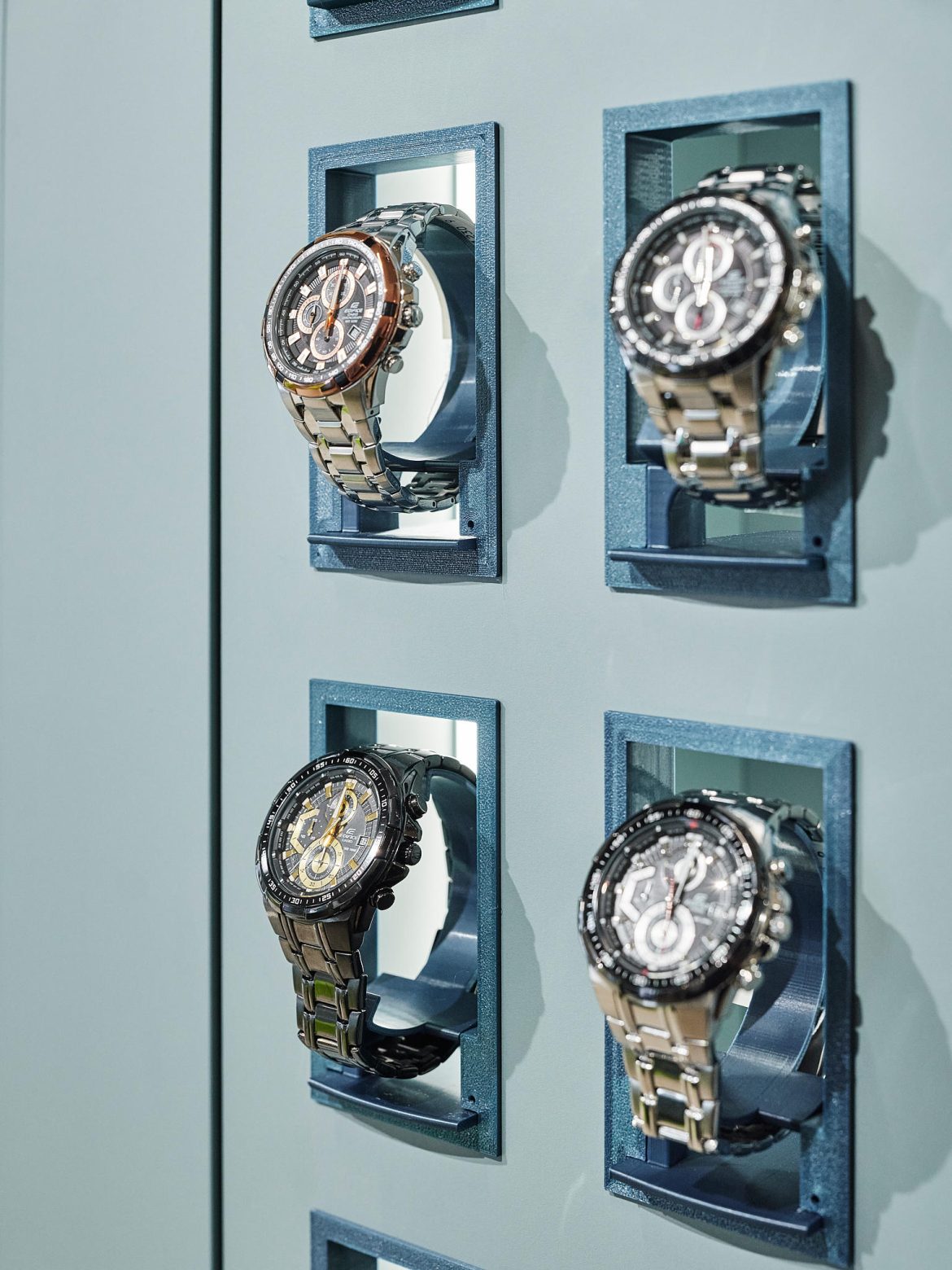
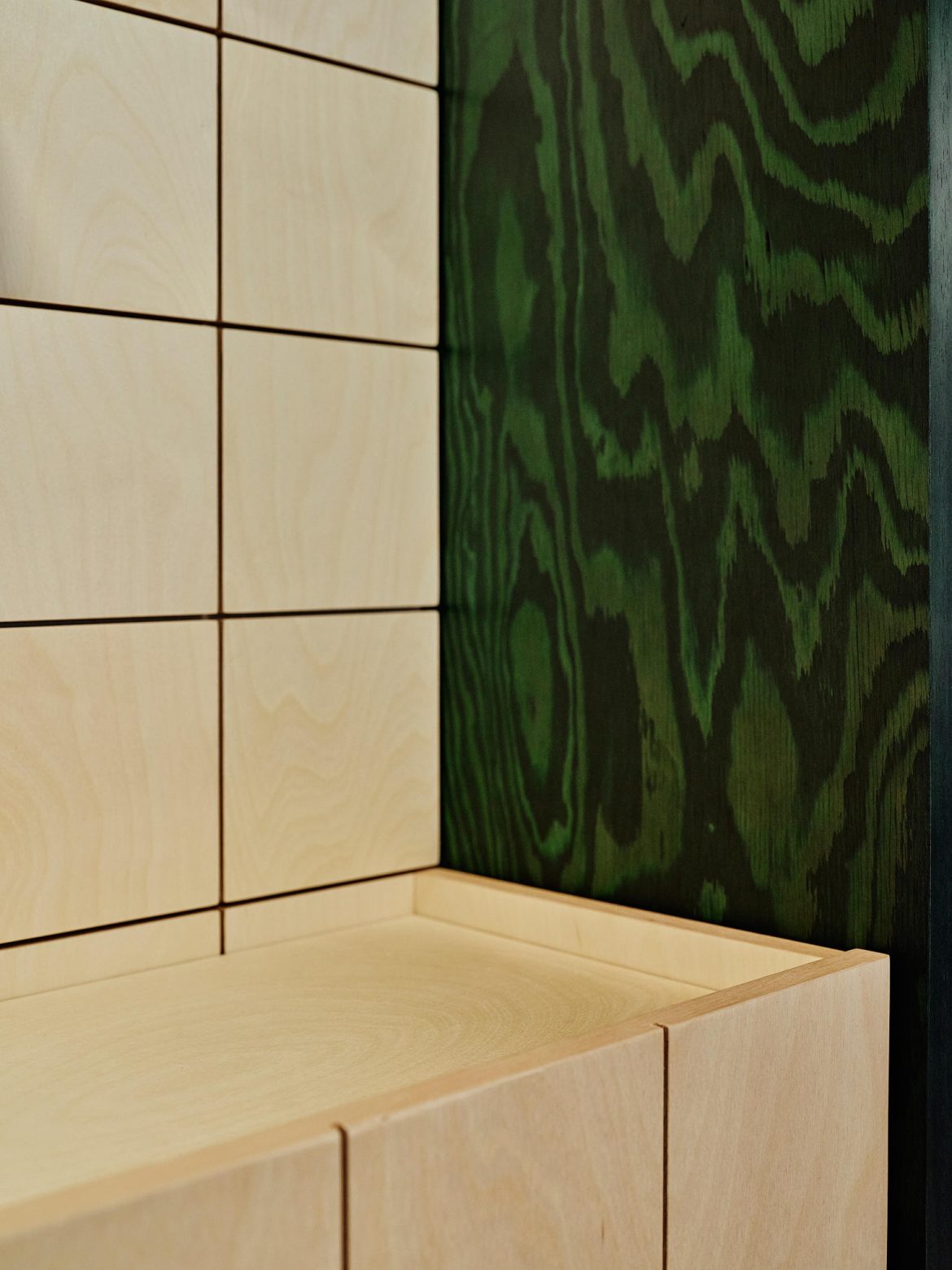
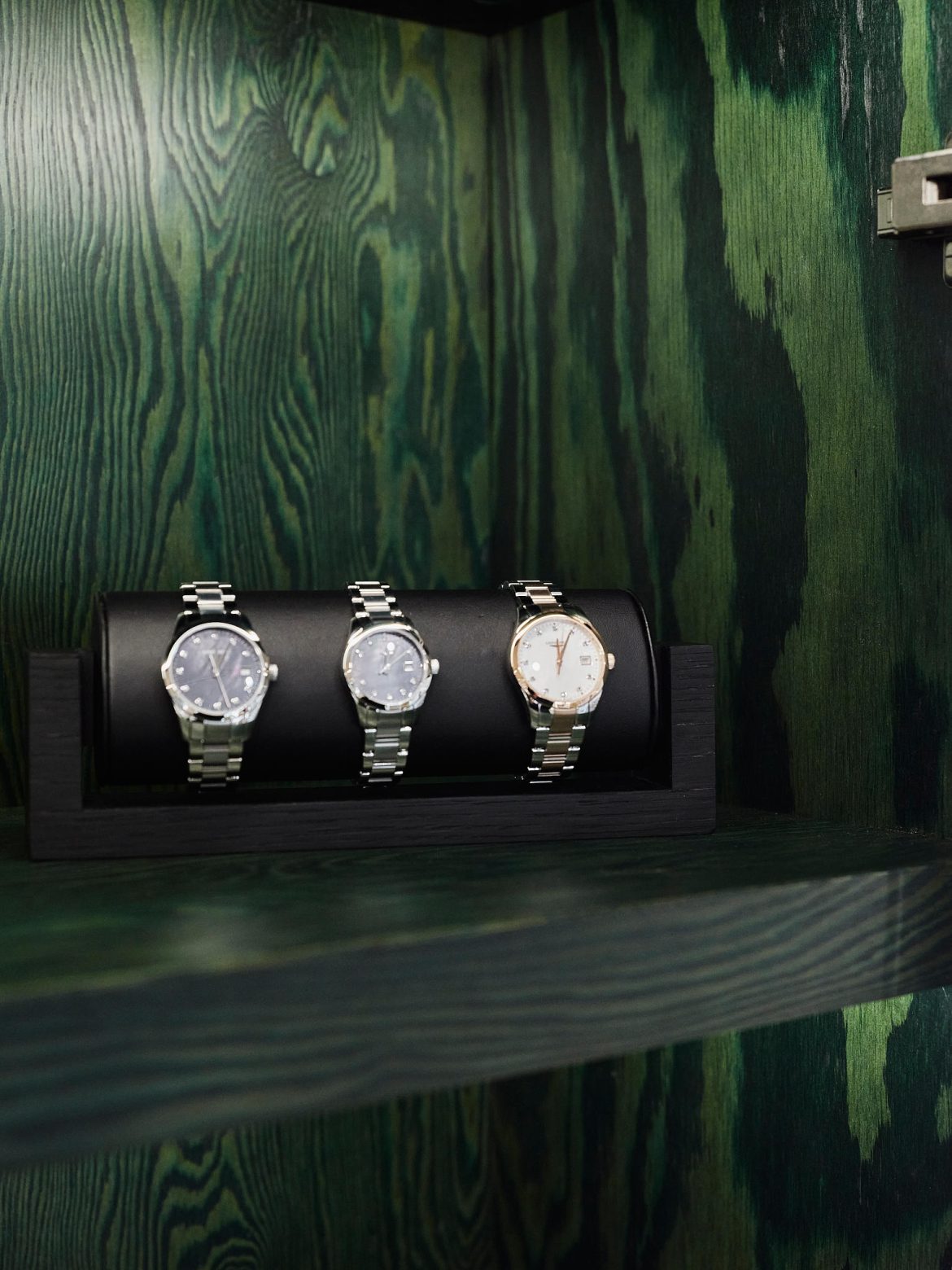
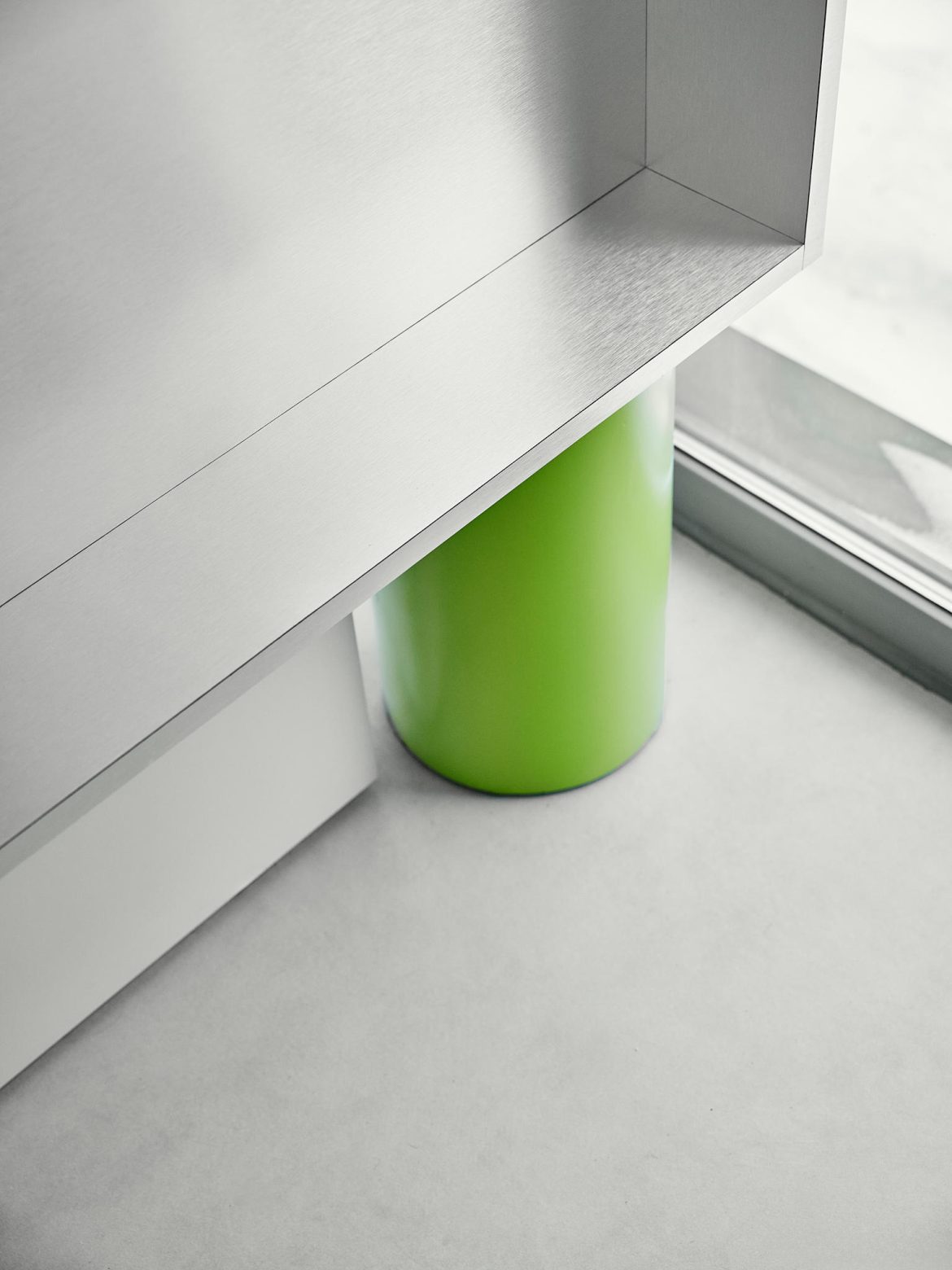
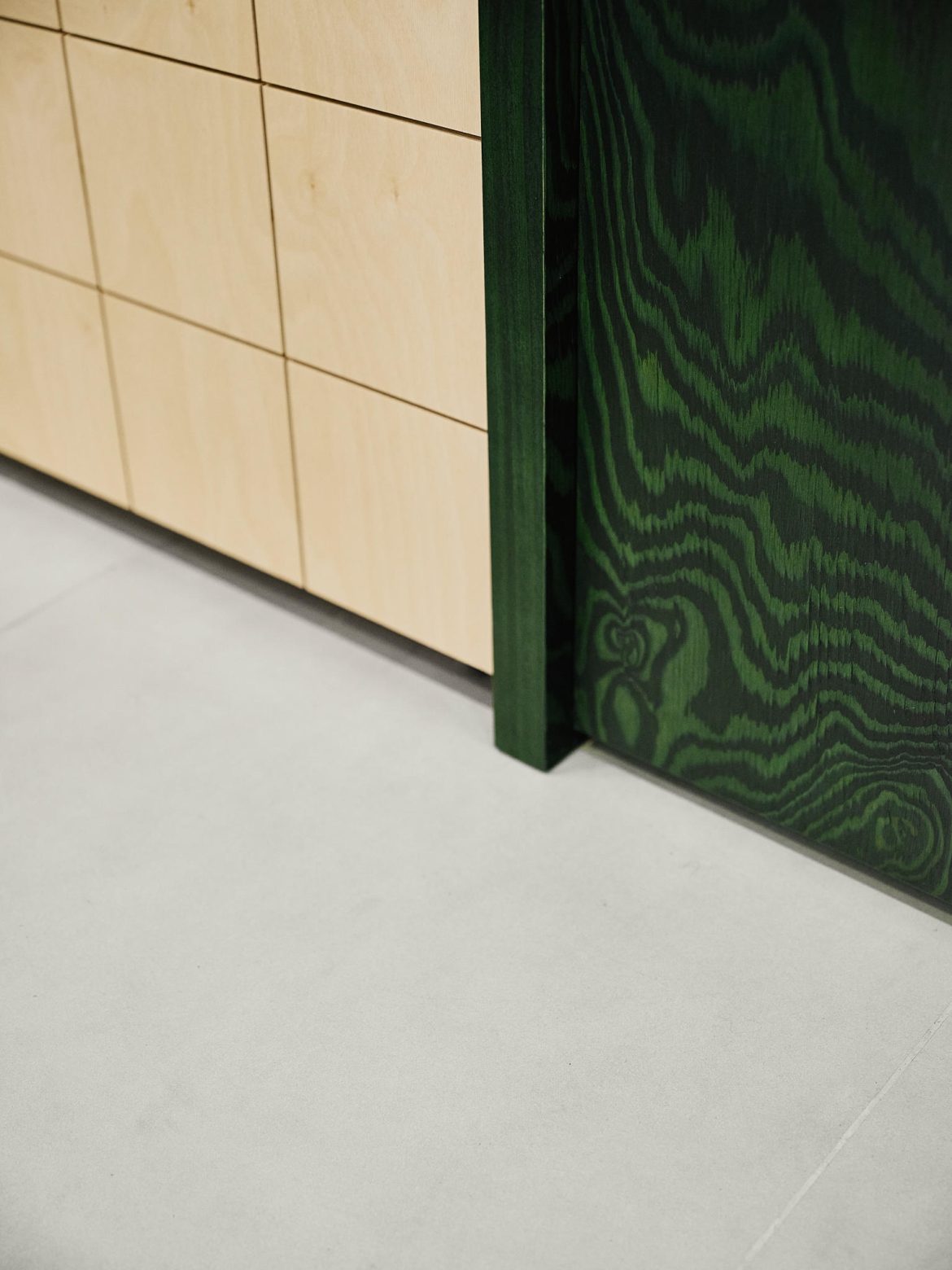
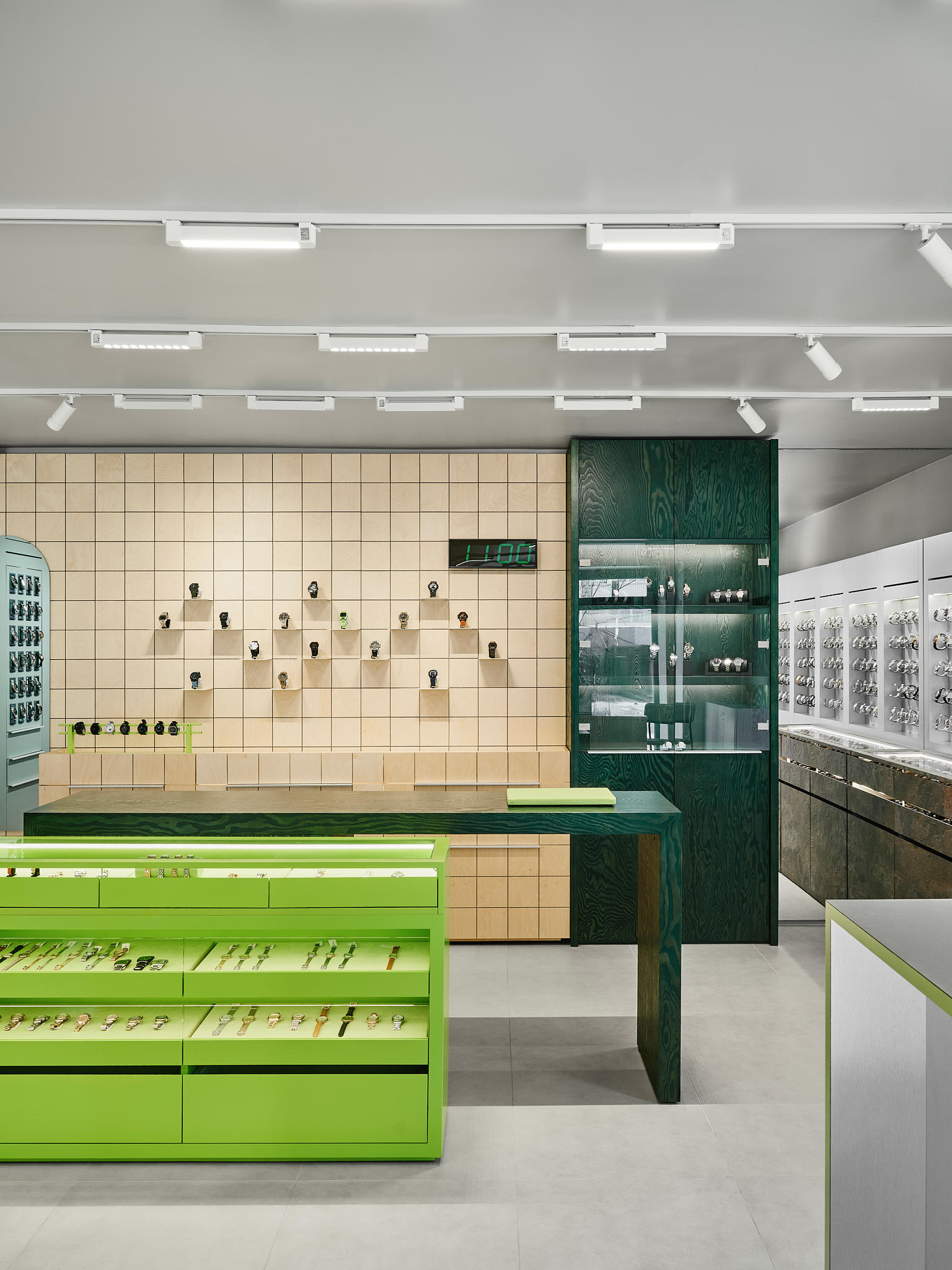
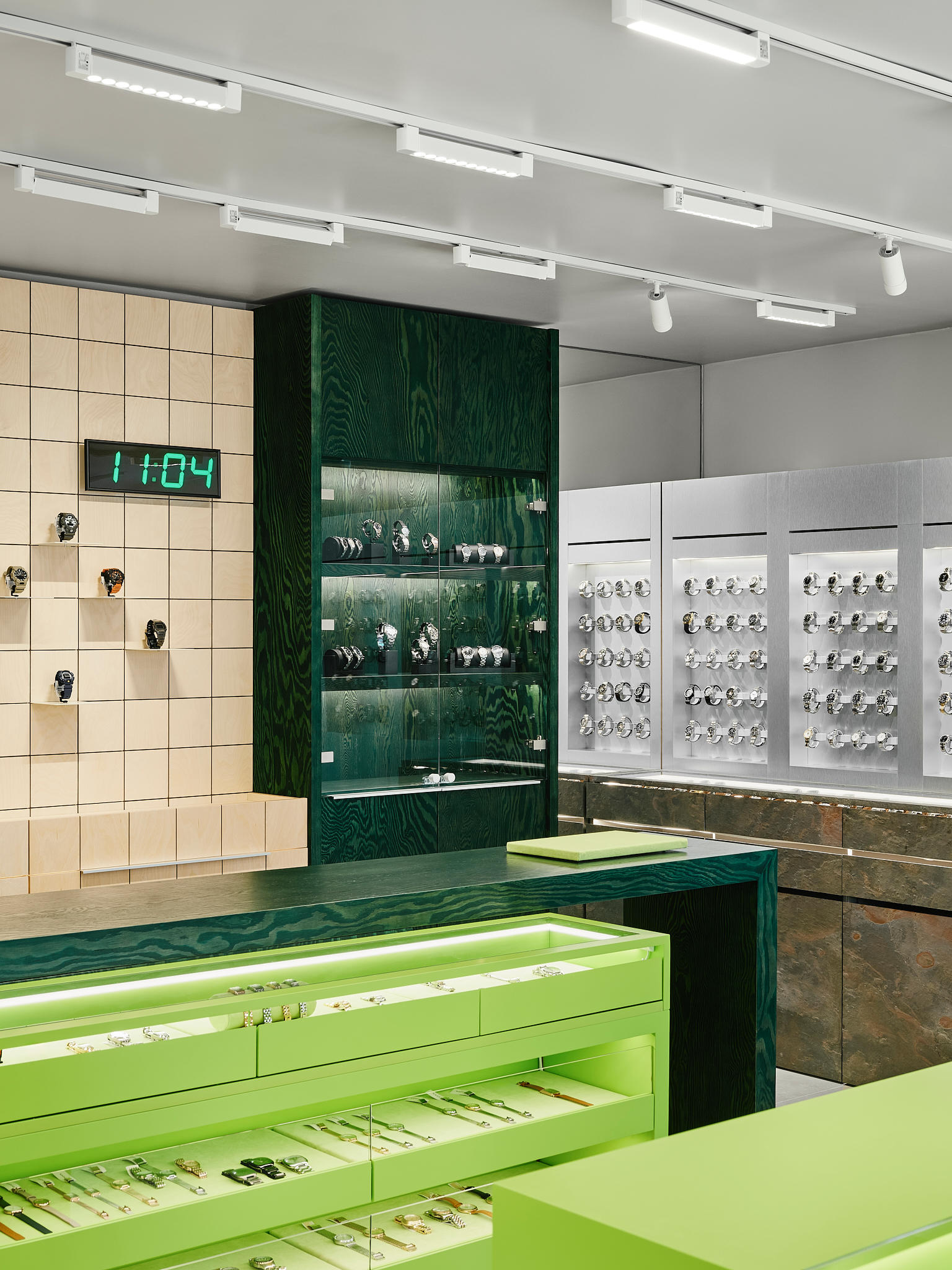
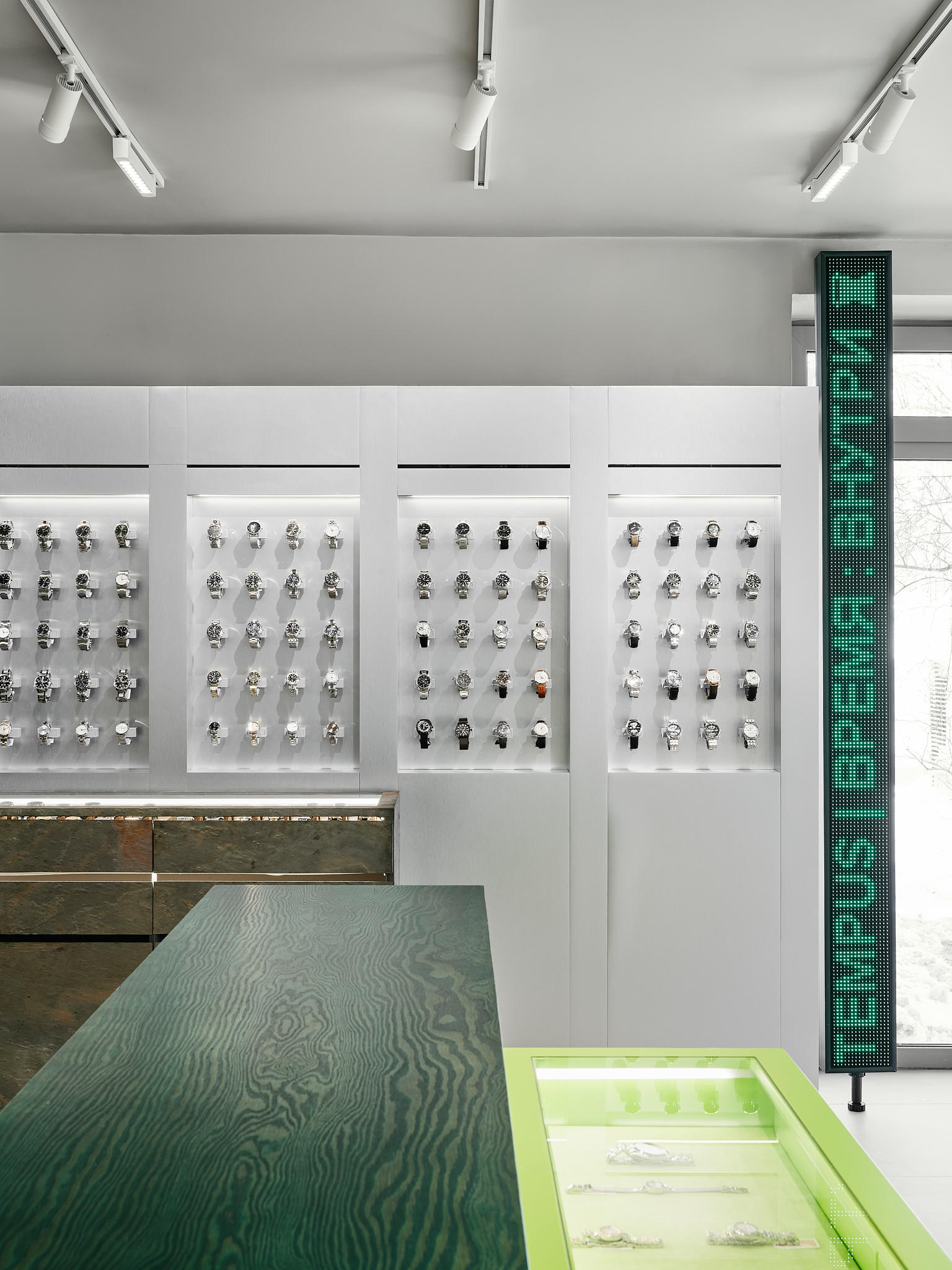
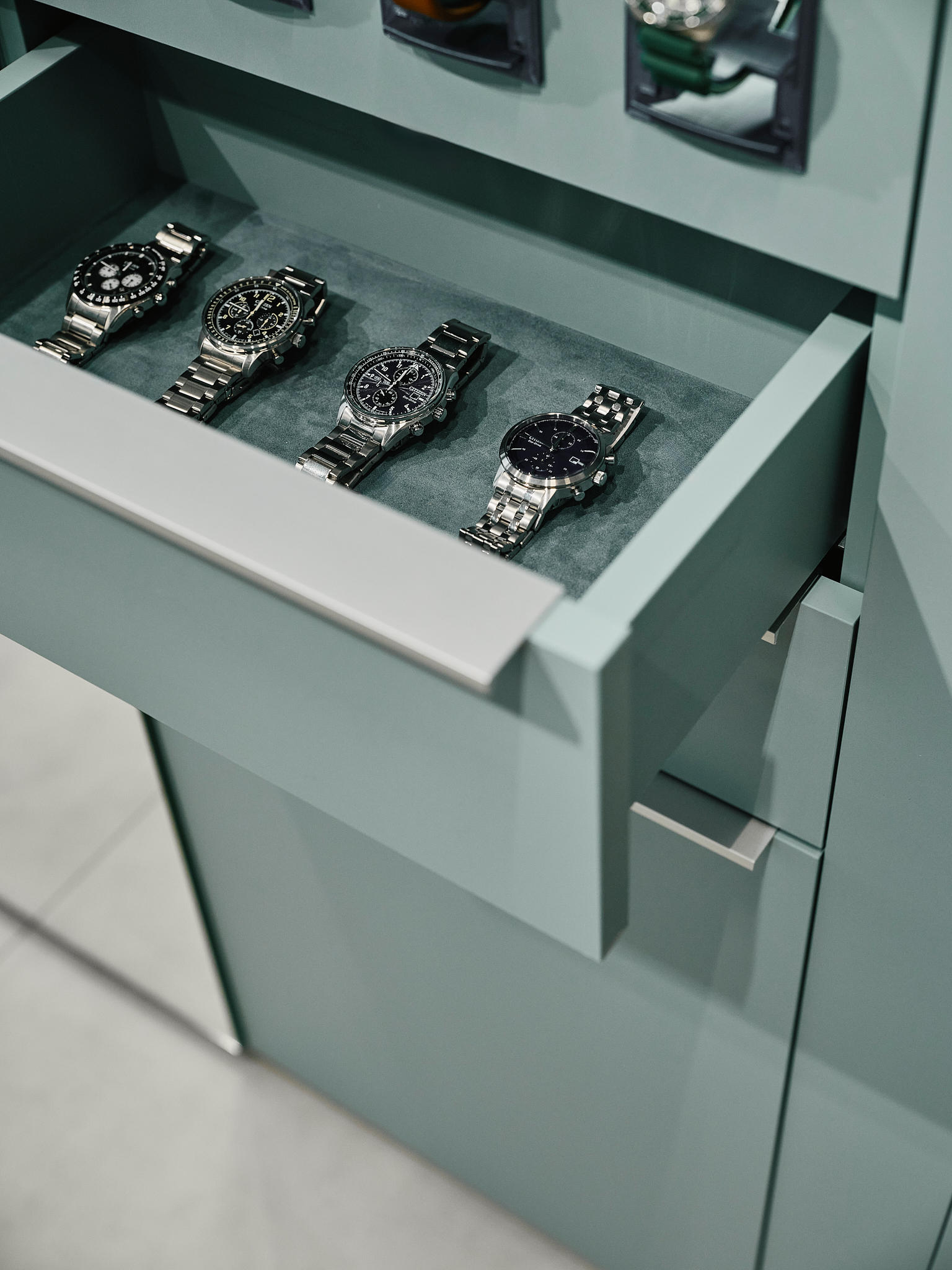
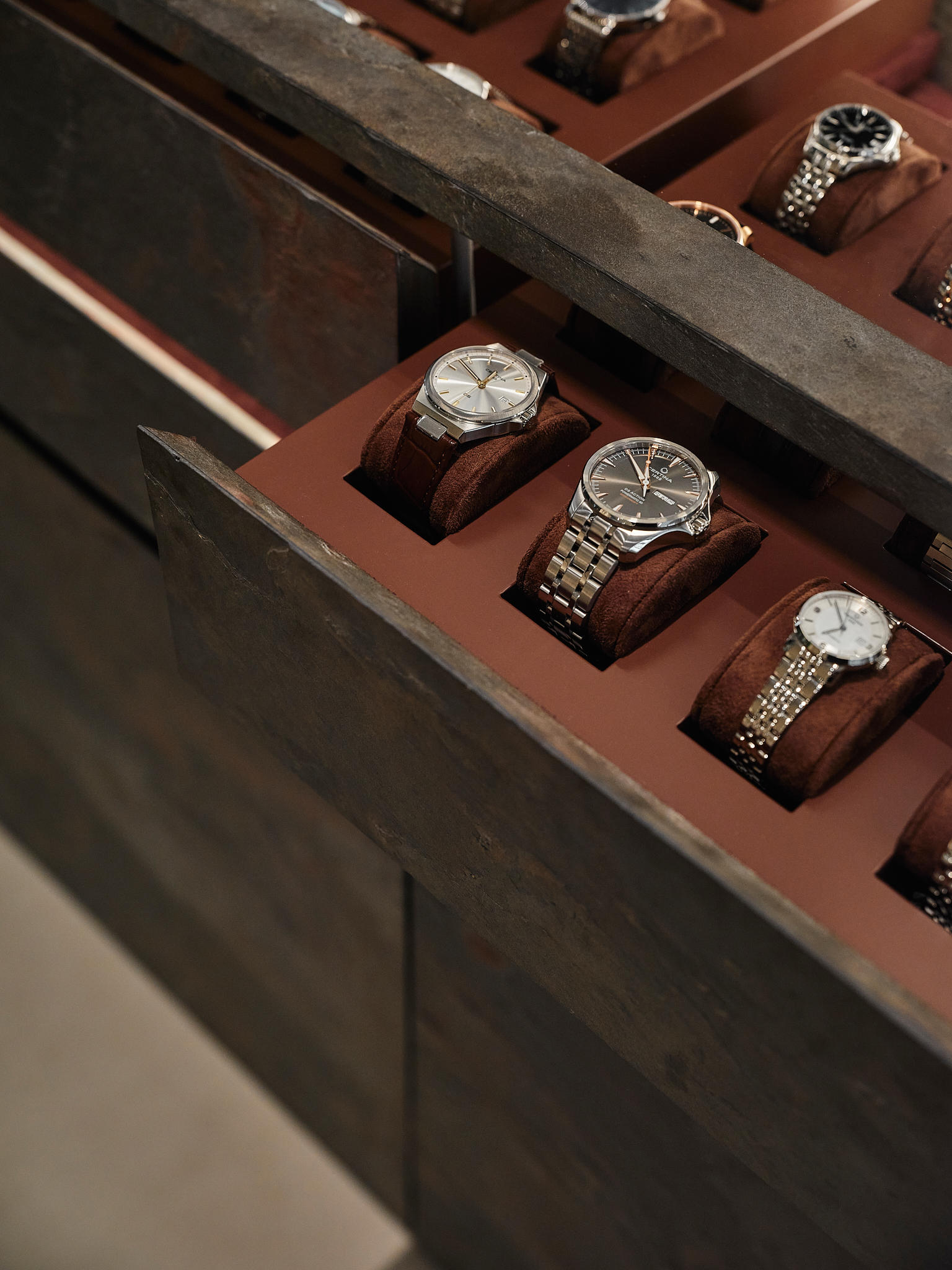
The key idea of the project is “a community of different stories.” It is expressed through a variety of commercial equipment: shelving, display cases and stands differ in materials, shape and character. One element can be made of stone veneer and refer to the premium segment, the other can be made of plywood, emphasizing accessibility and tactile simplicity. Metal structures add graphics and lightness, while plastic elements created using 3D printing form a modern technological layer.
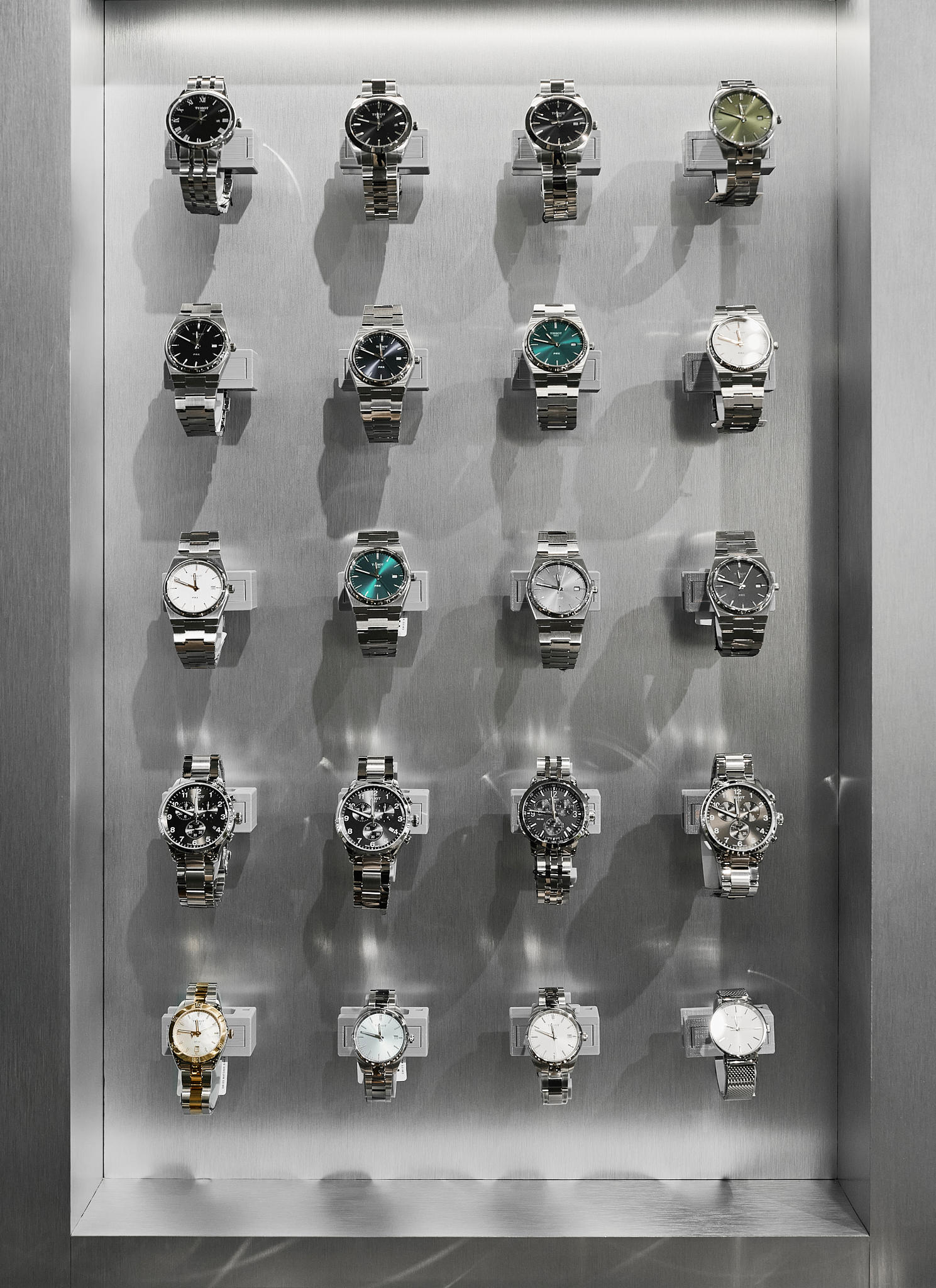
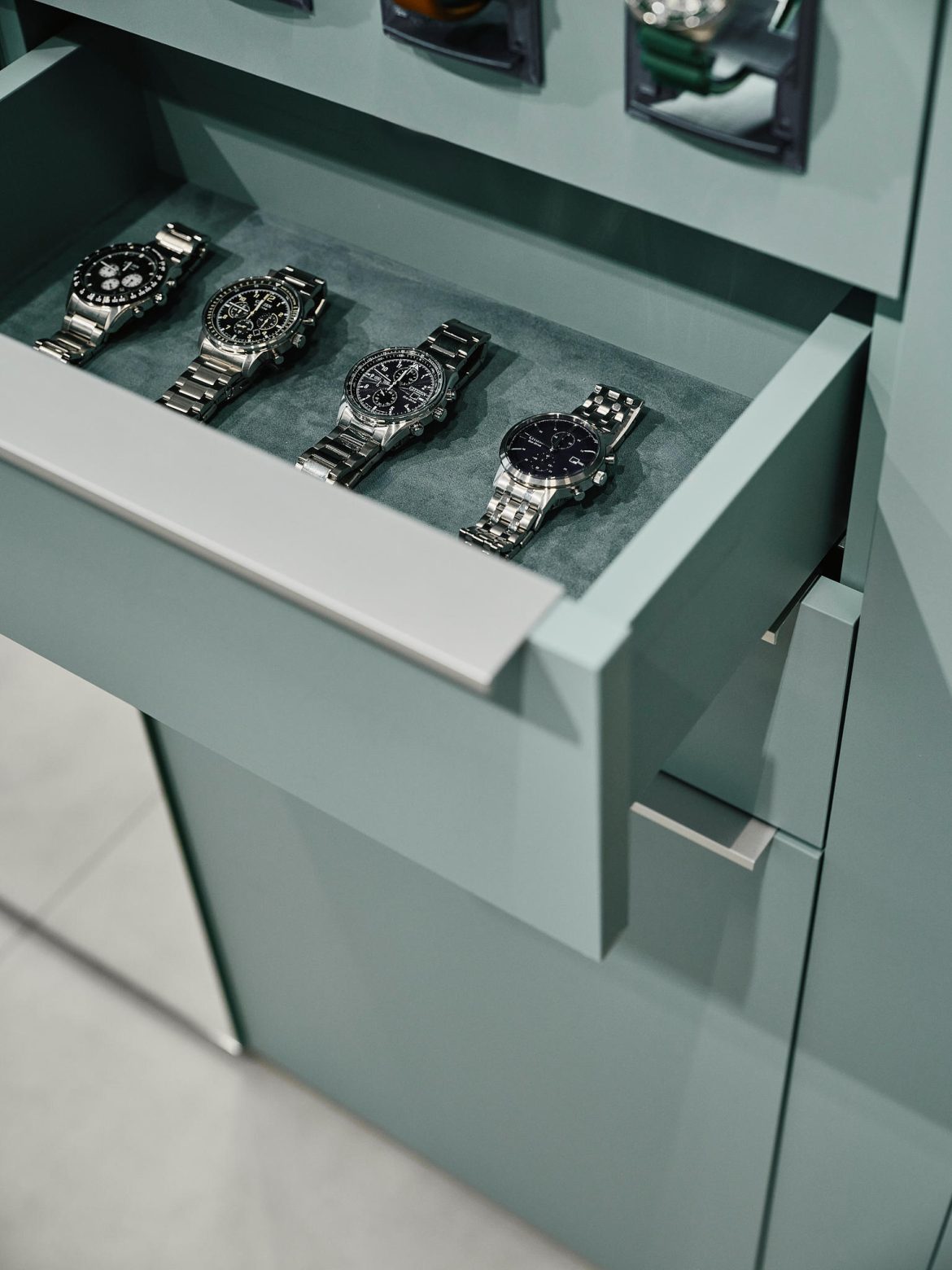
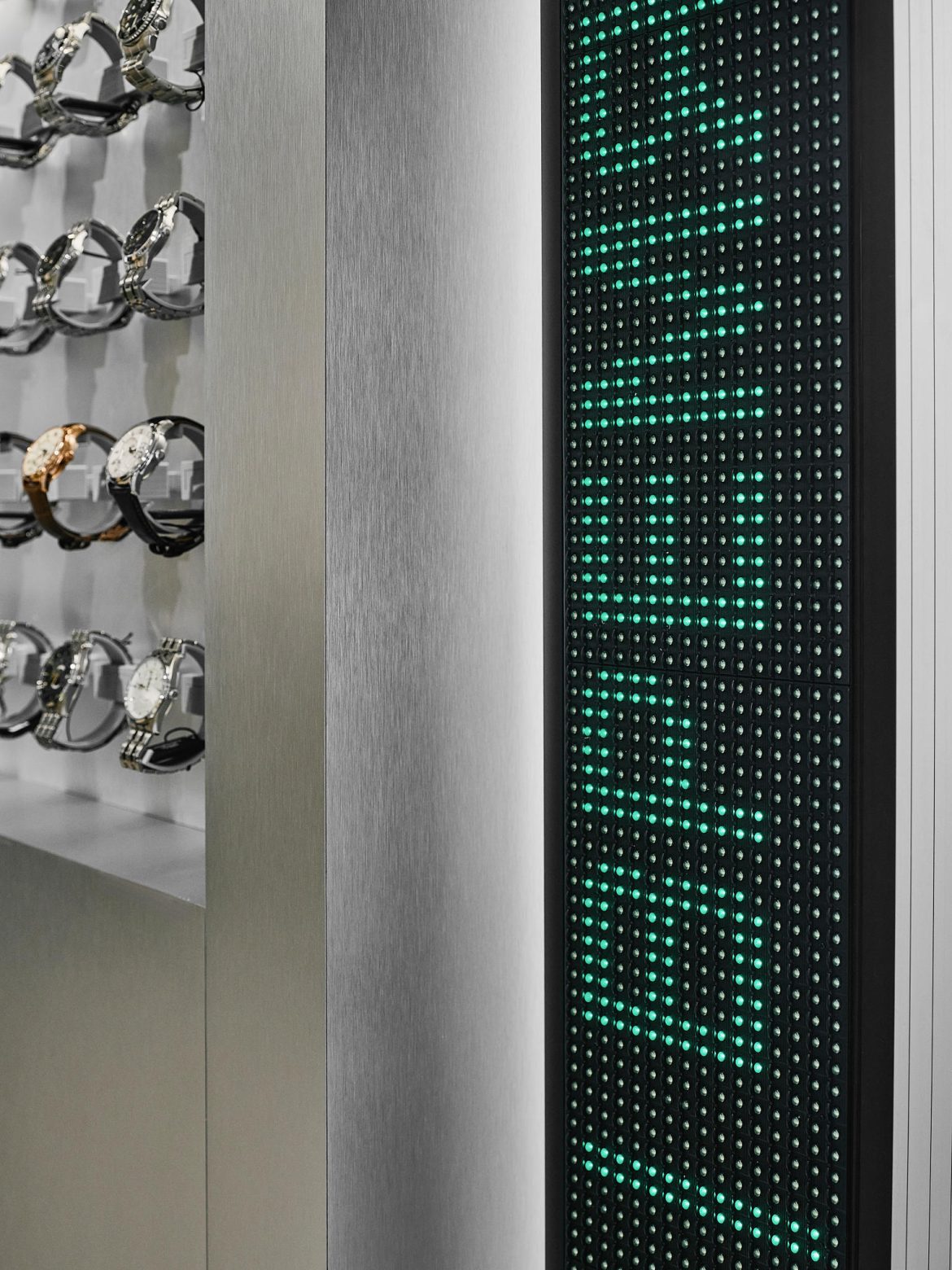
Special attention was paid to the development of watch holders. After a series of experiments, it was decided to produce them on a 3D printer. This made it possible to create precise, concise forms that perfectly match the logic of the exposition. Working with this technology has become an important milestone for the team and has opened up new opportunities for future projects.
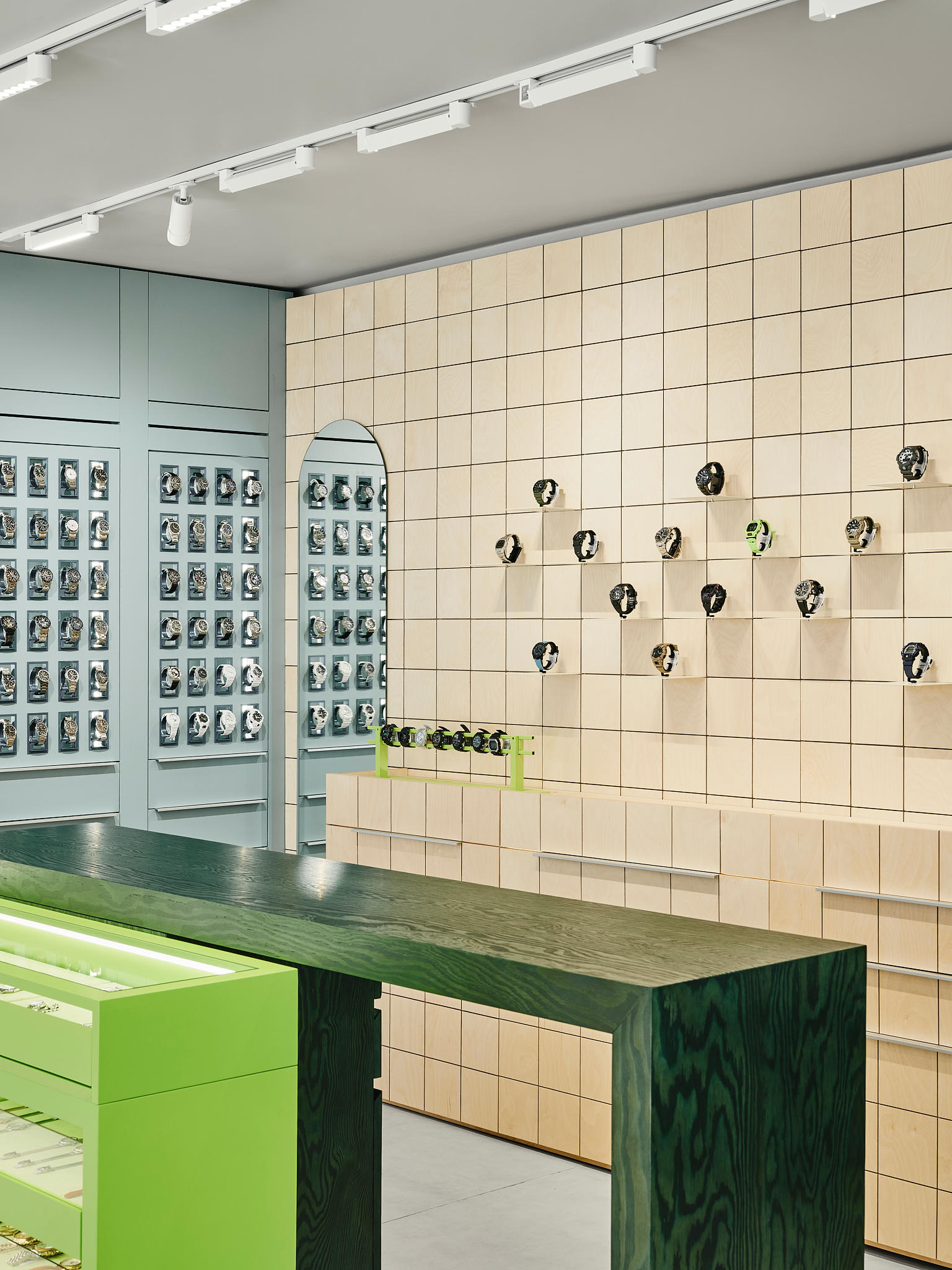
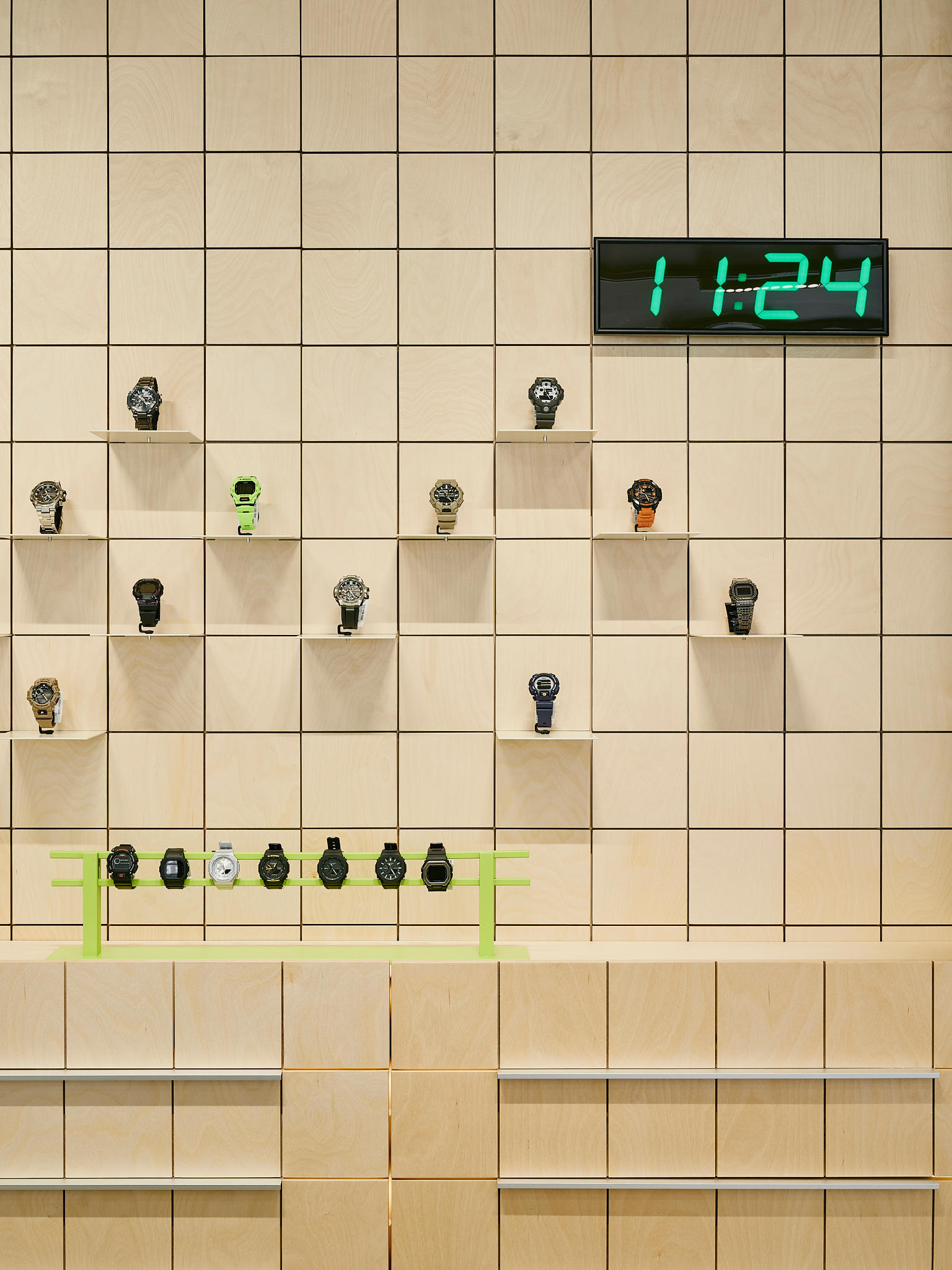
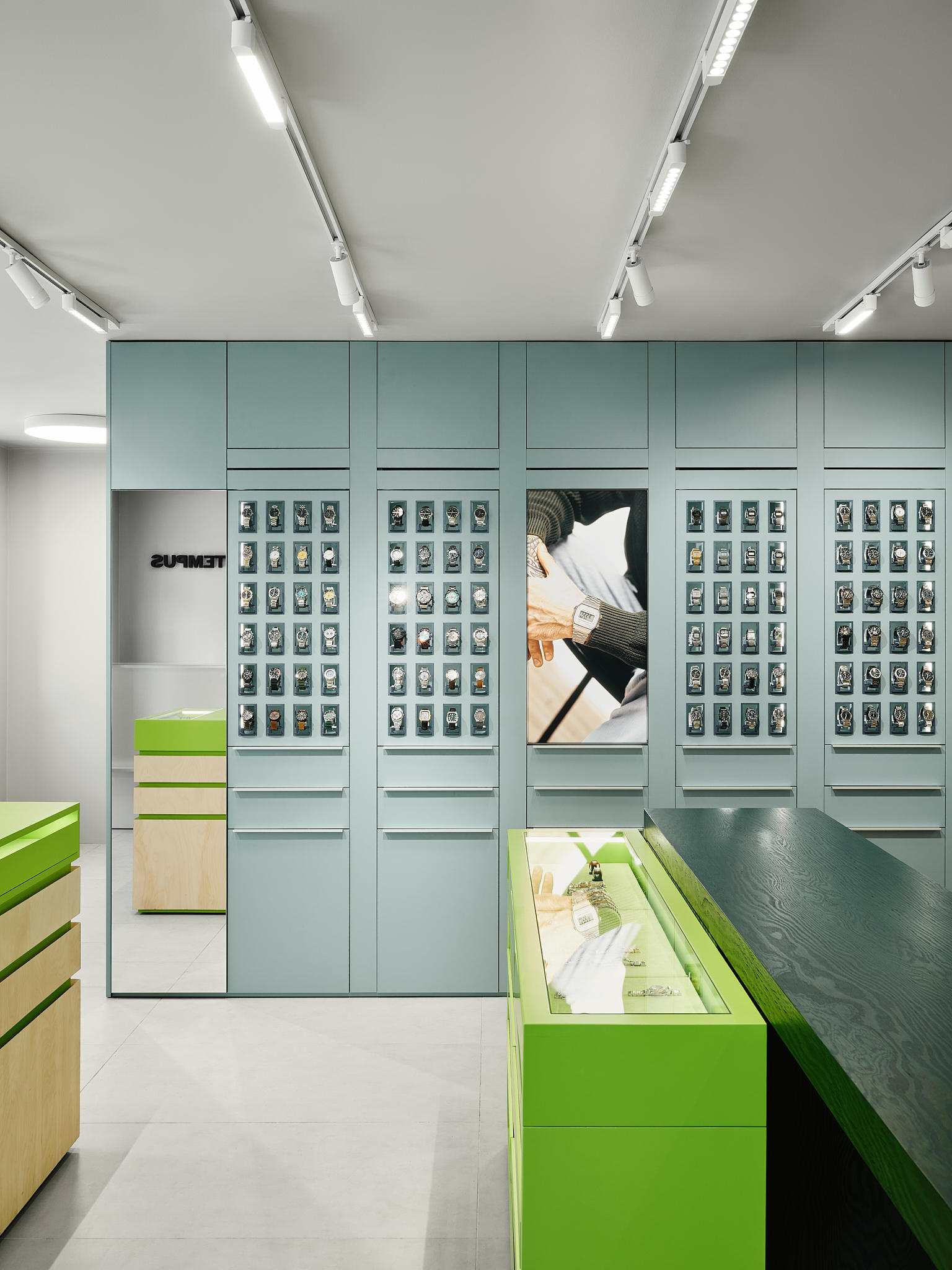
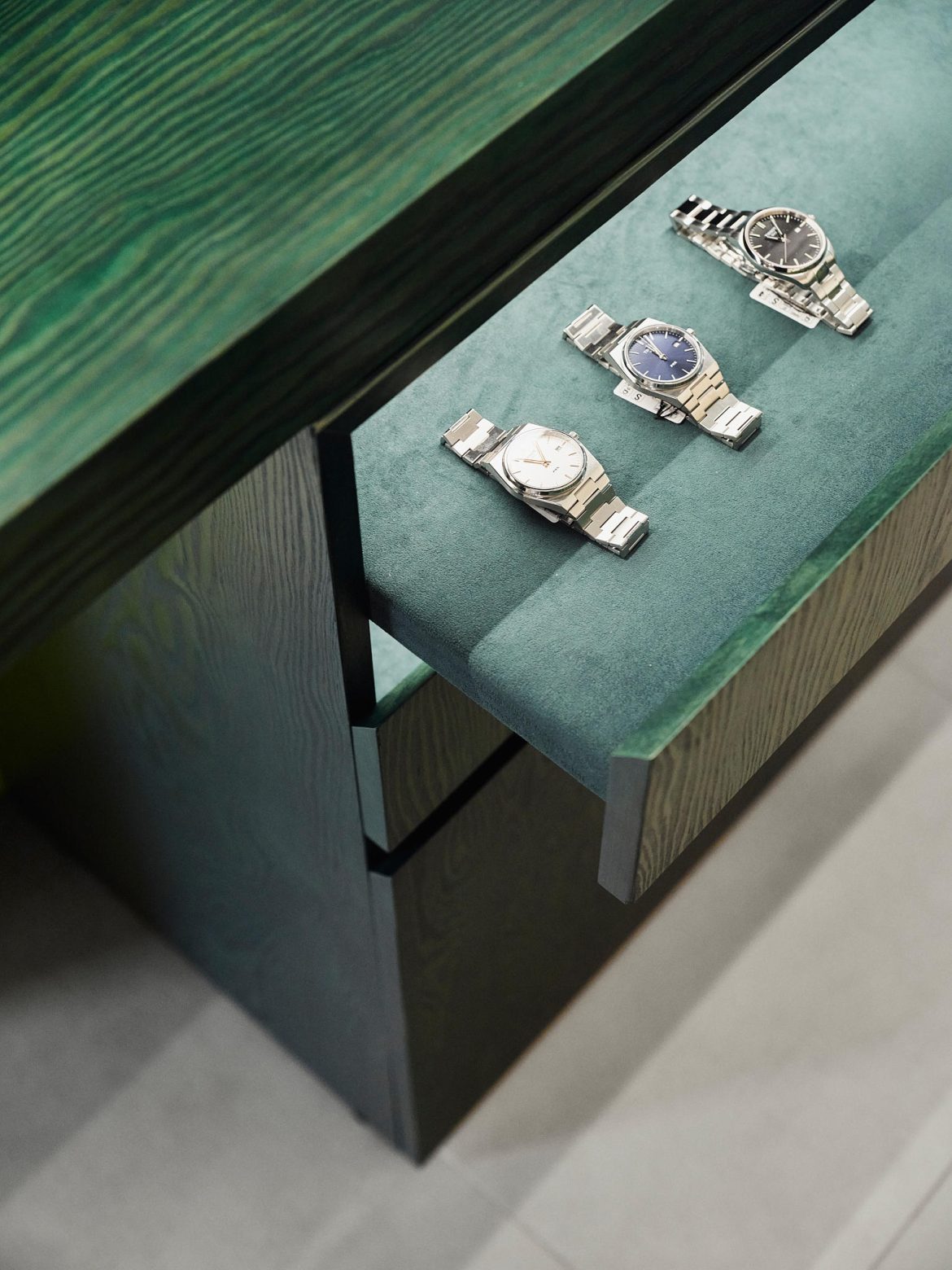
The composition of the interior is built as a sequence of different scenarios of interaction. There are open display areas where the visitor can freely take and examine the object, and more intimate storefronts that set the distance and value. Multi-height stands work like installations, allowing you to vary the exposure and create dynamics of perception.
The color palette is inspired by modern fashion and outfit: complex gray-blue and neutral shades are combined with the accent green of the brand. This scale forms a calm and lively image at the same time, devoid of rigid gender binding.
Elements related to the theme of time have become a separate expressive layer. The electronic clock and the slider refer to the aesthetics of the 1990s, creating a time-shifting effect. This decision echoes the brand’s philosophy: time is perceived subjectively — it can drag on or accelerate depending on a person’s condition. The interior captures this idea, turning the space into a metaphor for personal time.
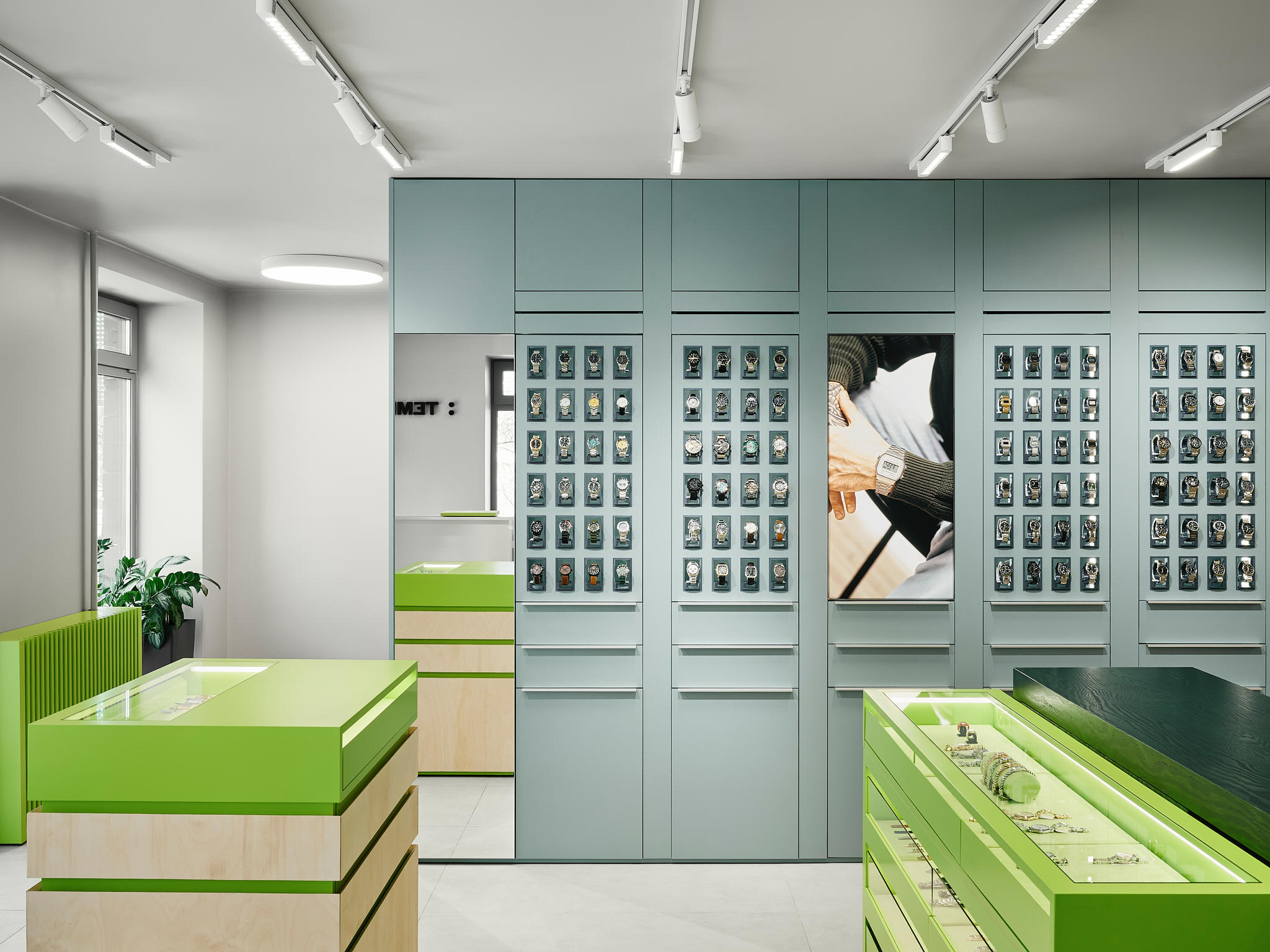
An additional emphasis was placed on the waiting area, designed as a cozy space with upholstered furniture and live plants. It replaced the originally planned workshop and reinforced the human dimension of the project — here you can stop, slow down and just stay.
The project was implemented in close cooperation with the customer and contractors, many of whom showed a high level of engagement and willingness to experiment. Thanks to this, it was possible to implement a number of non-standard solutions with almost no simplifications.
Tempus demonstrates how an interior can work not only as a trading environment, but also as an idea carrier. Here, time becomes not an abstract quantity, but a personal experience, and choosing a watch is a way to express oneself in different states and life scenarios.