Project name: Resmile Dental Wellness
Interior design: Spacecraft co.,ltd
Design Team: …
Location: Bangkok Thailand
Photo: Panoramic studio
Area: 37 Sq.m
Year: 2025
Project description from design firms Spacecraft co.,ltd
Designing Against Fear: When a Dental Clinic Becomes a Spatial Experience
Introduction
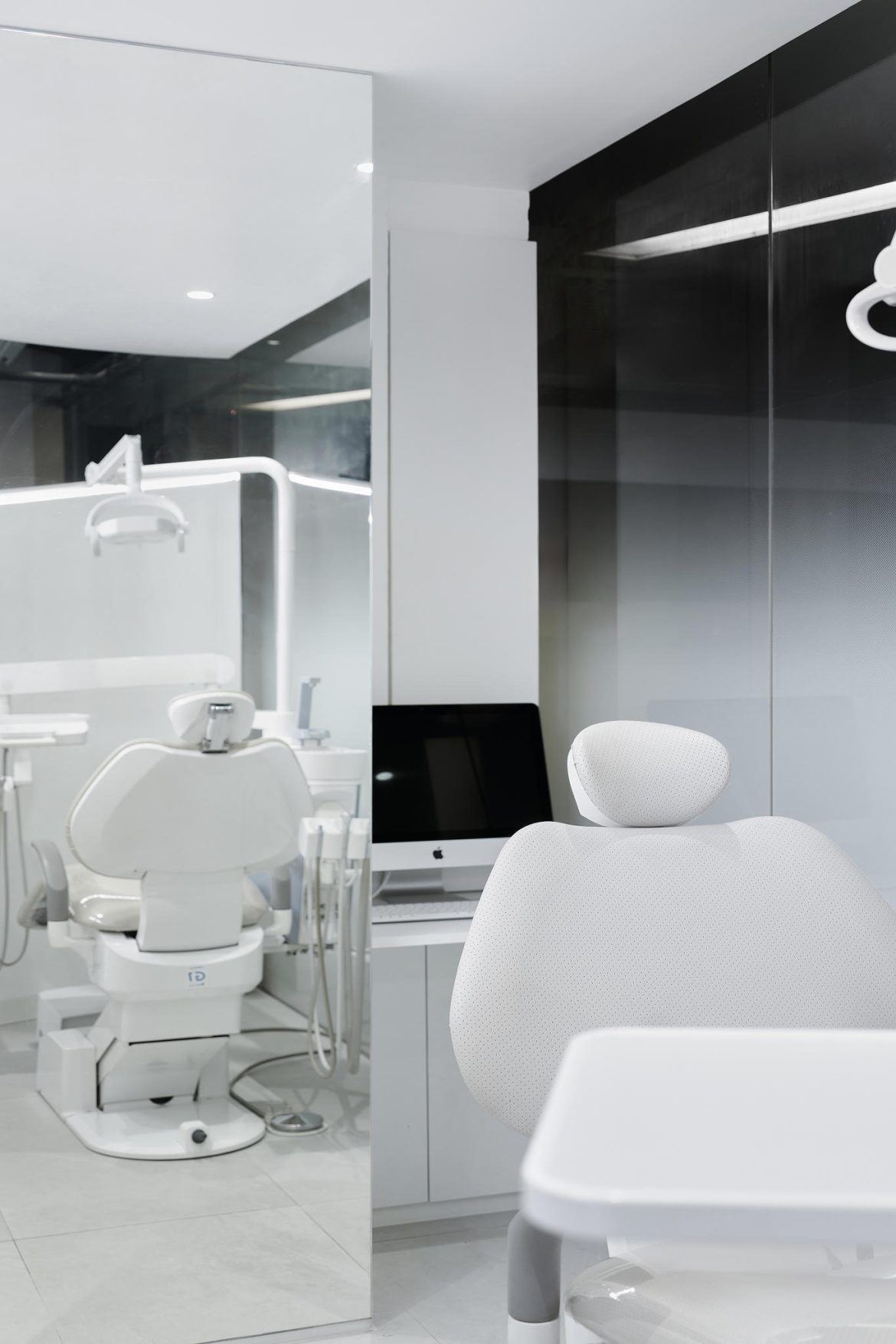
Among the architectural programs most rigidly defined by function, dental clinics rank among the most demanding — bound by hygiene standards, clinical circulation requirements, and the psychological weight patients carry before even stepping through the door. Bangkok-based architecture and interior design studio , space+craft confronts these constraints head-on. Within a mere 37 square metres, Resmile Dental Wellness (2025) is not simply a clinic. It is a deliberate interrogation of what healthcare architecture can — and should — feel like.
Design Concept: Futuristic Aesthetics as Psychological Strategy
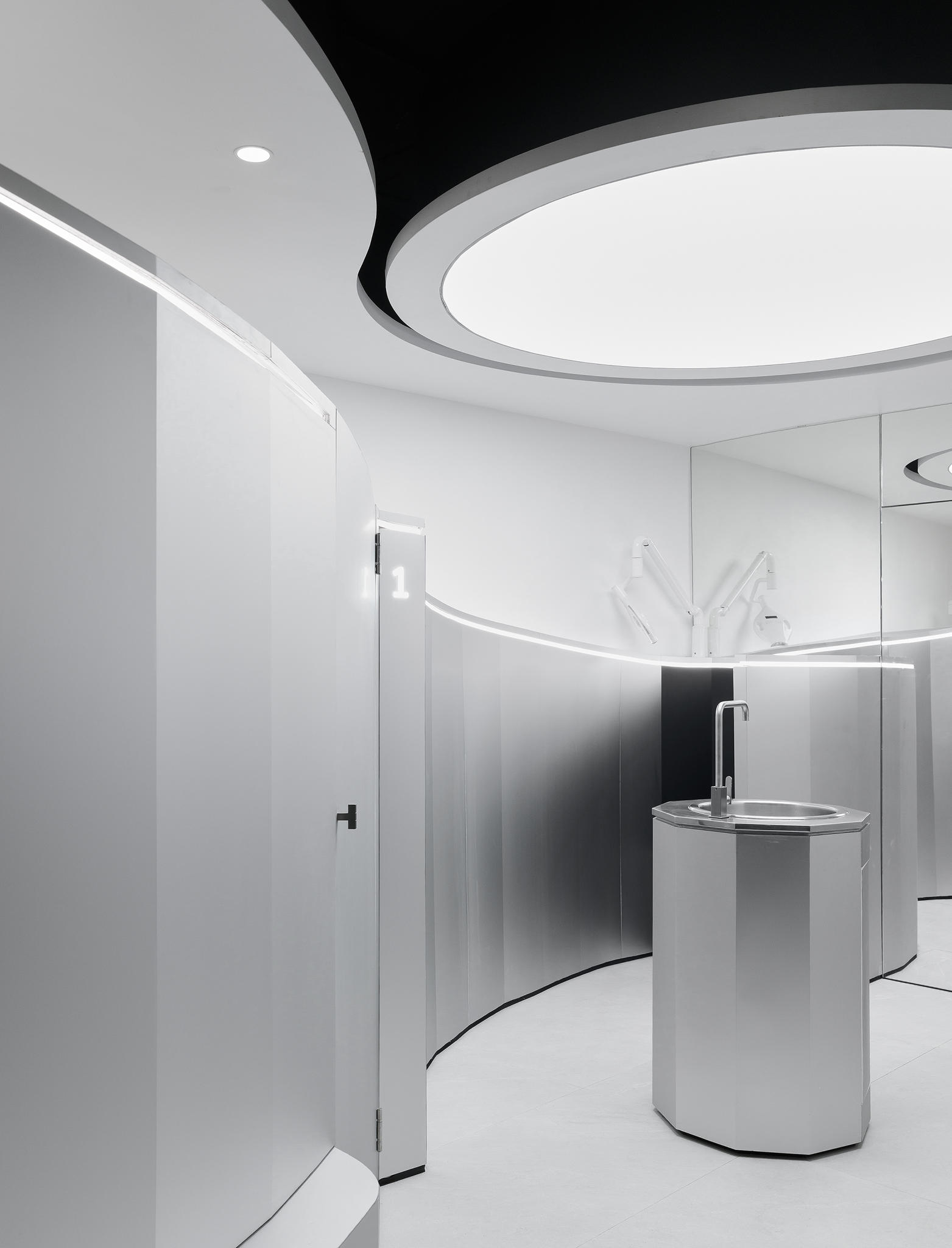
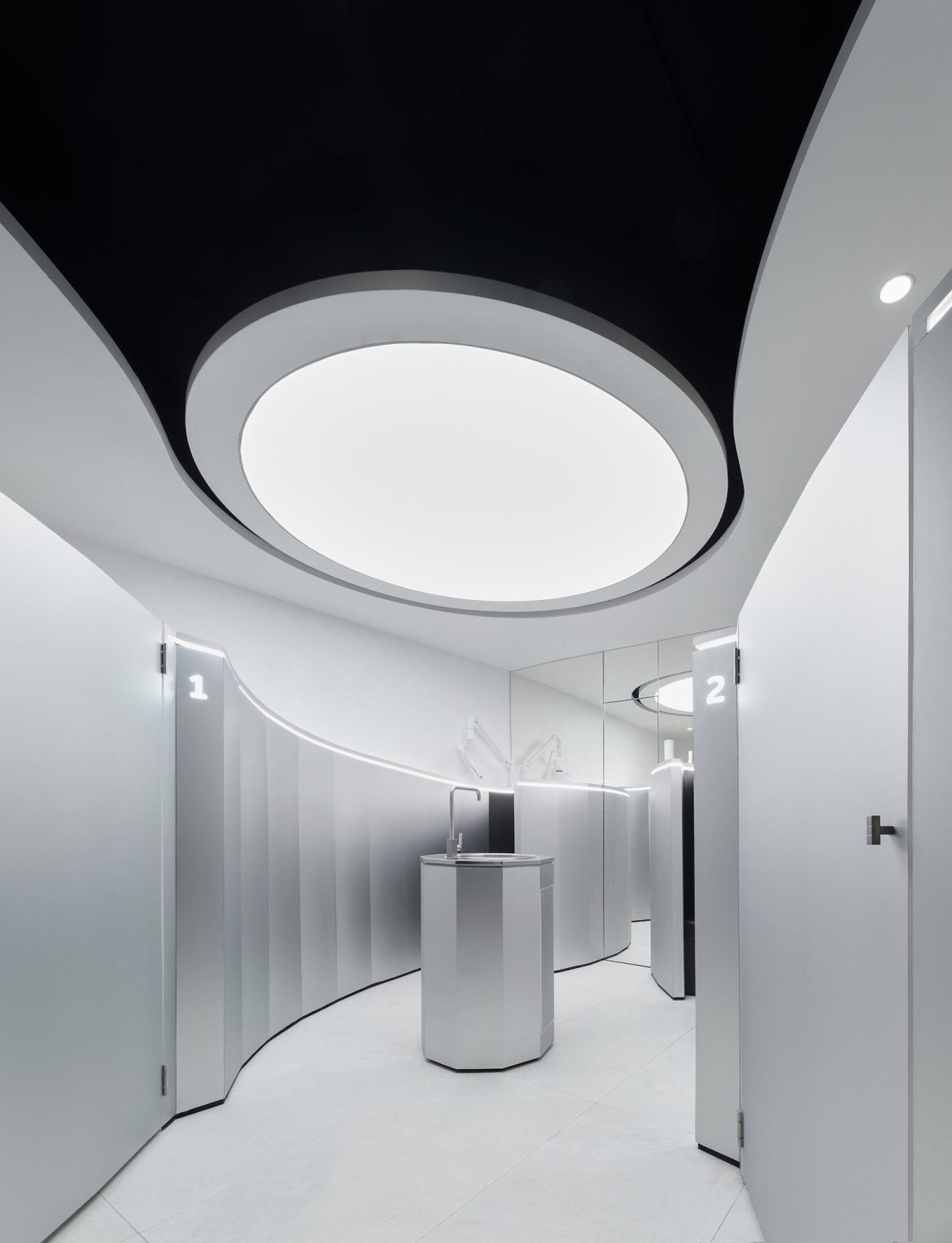
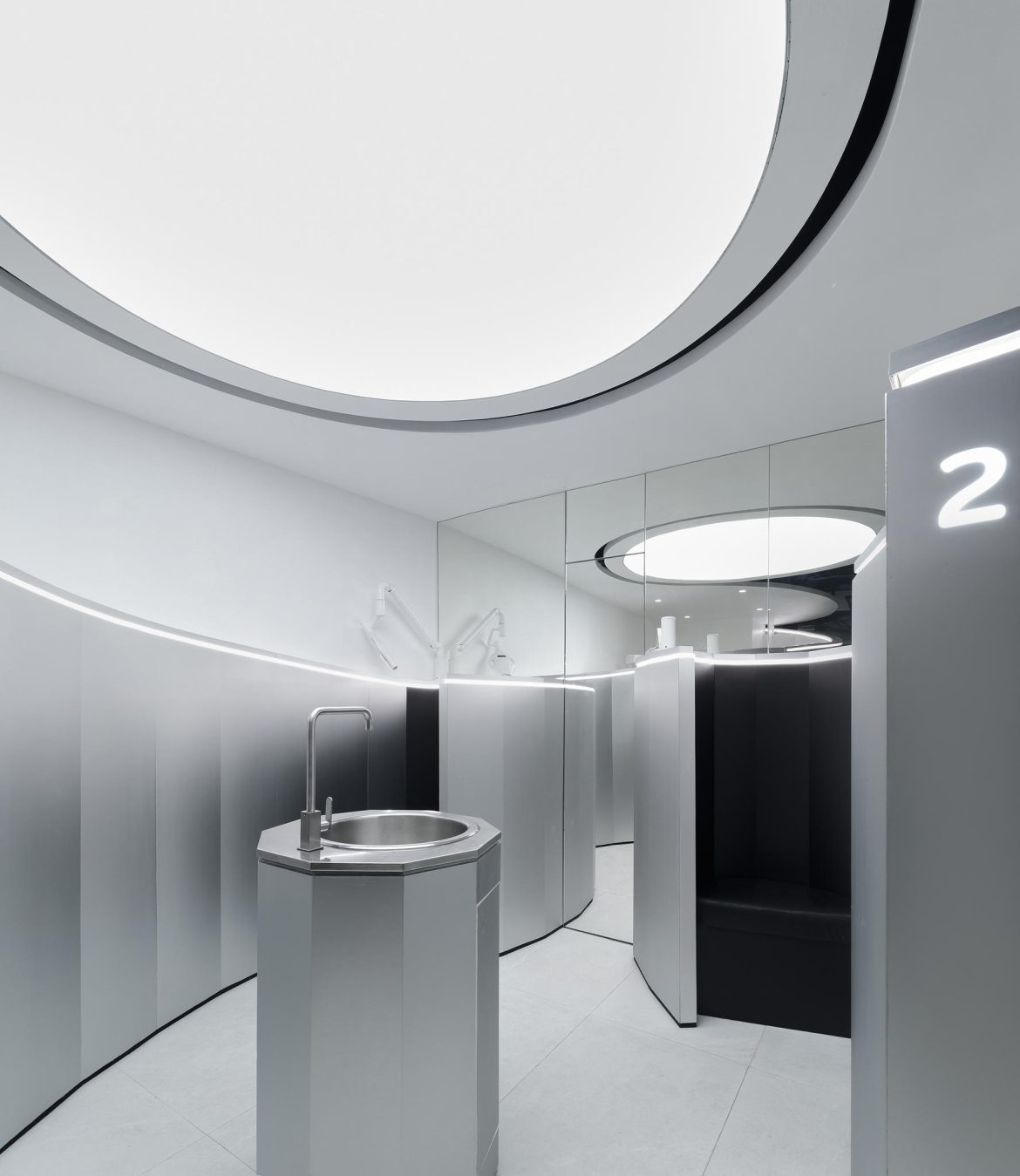
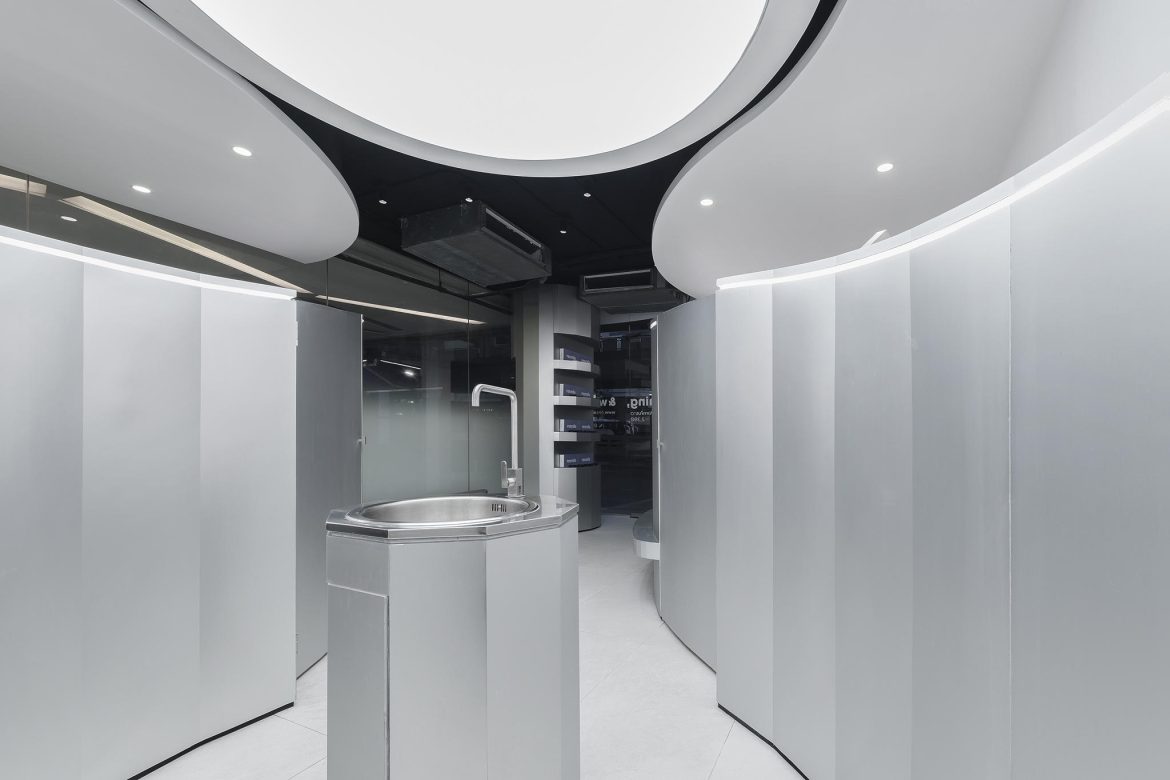
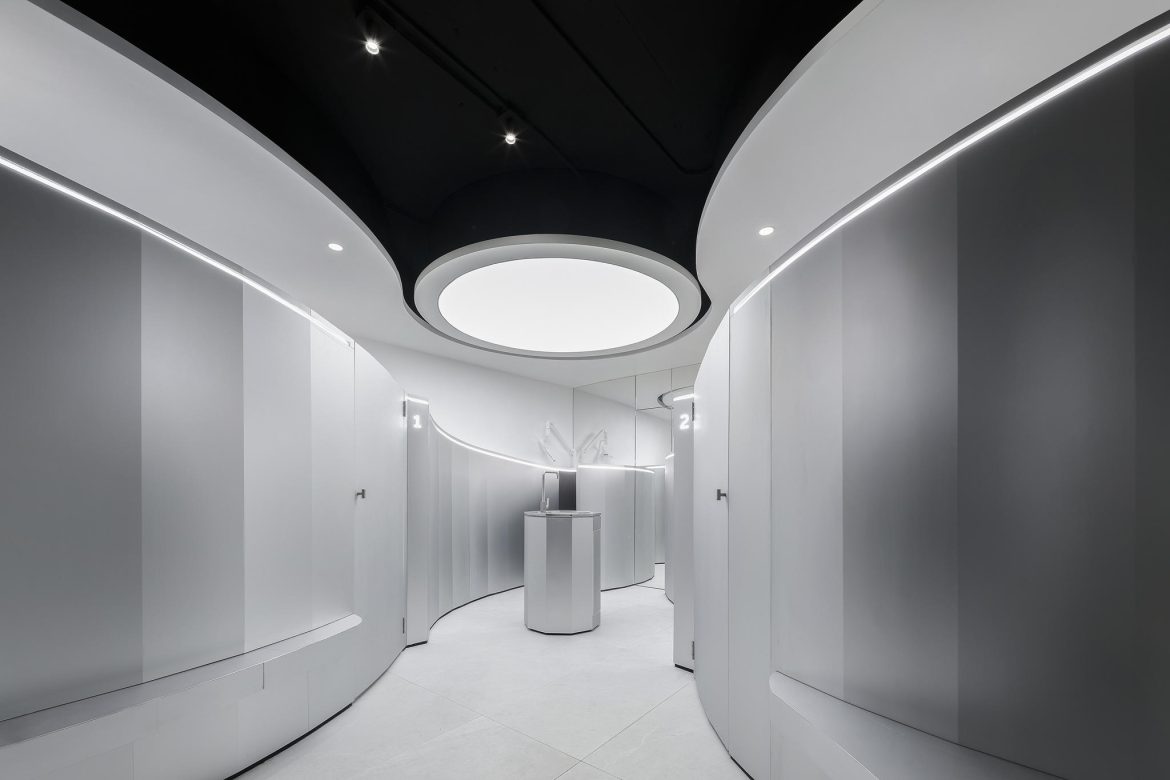
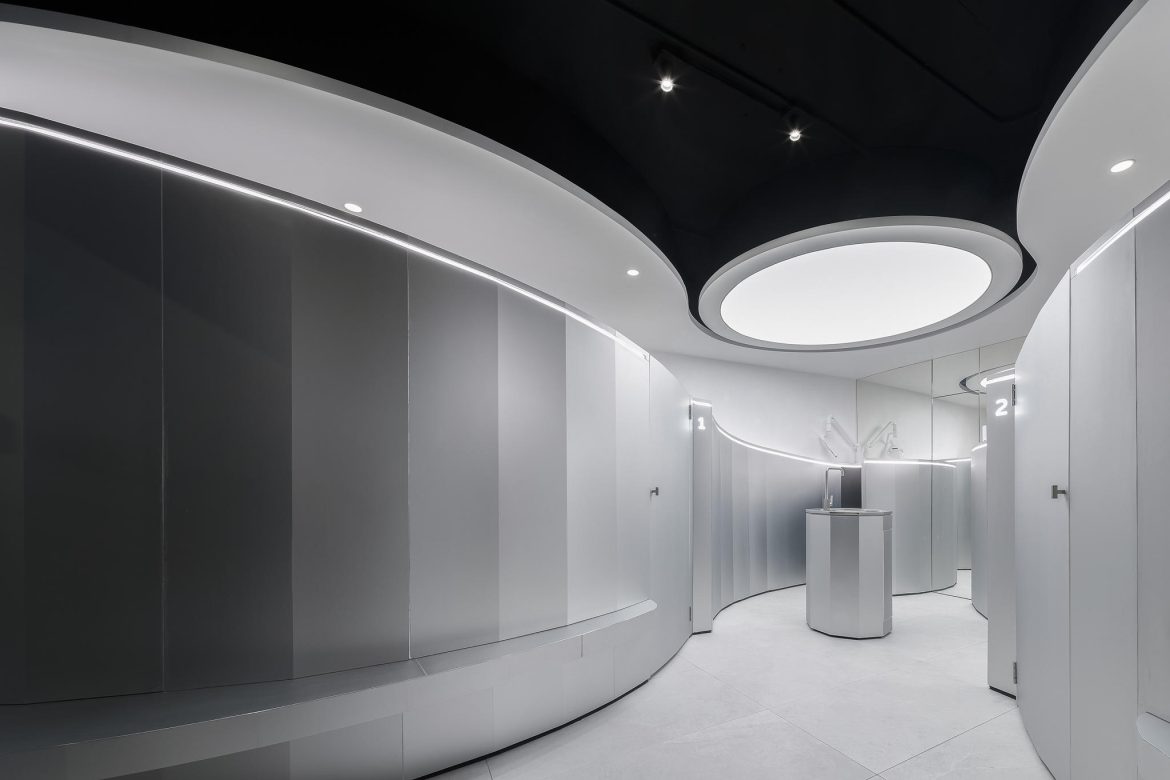
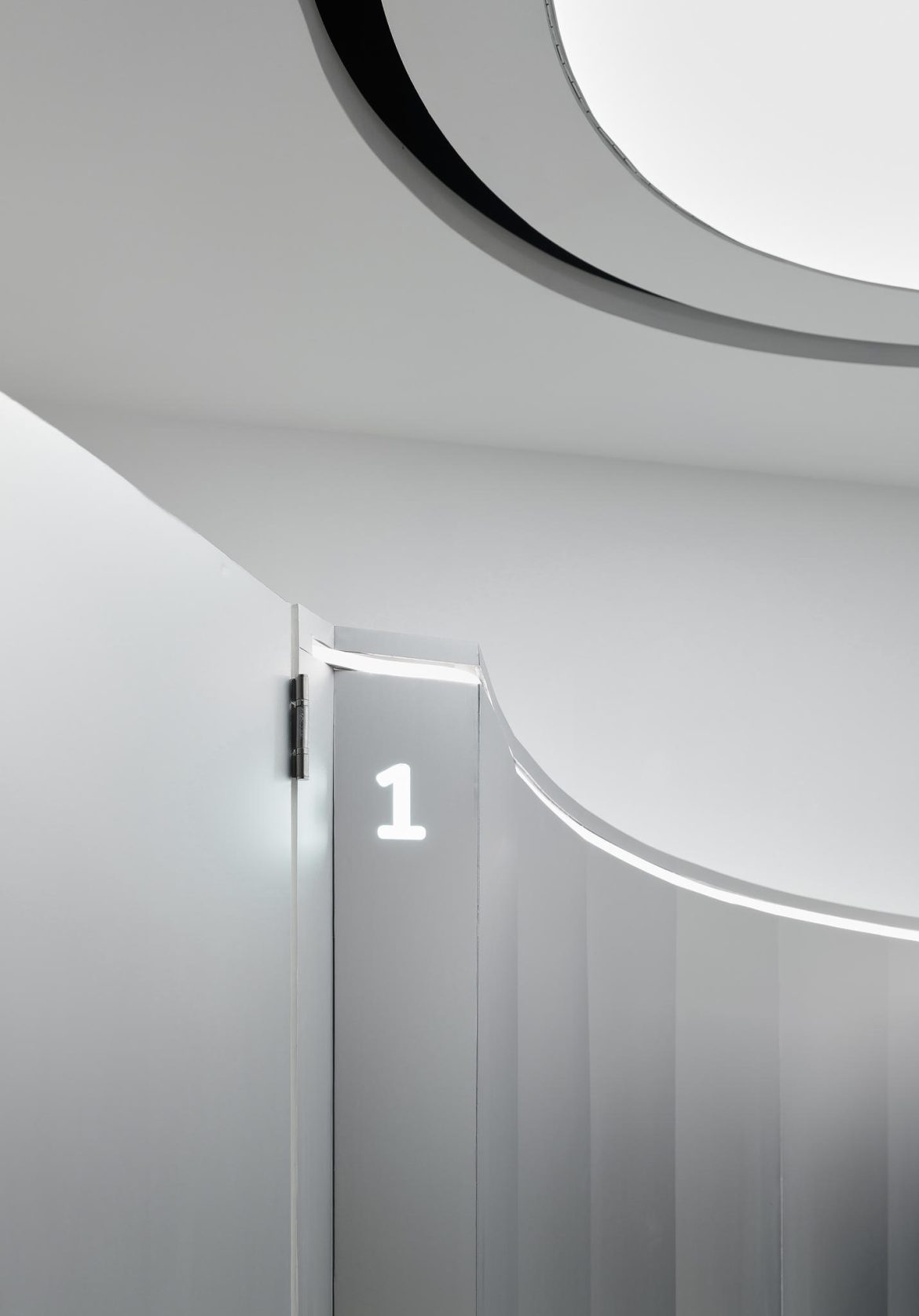
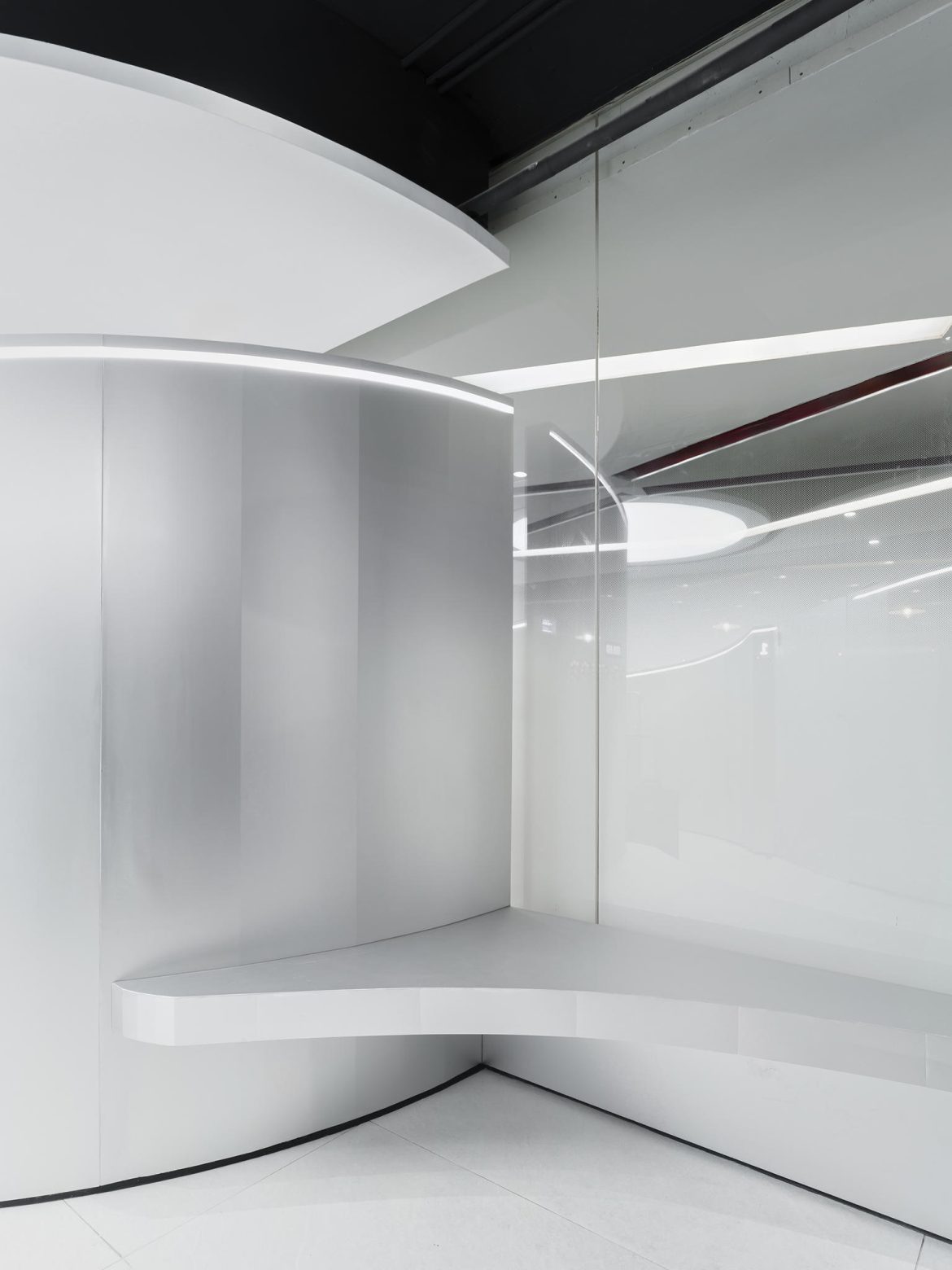
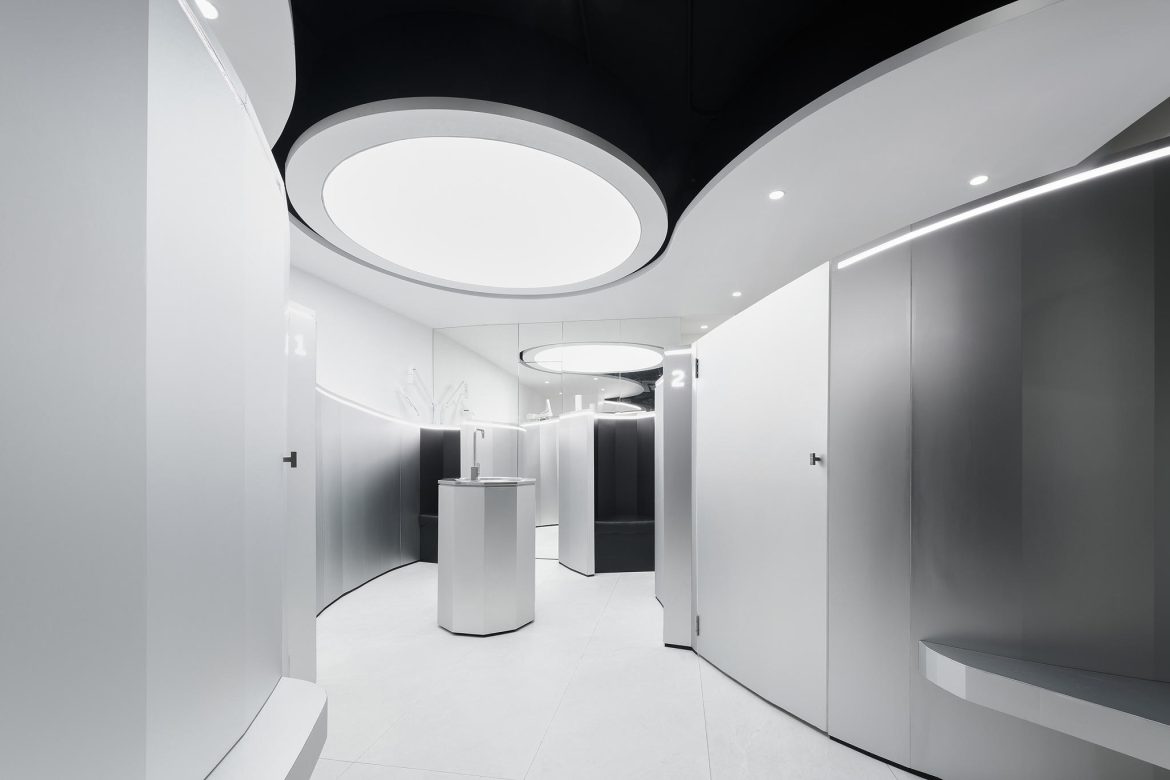
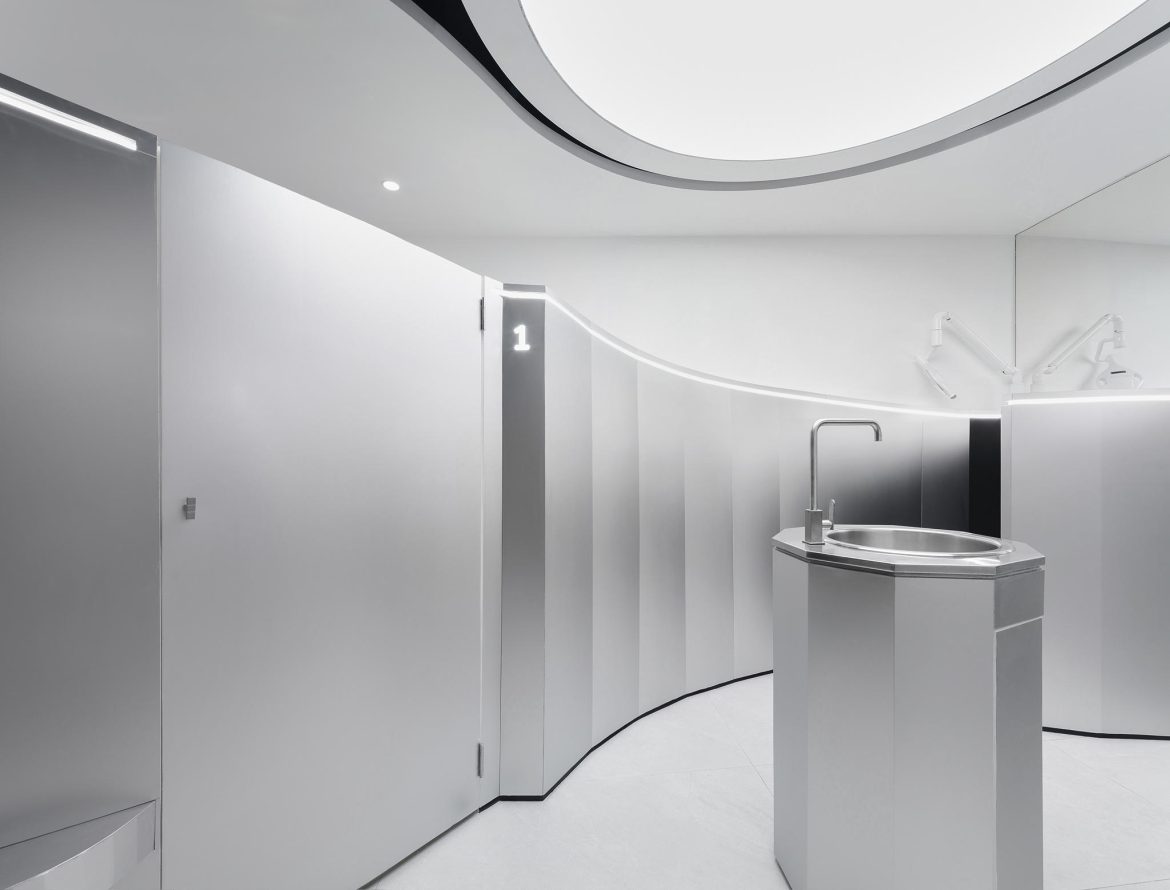
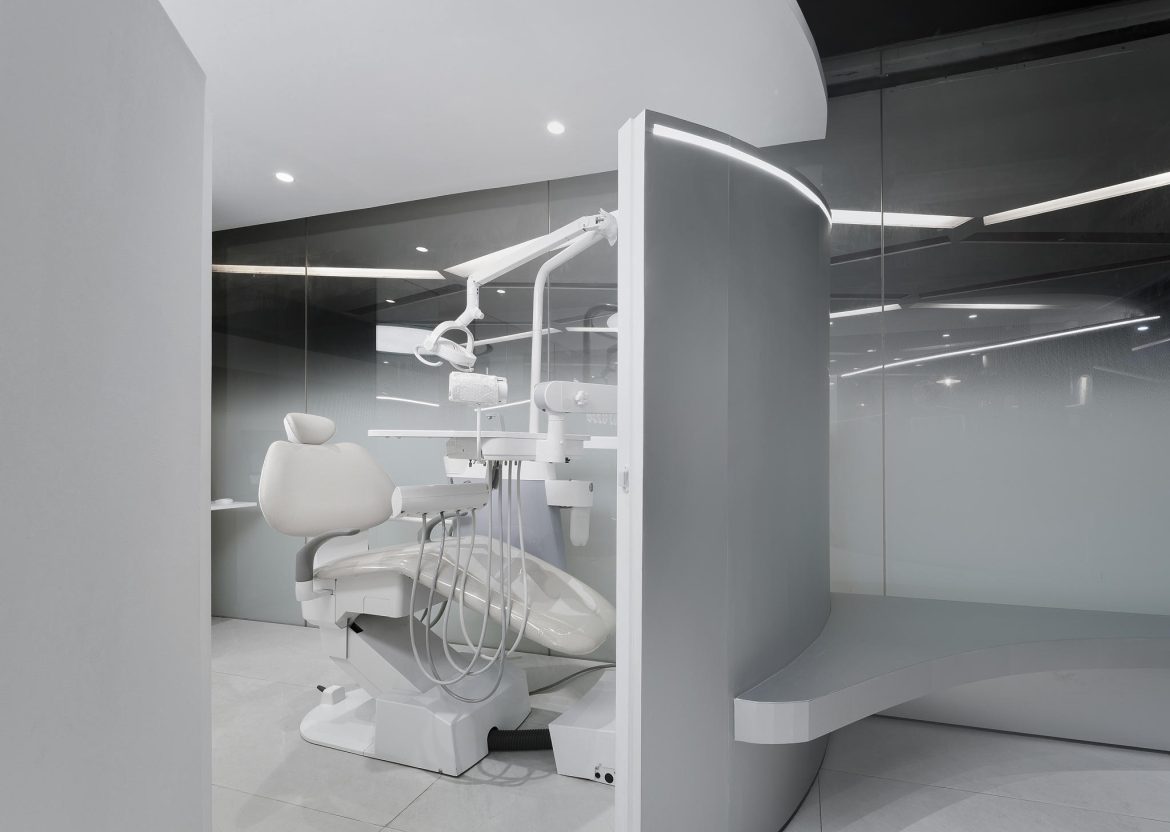
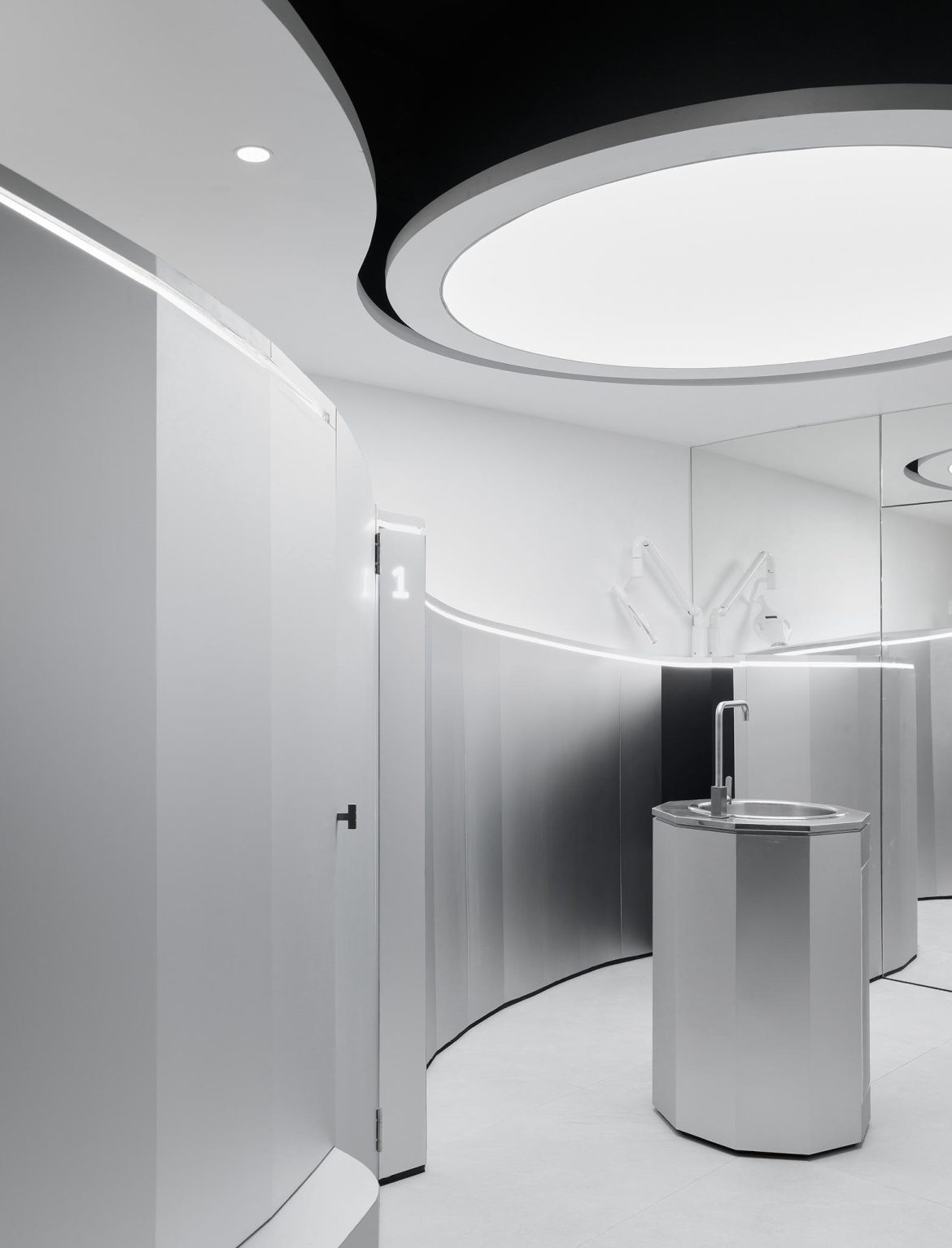
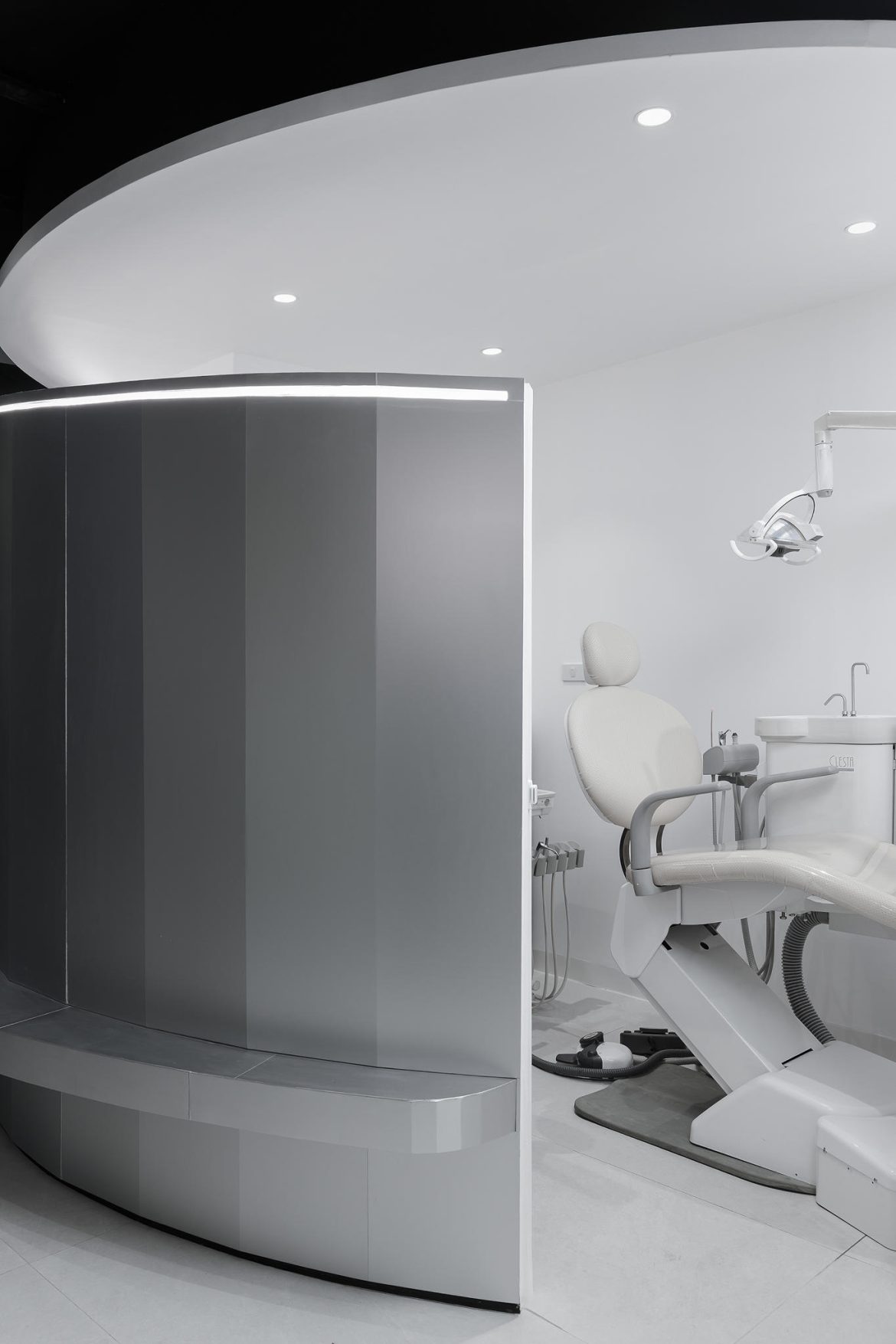
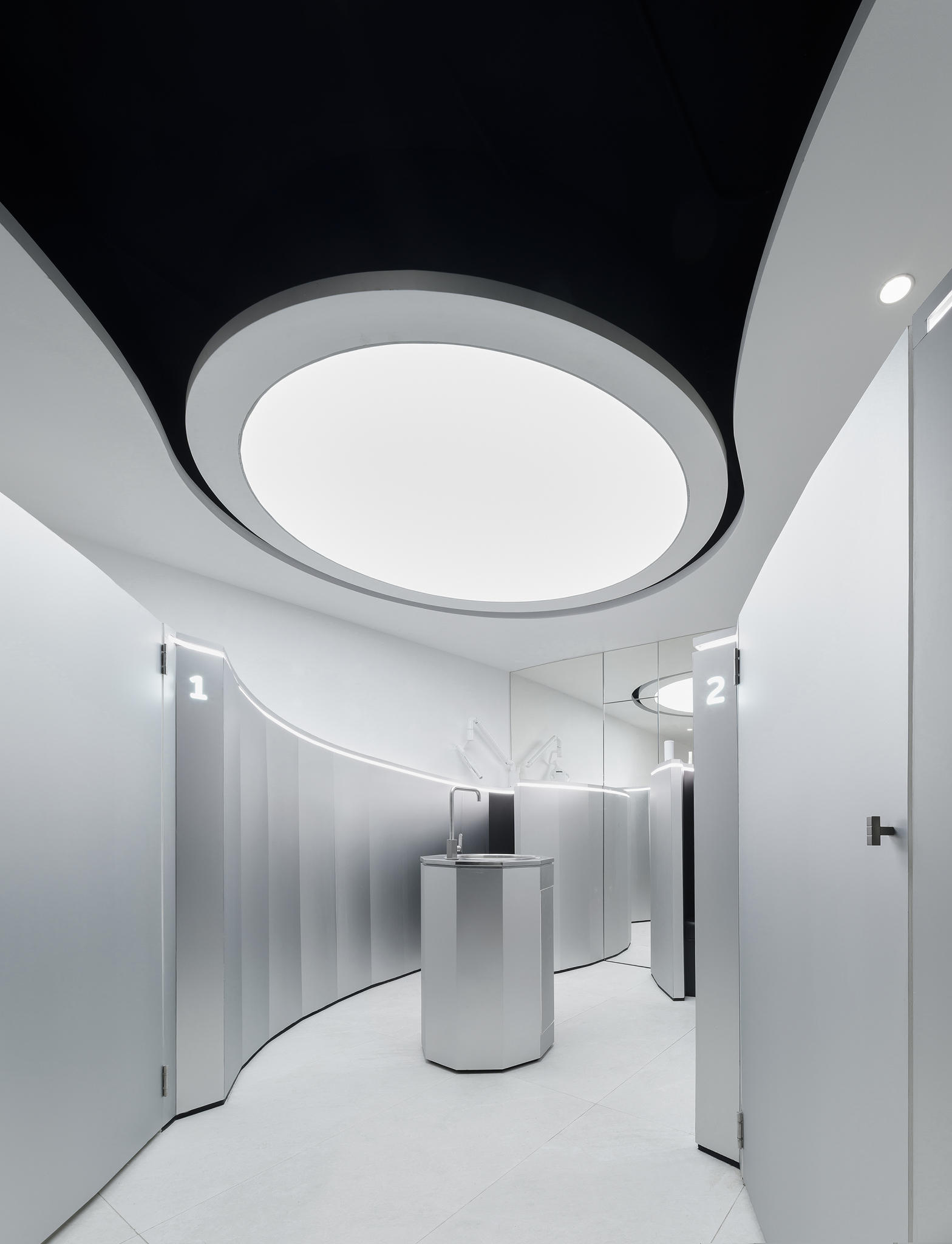
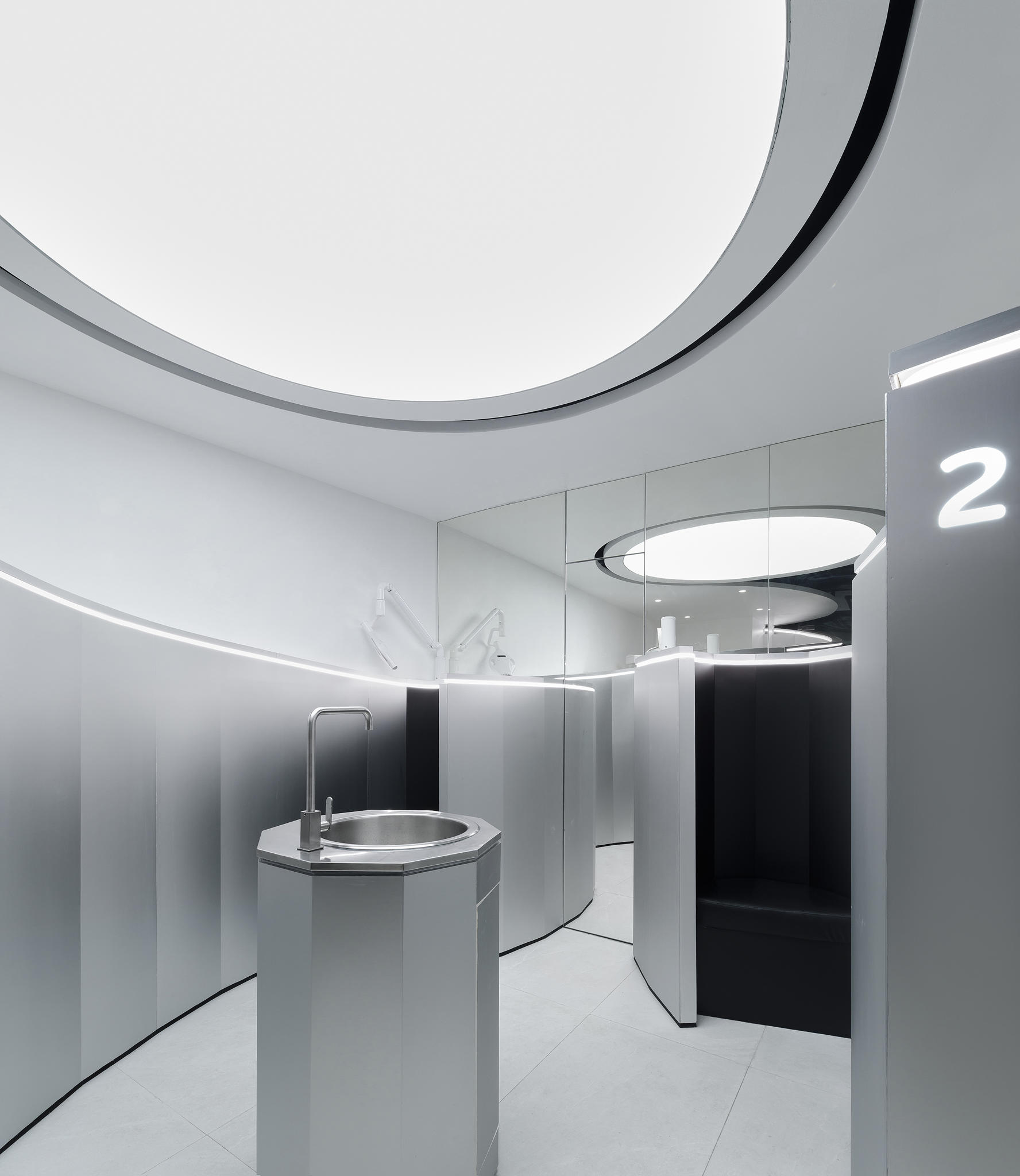
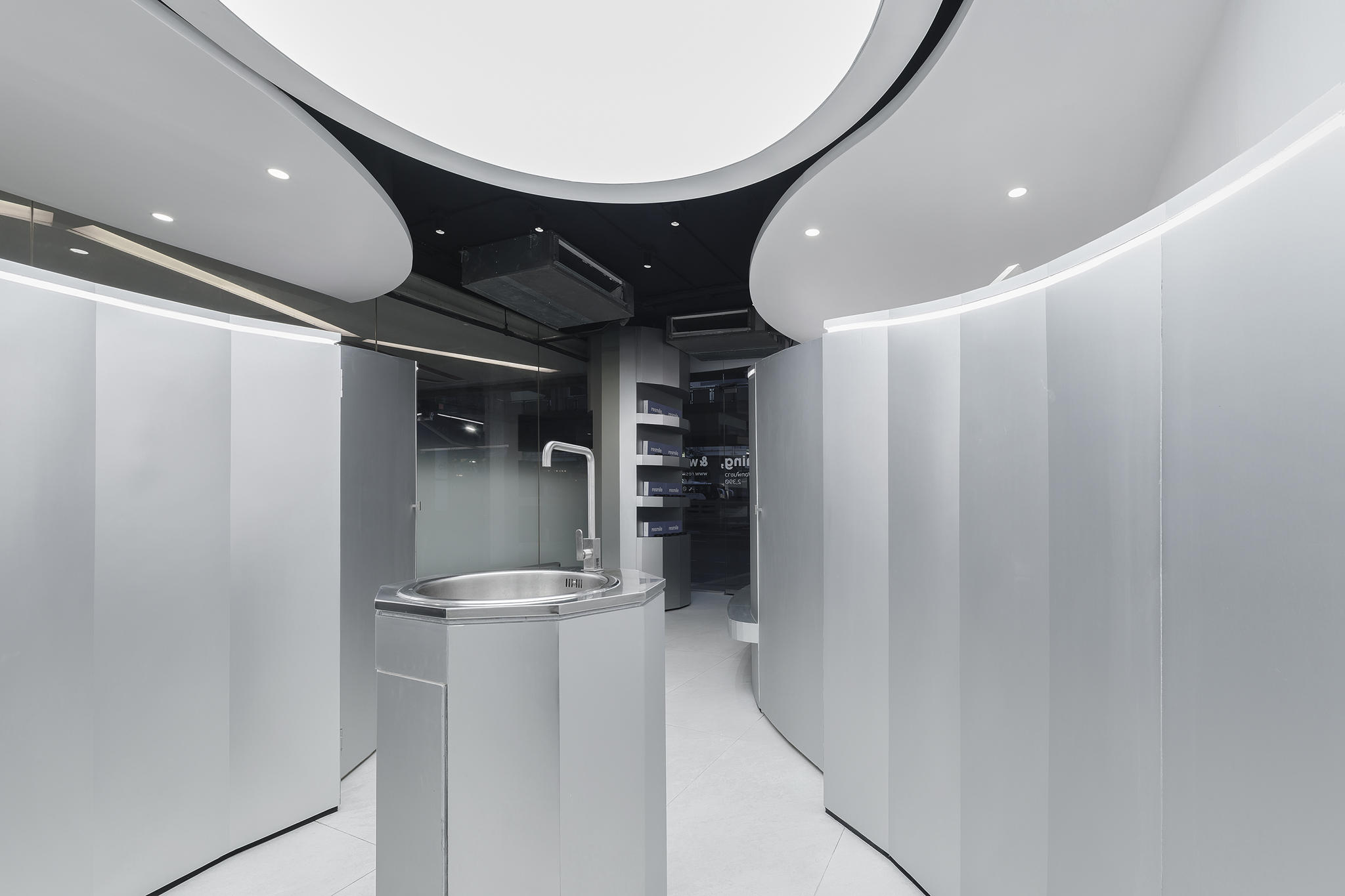
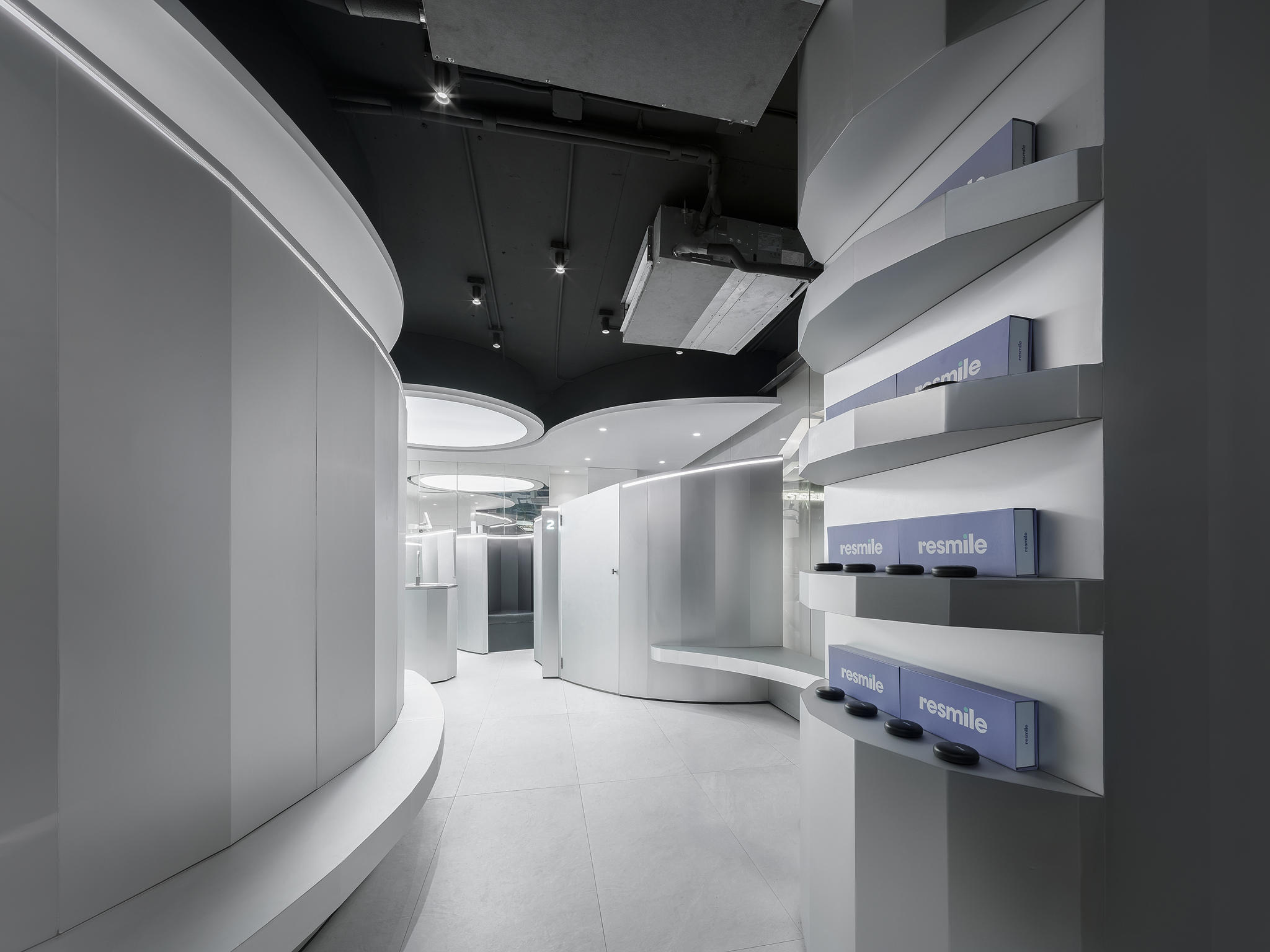
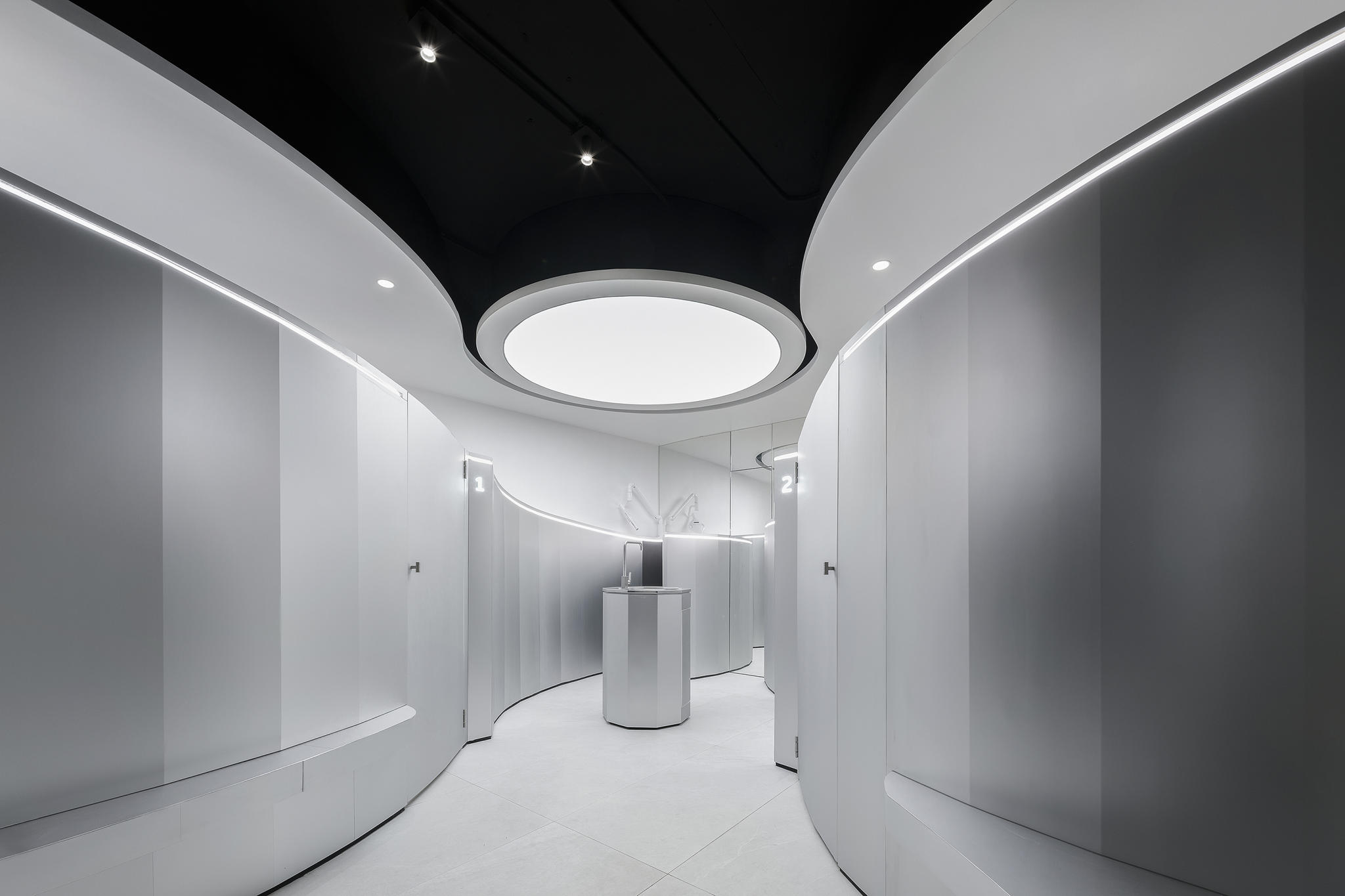
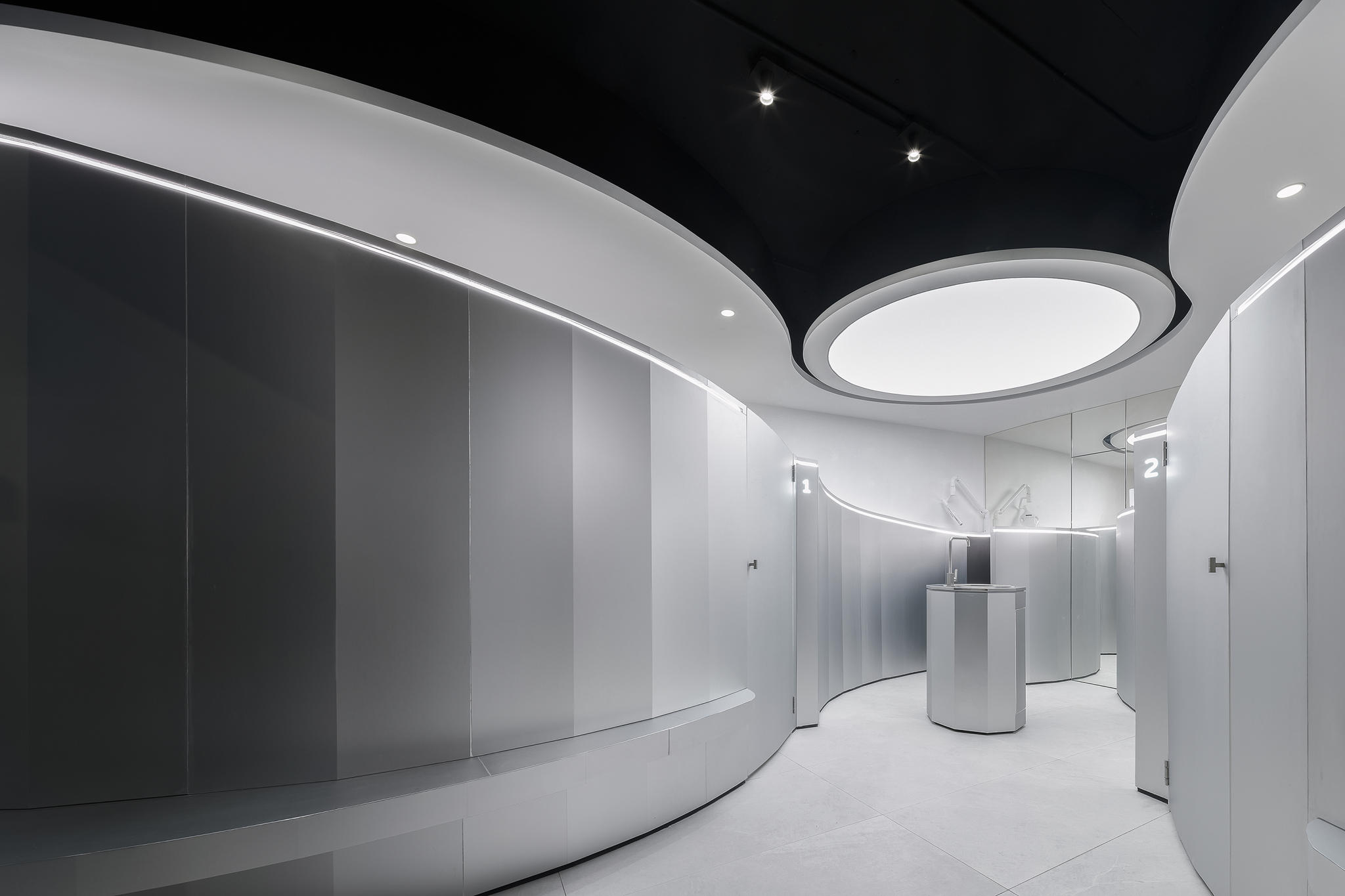
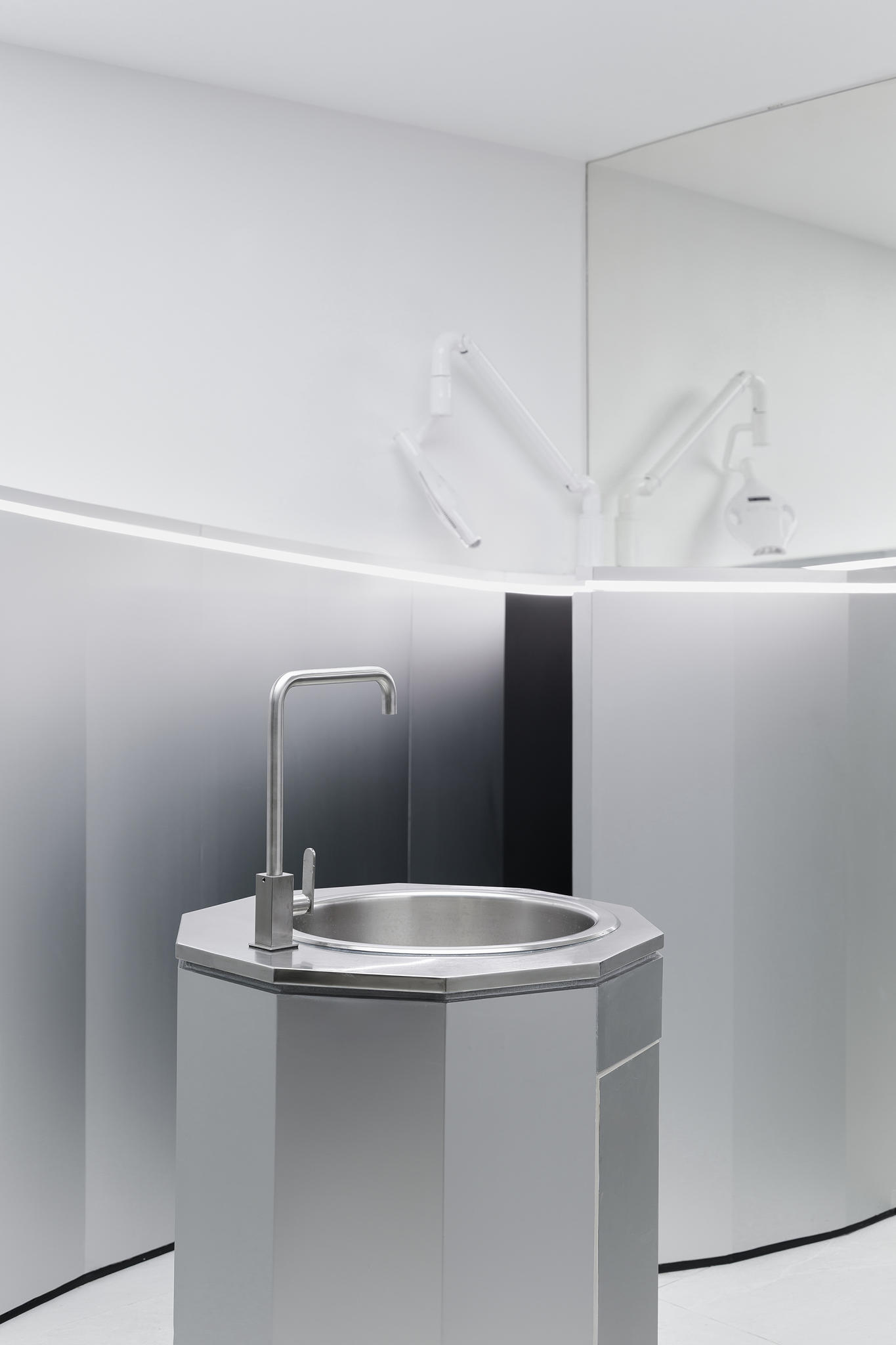
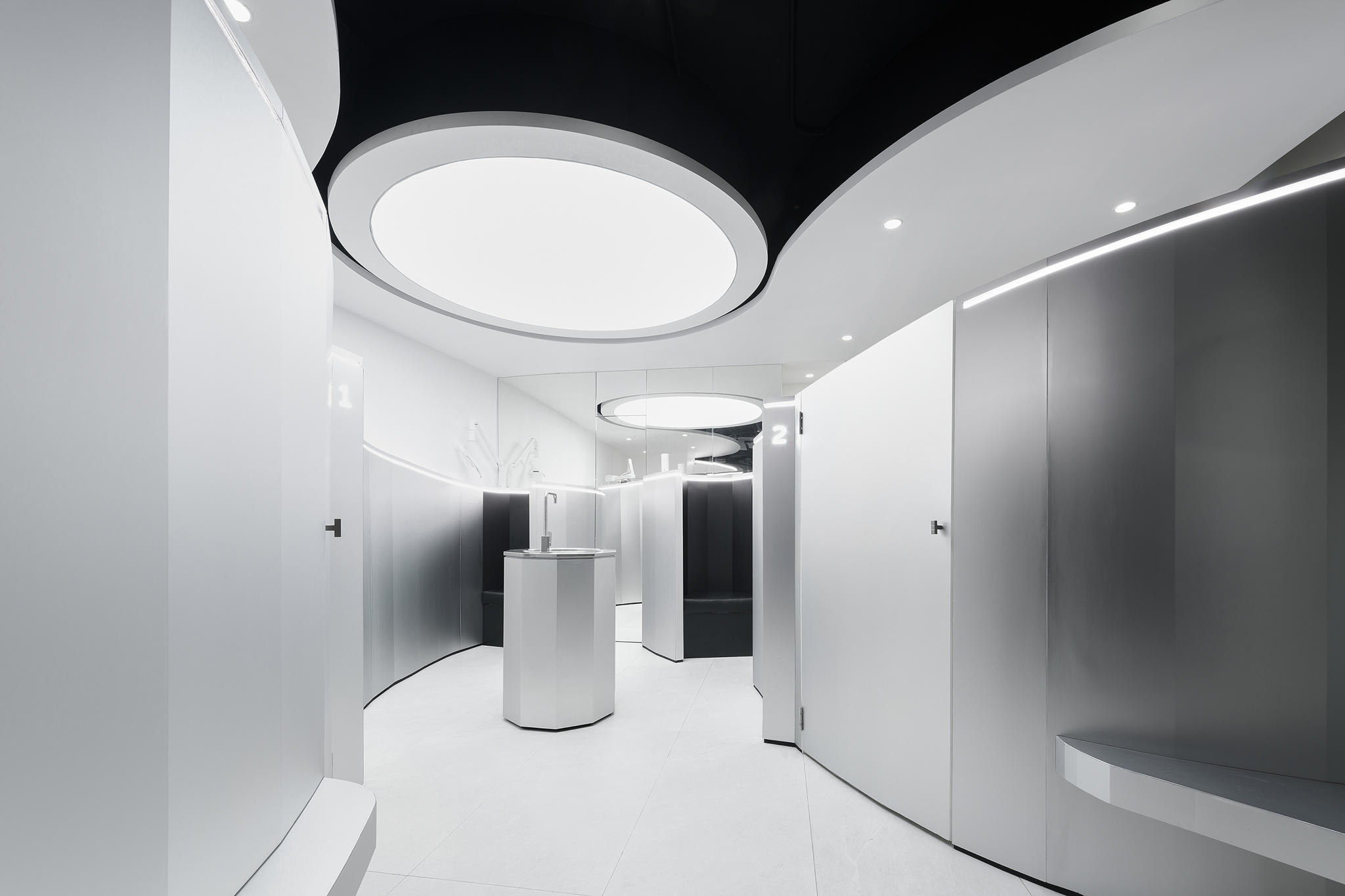
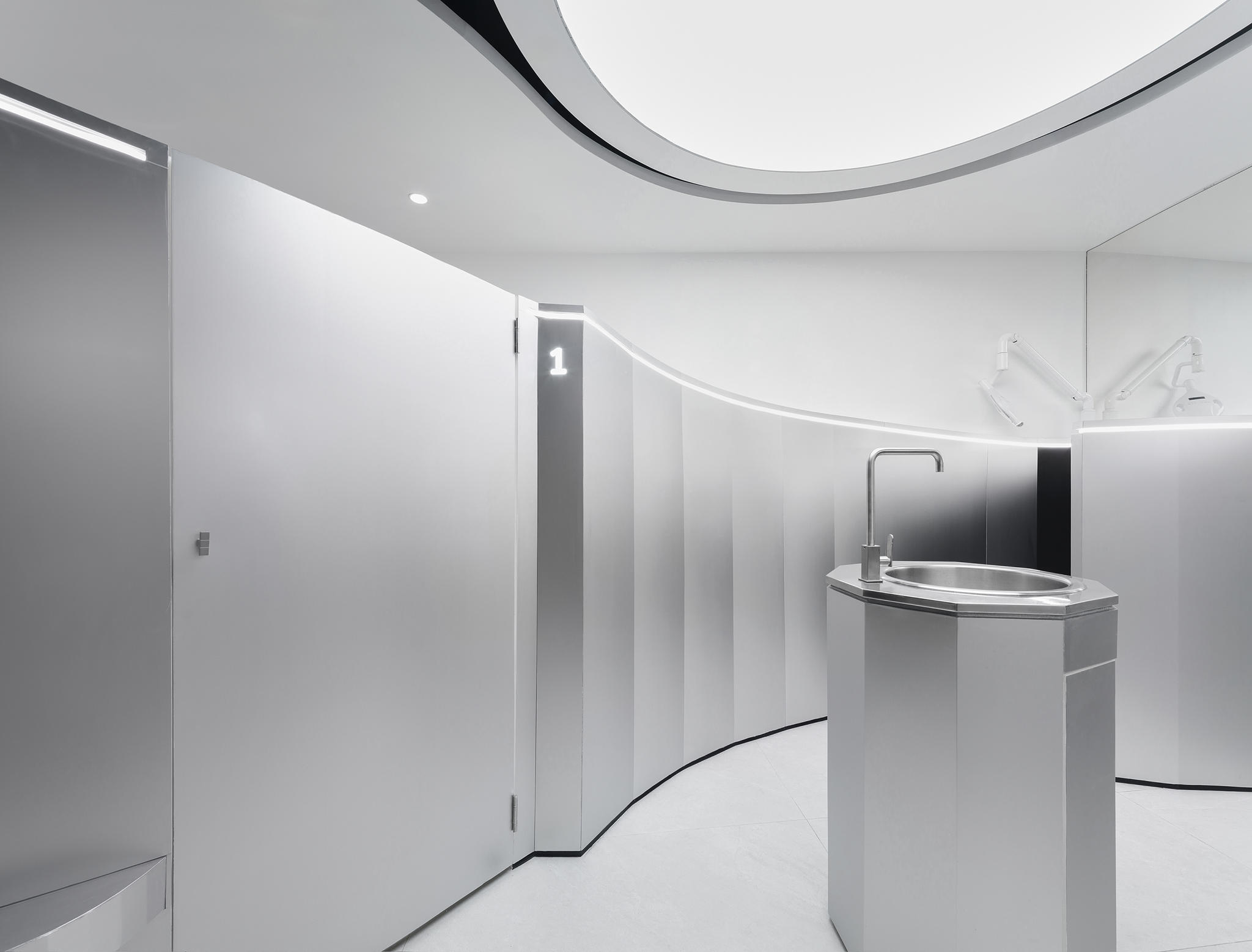
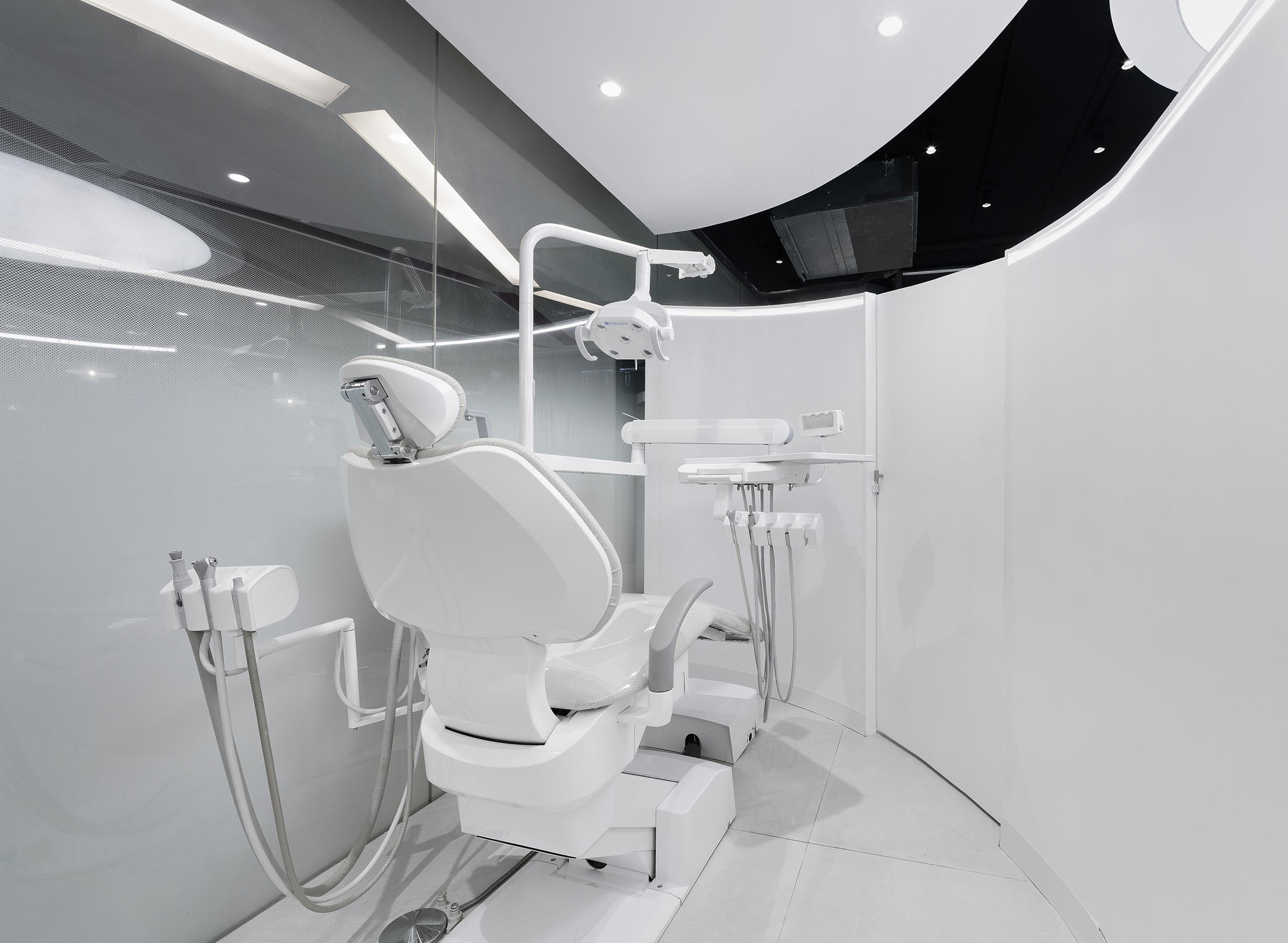
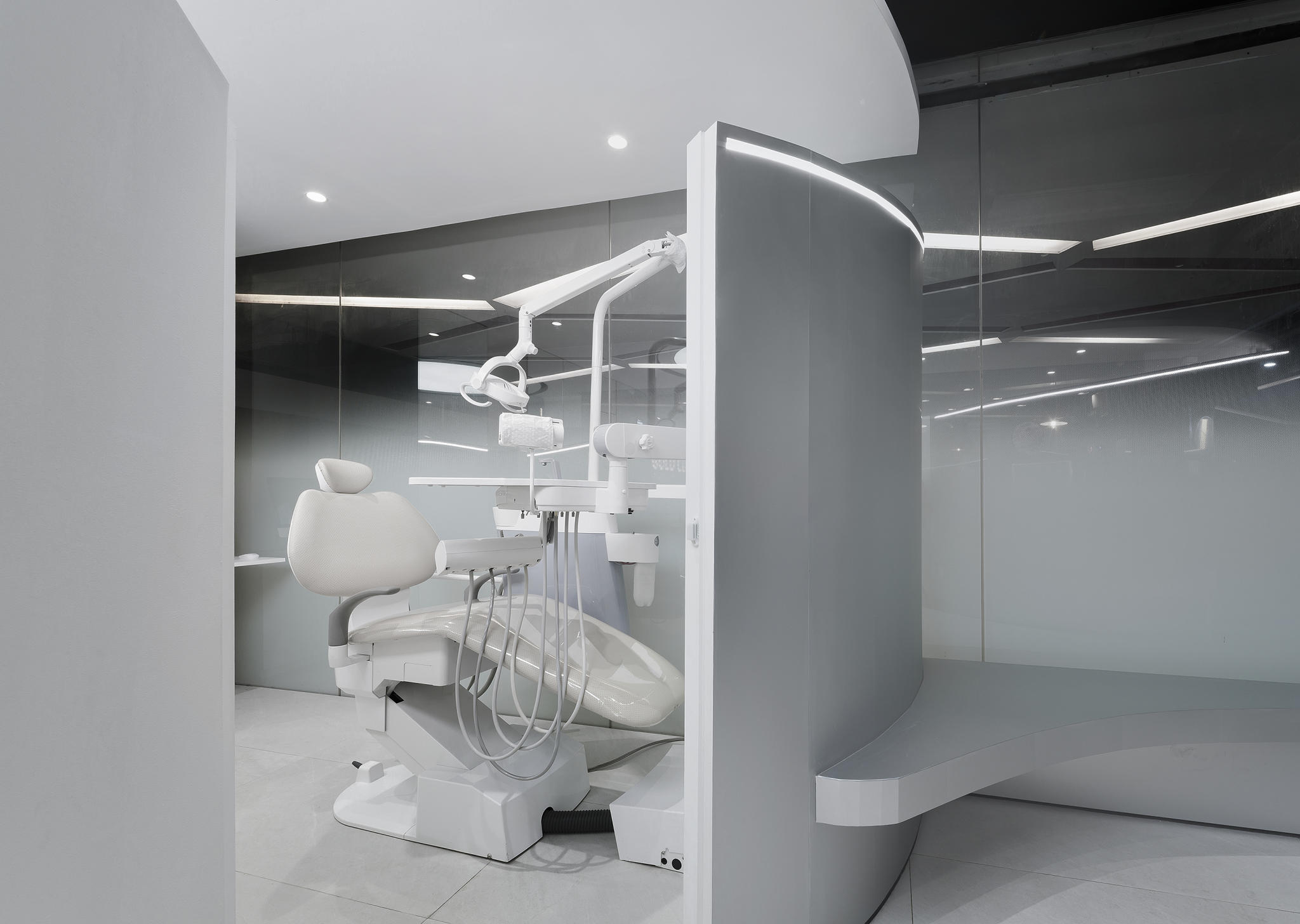
What distinguishes this project is not visual novelty alone, but the conceptual intent embedded beneath its curved forms and high-contrast monochrome palette. space+craft deploys a biomorphic formal language — a continuous vocabulary of curves that categorically refuses the right angle — to redefine what a clinical environment communicates. In theoretical terms, biomorphic architecture translates organic geometries drawn from natural systems into spatial experiences designed to provoke emotional responses in the user. At Resmile, that response is the reduction of anxiety. Walls curve and flow uninterrupted throughout the plan, allowing the constrained 37 m² to register as movement and continuity rather than confinement.
Light and Ceiling: Binary Contrast as Spatial Structure
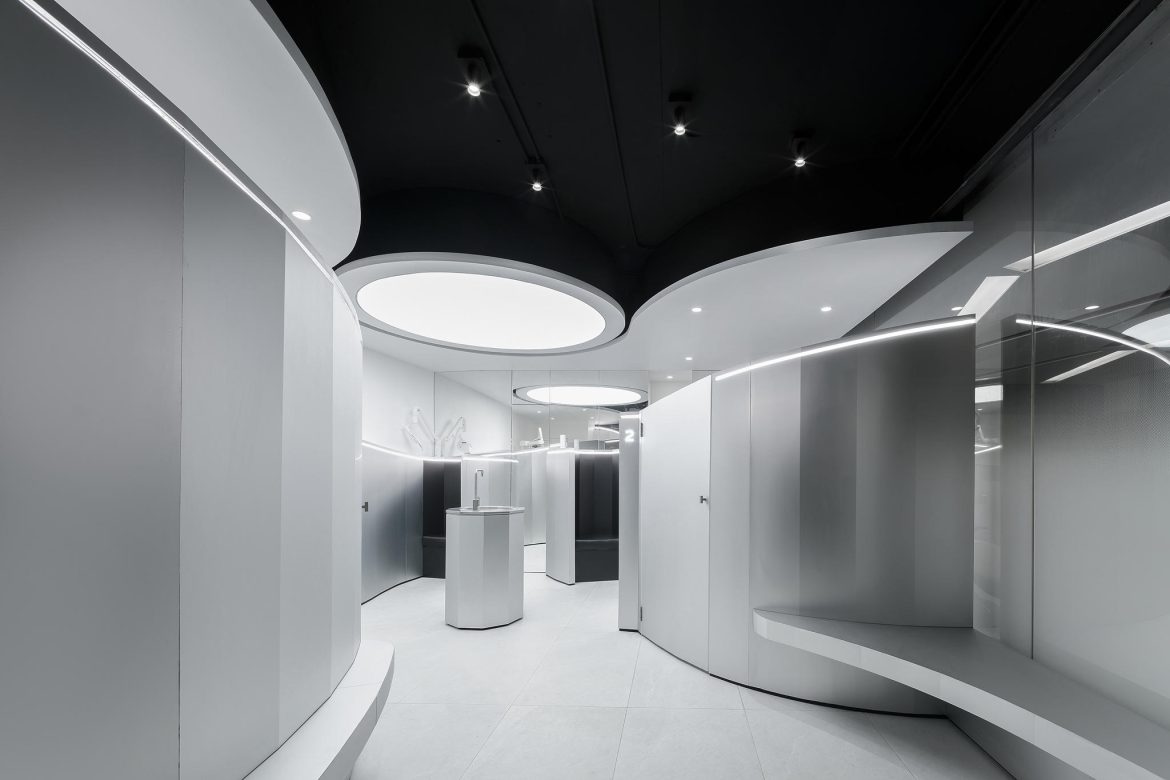
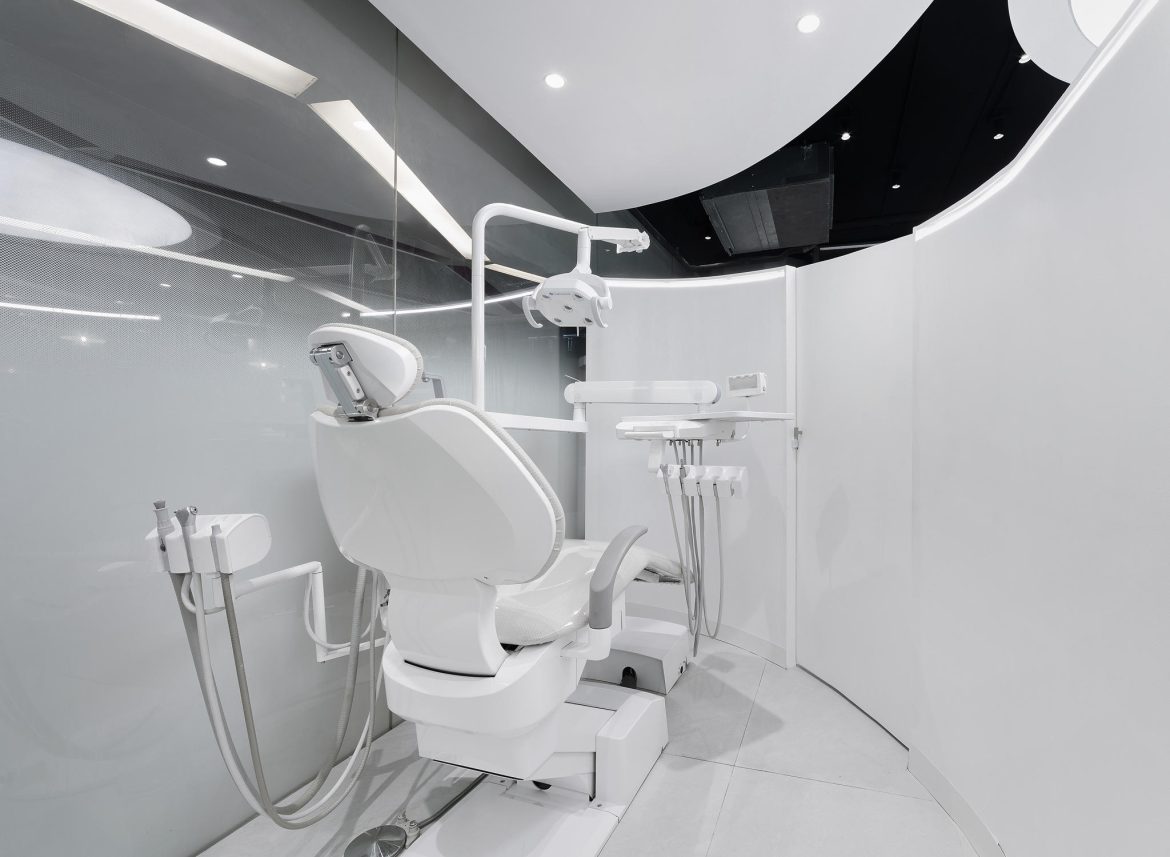
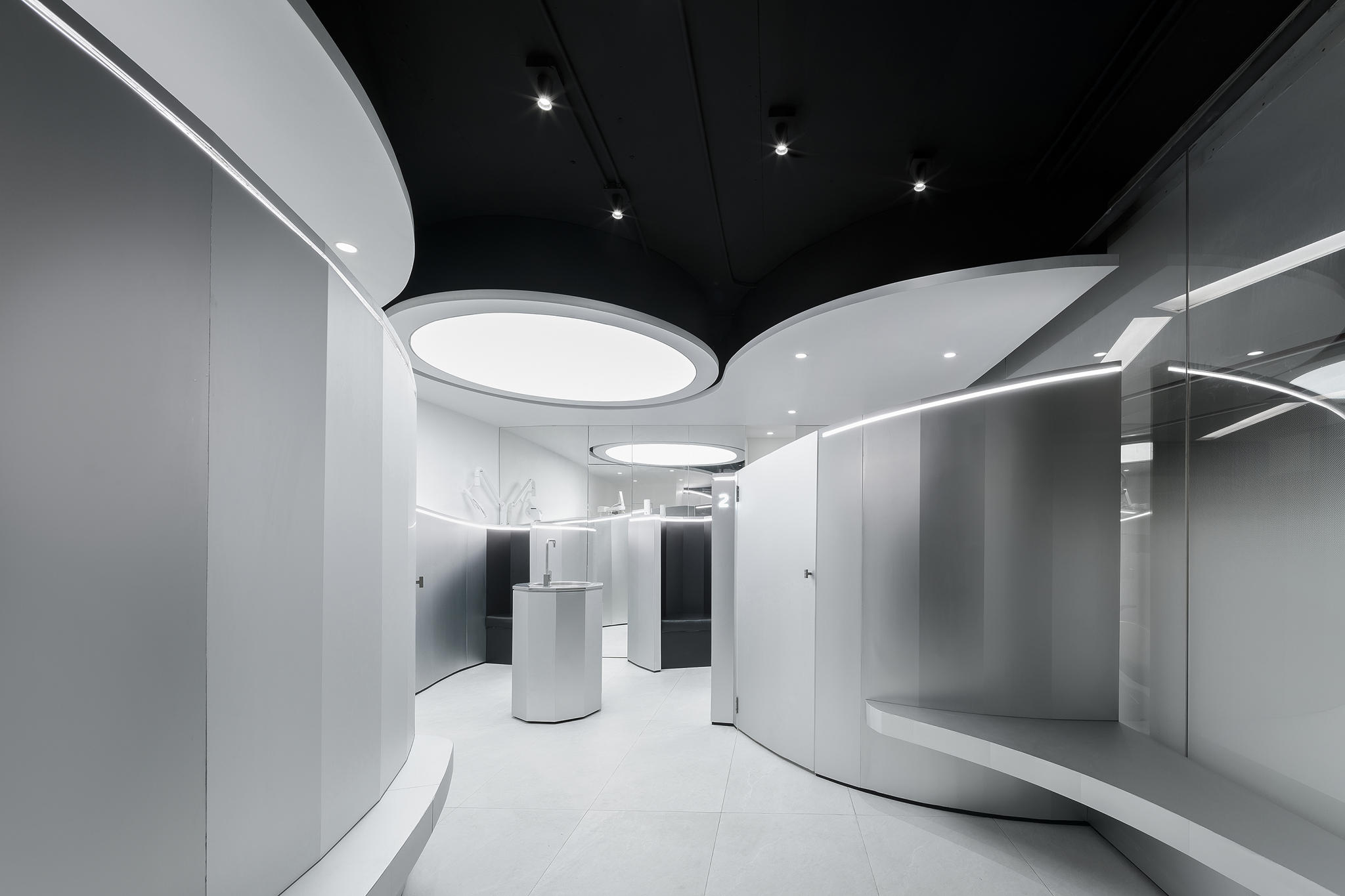
Among the project’s most powerful design decisions is the use of a pure black ceiling set against white floors, walls, and built-in furniture — a move that operates on multiple levels simultaneously. Psychologically, the dark ceiling compresses the vertical volume of the room while the white horizontal surfaces reflect light and expand the perception of lateral space. The result is a productive paradox: the room feels open yet contained, generating a sense of cocooning that actively works to ease patient anxiety. Circular ceiling fixtures serve as visual anchors, guiding users through the sequence of spaces with metronomic regularity — lending a sense of order and predictability to an environment where patients typically feel a loss of control.
Spatial Organisation: Efficiency from Constraint
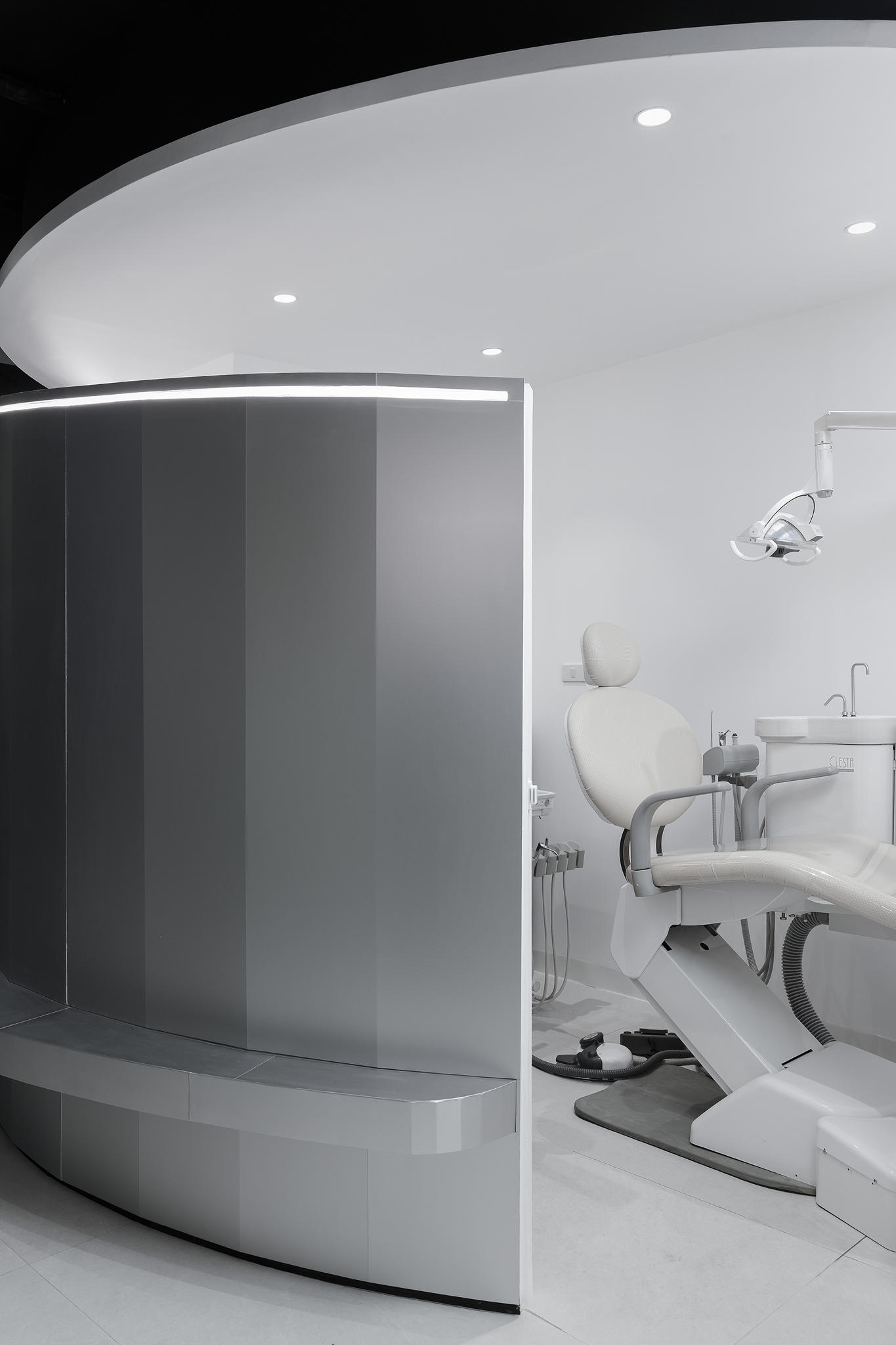
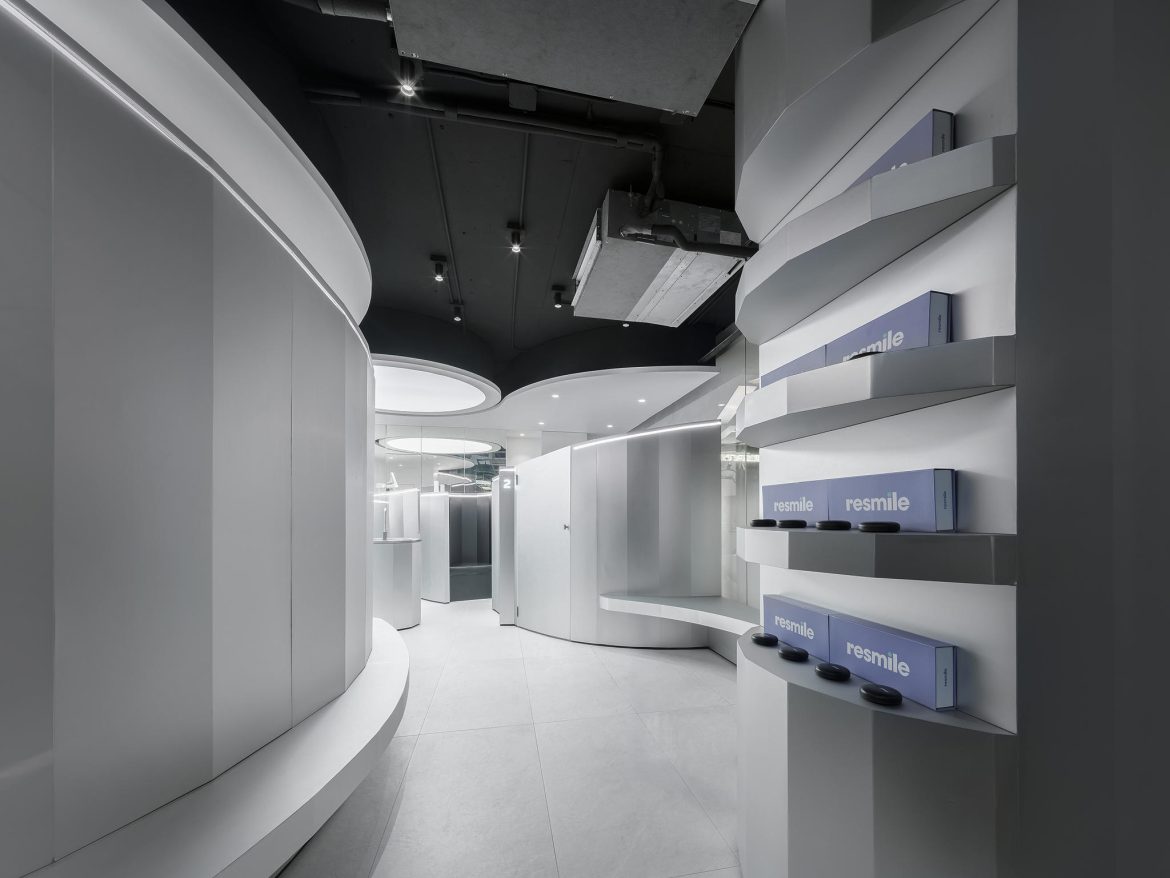
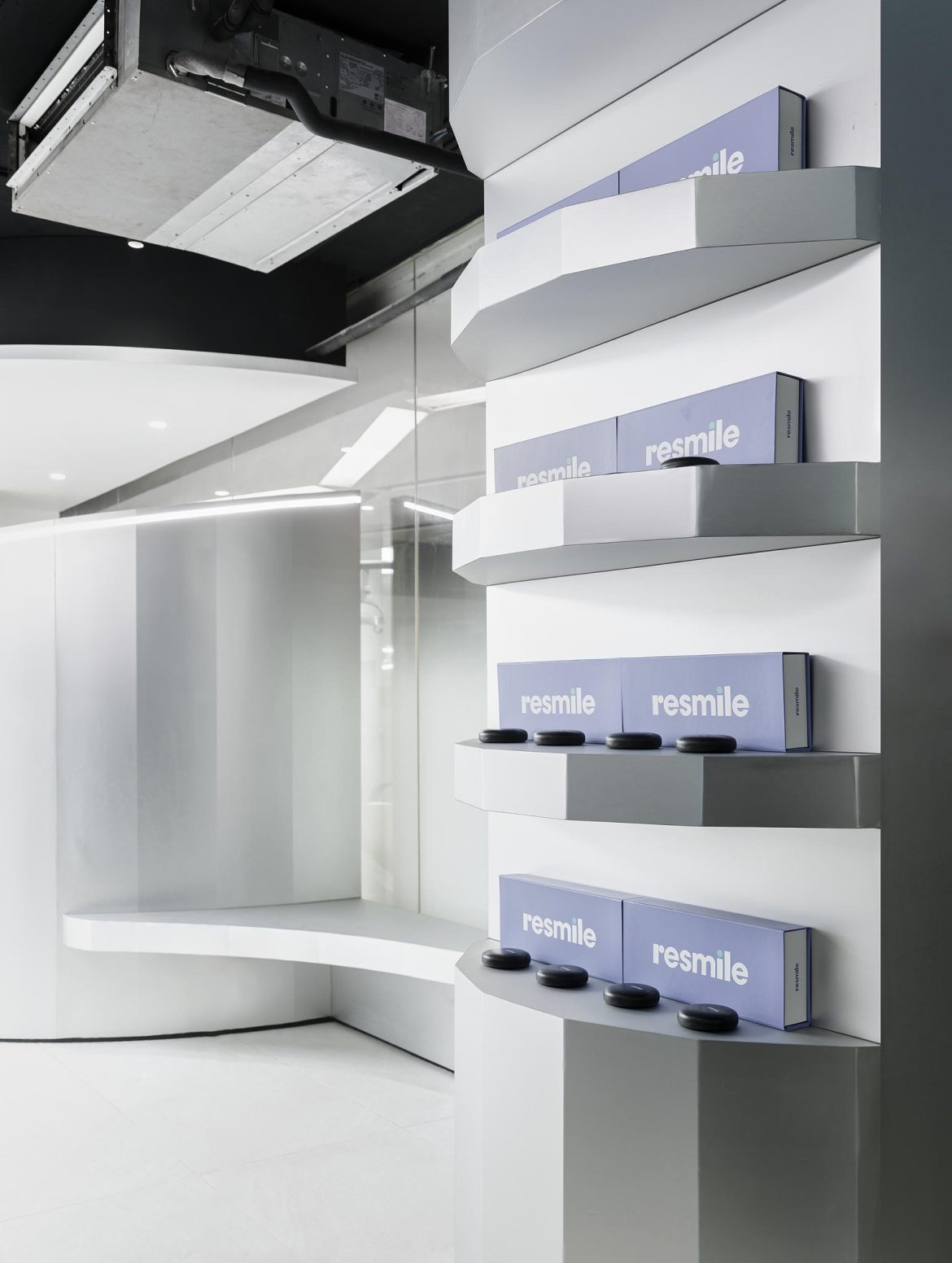
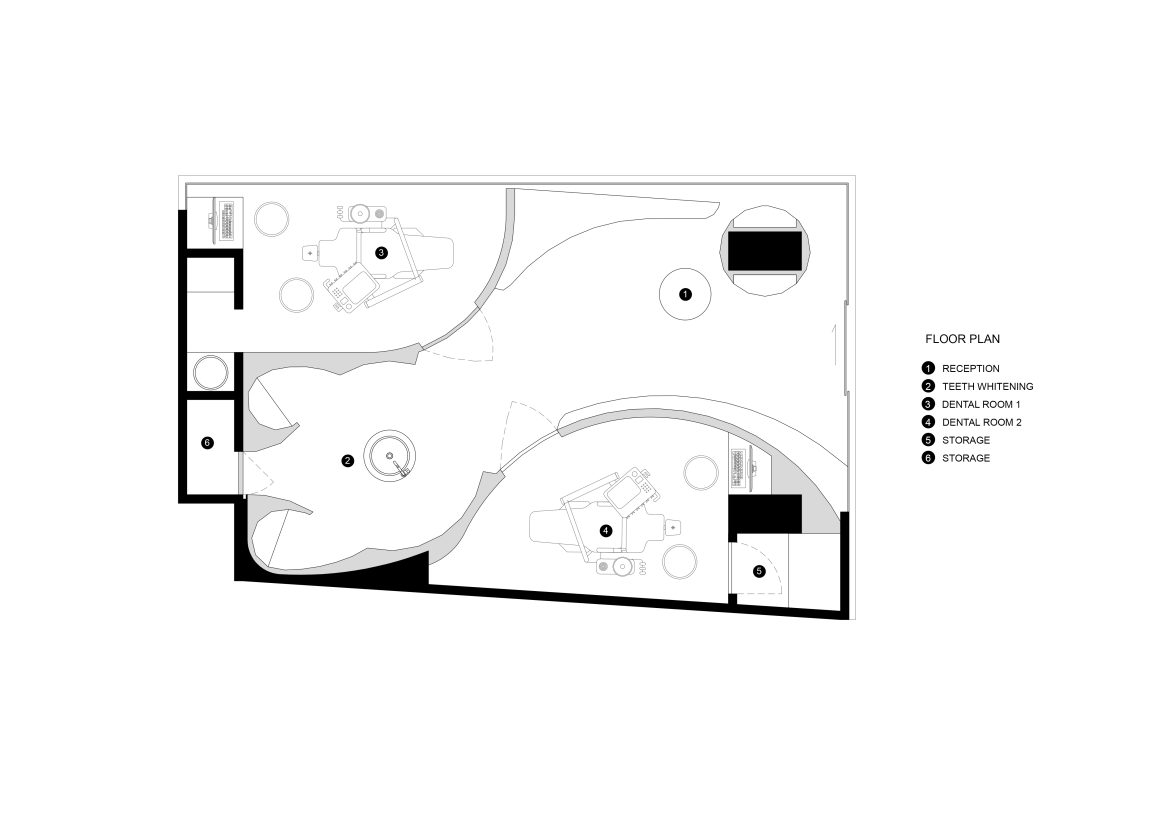
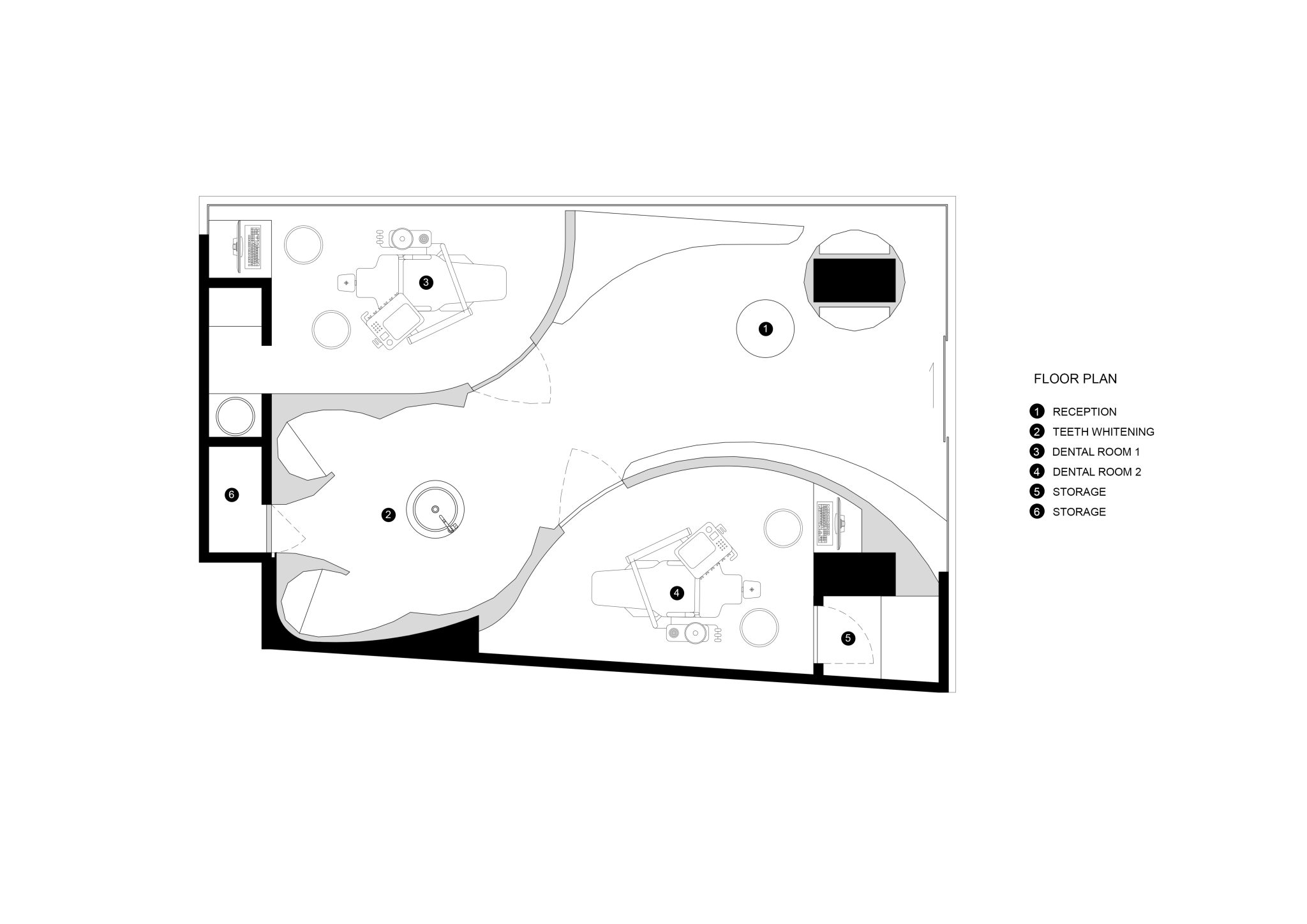
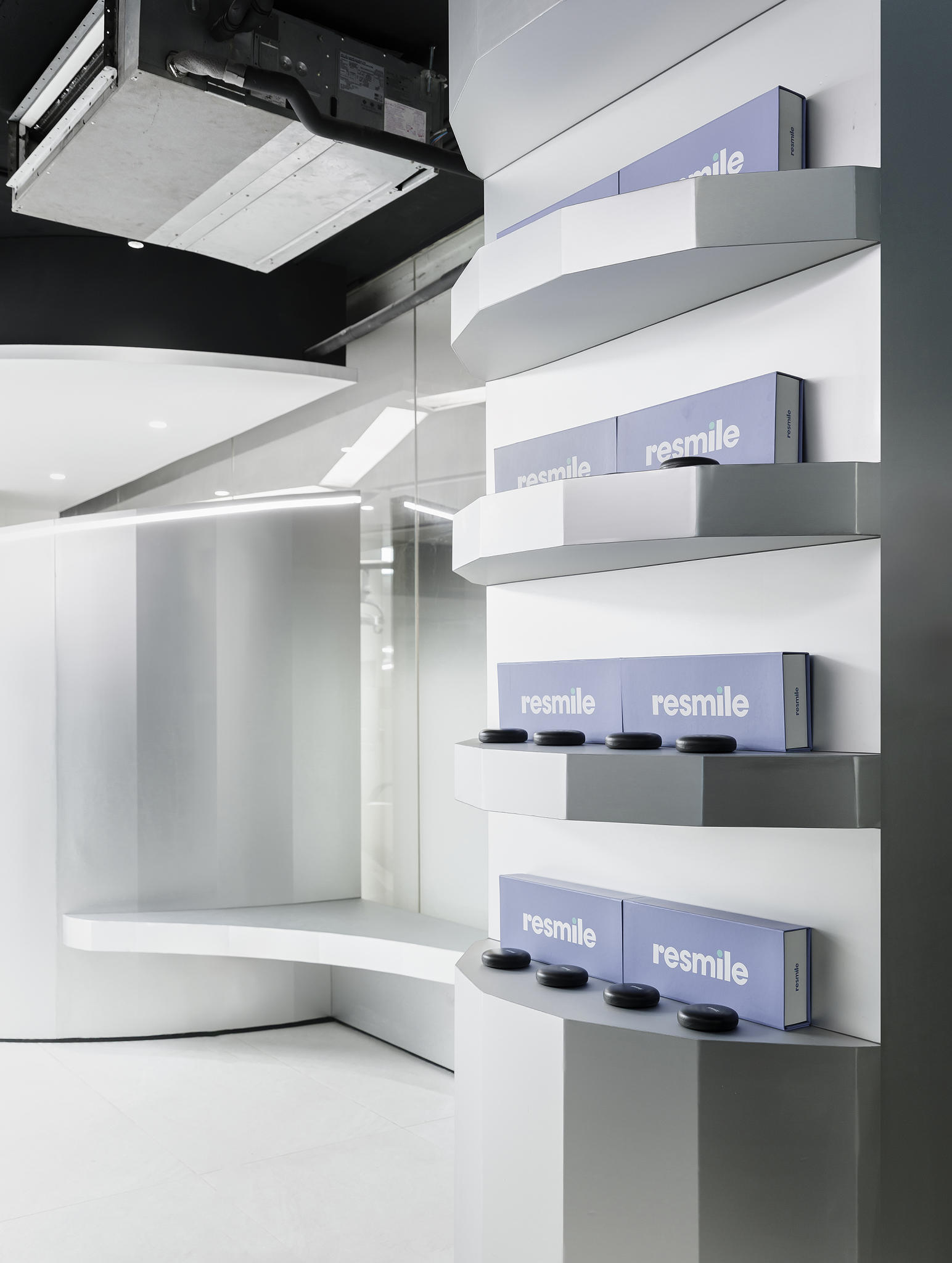
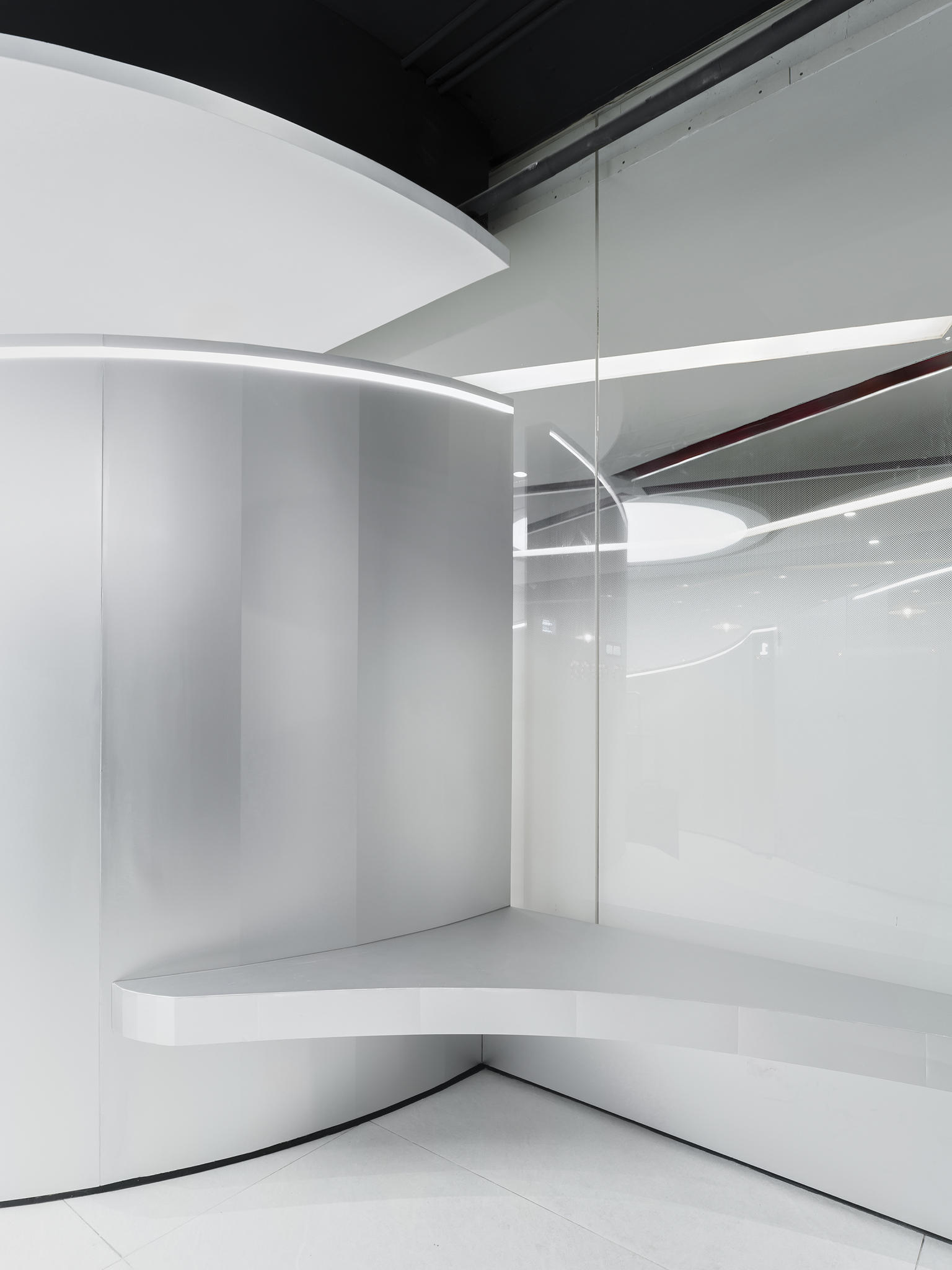
Designing a 37 m² medical space to functionally accommodate reception, waiting, and treatment zones is no ordinary planning challenge. space+craft resolves this through the dissolution of boundaries between zones. Rather than hard partitions, the curvature of built-in elements and curved wall surfaces implies territory — establishing privacy without spatial compression. Display shelving merges architecturally with the wall plane, functioning as an extension of the envelope rather than freestanding furniture, reducing visual noise in a space where every square metre is load-bearing.
Material Palette: Restraint as Manifesto
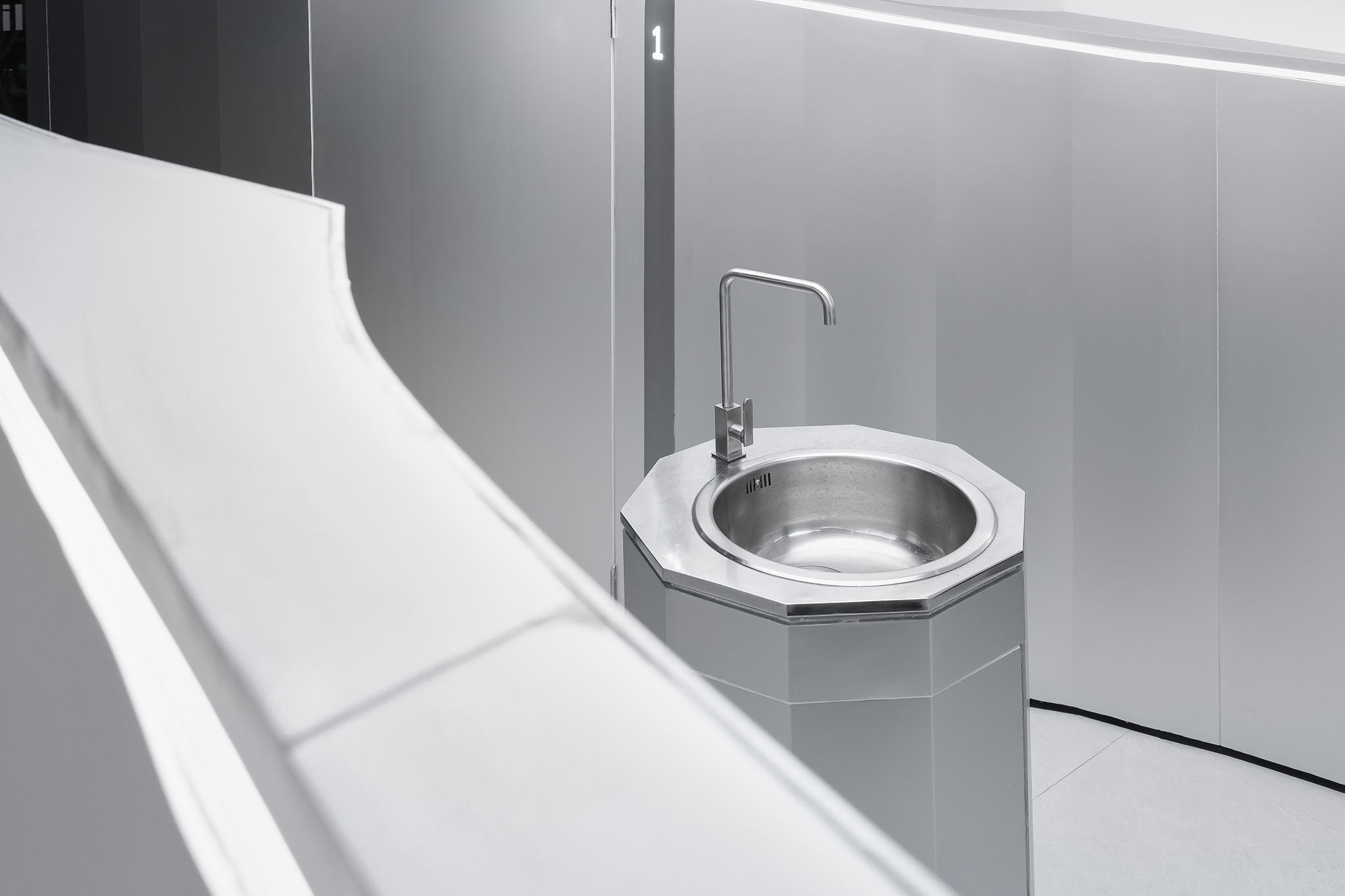
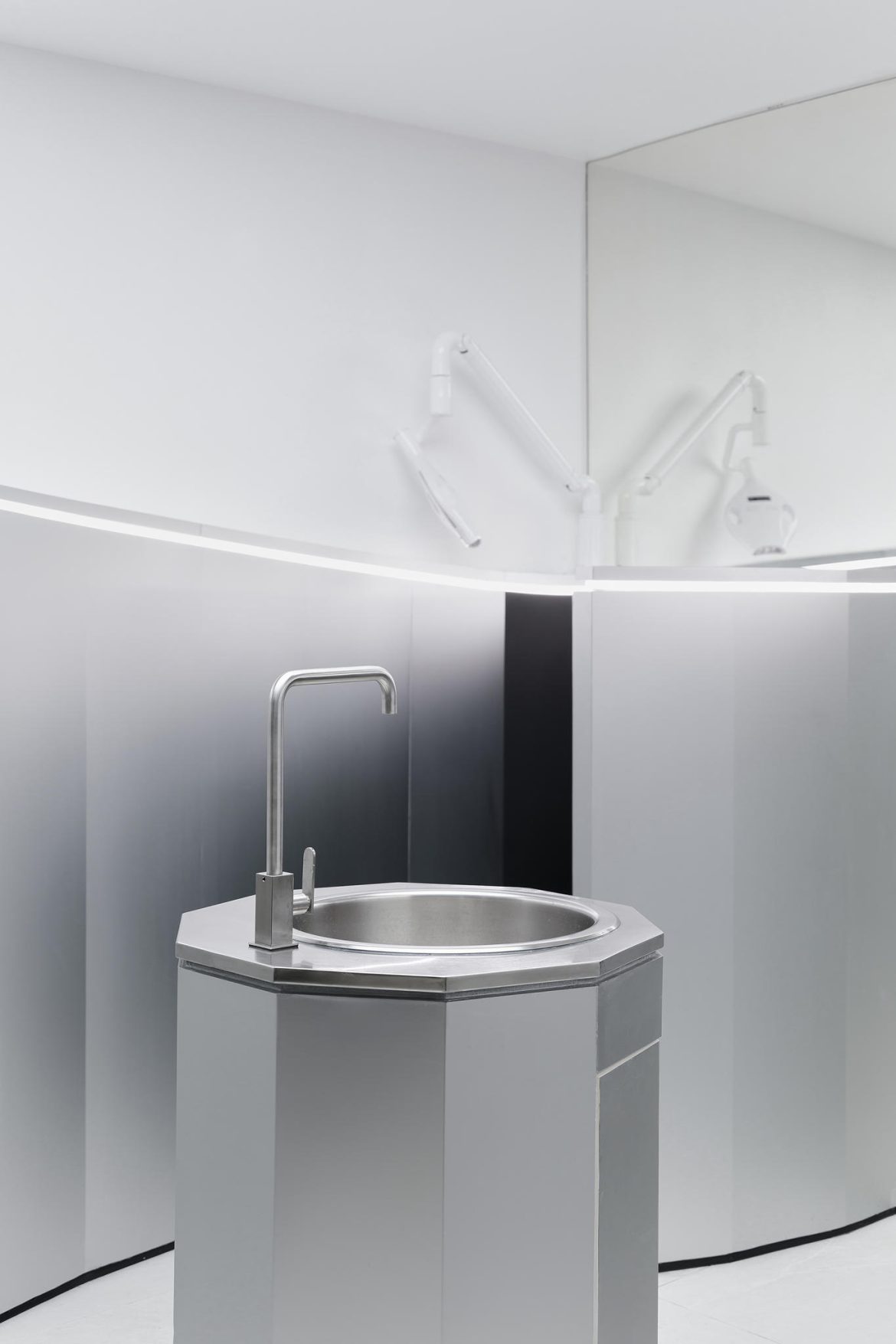
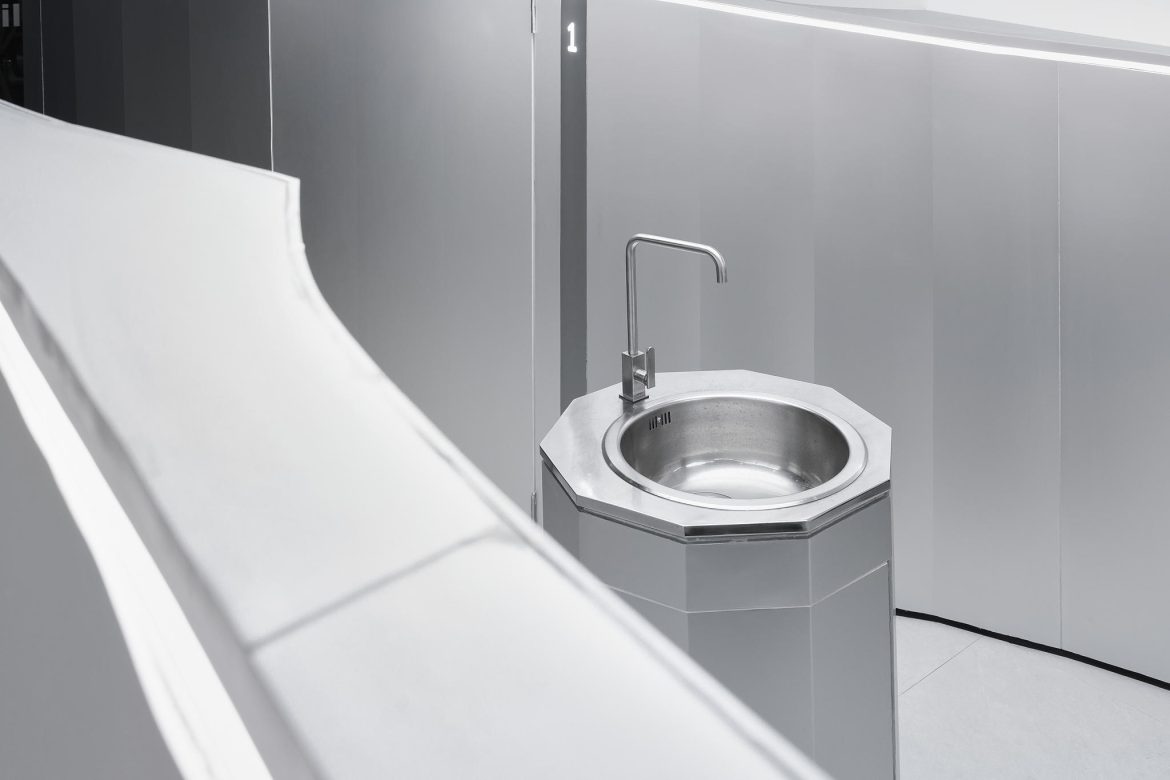
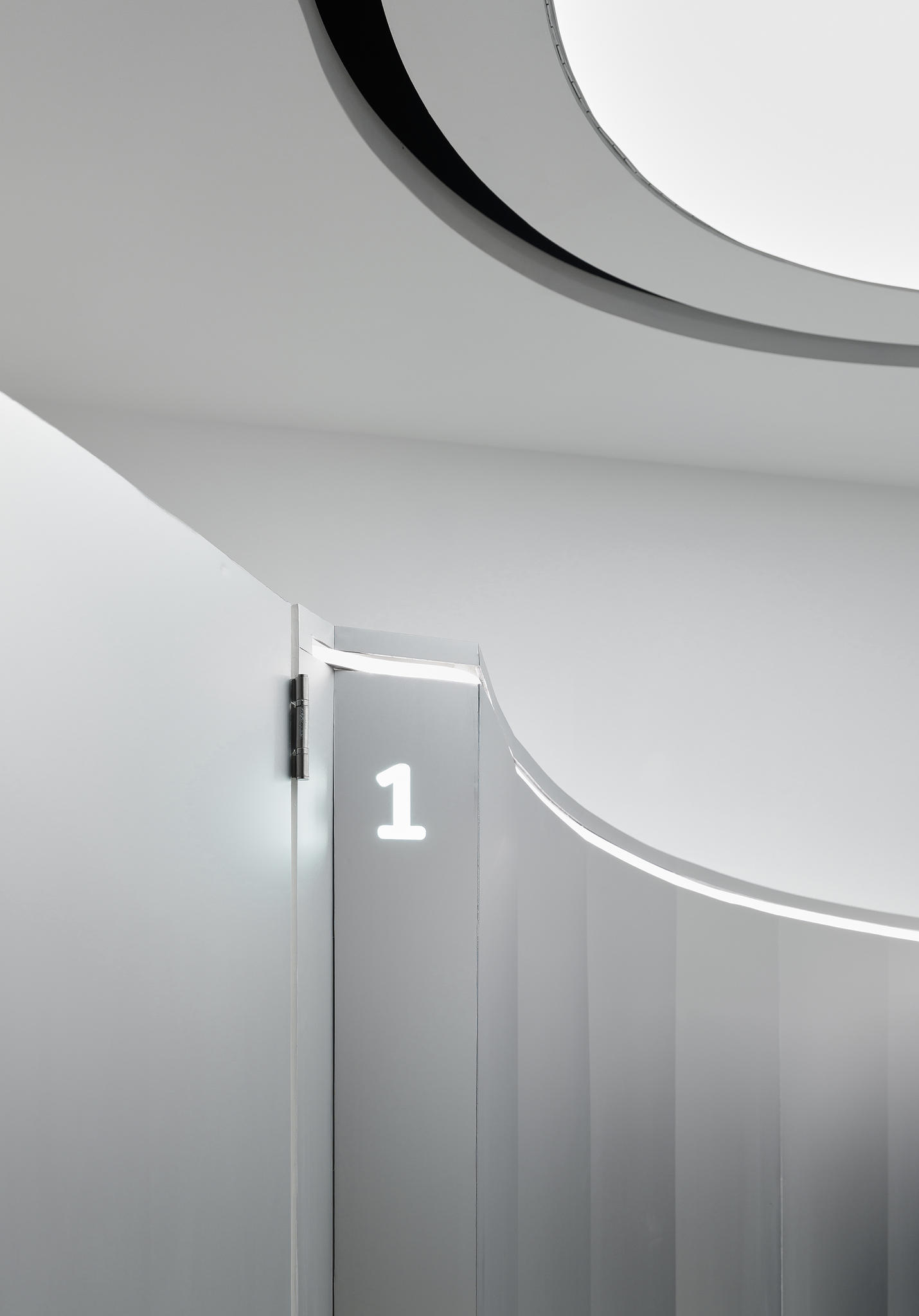
The material selection is rigorously disciplined, governed by a logic of uniformity and surface continuity. High-gloss white finishes throughout reflect light and foreground architectural form, while the blue-grey accent of Resmile product packaging on display shelves operates as the sole chromatic punctuation against an otherwise unbroken field of white. The decision to withhold colour allows form to speak — a position aligned with reductive design principles that understand subtraction as its own form of addition.
Conclusion: Architecture as Therapeutic Tool
Resmile Dental Wellness demonstrates that spatial constraint need not be the adversary of design ambition. space+craft proves that within 37 m², futuristic architecture is not a stylistic gesture but a precise spatial strategy — one with a singular aim: to transform an experience people dread into one they might actually seek out. That is the quiet power of healthcare architecture done with intention, and it is a conversation the broader discipline would benefit from having more often.